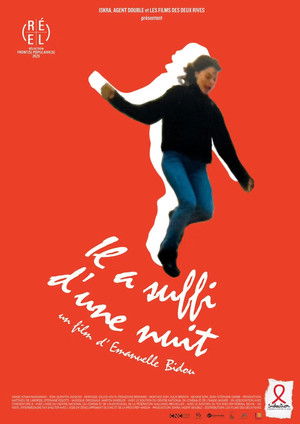
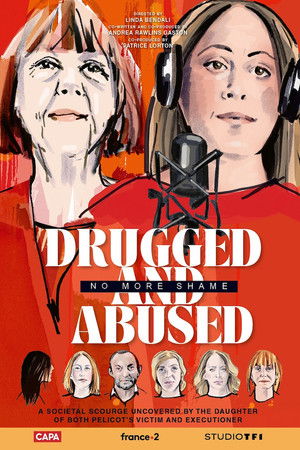
After seven years in prison, a female student in Tehran is hanged for murder. She had acted in self-defence against a rapist. For a pardon, she would have had to retract her testimony. This moving film reopens the case.
In New Jersey, the Good Grief community focuses on a holistic way of dealing with grief, where children can give in to rage in ‘the volcano room,' and say goodbye to a dying teddy bear patient in ‘the hospital room.' Over the course of a year, we follow the weekly meetings and get close to Kimmy, Nicky, Peter, Nora, Nolan, and Mikayla and their close companion: grief. It is sometimes heartbreaking, but also humorous, to experience the questions about life and death through their open and curious minds. Grief is high and heavy as a mountain, but it helps you understand what has happened, and that death is irreversible.
To celebrate the release of a new movie for their 20th anniversary, this documentary offers some behind-the-scenes footages.
Michael Almereyda’s Paradise is a poignant and surprising sketchbook, a collection of brief episodes captured during a decade of travel. The film is marked by a sense of mystery, wonderment, and sly humor, reflecting a notion of life as a series of elusive, paradisiacal moments that are routinely taken for granted — and always slipping away.
As a young father, watching his daughter go through her life experiences, film director Alexandre Mourot discovered the Montessori approach and decided to set his camera up in a children's house (3 to 6 years of age) in the oldest Montessori school in France. Alexandre was warmly welcomed in a surprisingly calm and peaceful environment, filled with flowers, fruits and Montessori materials. He met happy children, who were free to move about, working alone or in small groups. The teacher remained very discreet. Some children were reading, others were making bread, doing division, laughing or sleeping. The children guided the film director throughout the whole school year, helping him to understand the magic of their autonomy and self-esteem - the seeds of a new society of peace and freedom, which Maria Montessori dedicated her life work to.
Disobedience tells the David vs. Goliath tale of front line leaders battling for a livable world. Filmed in the Philippines, Turkey, Germany, Canada, Cambodia and the United States, it weaves together these riveting stories with insights from the most renowned voices on social justice and climate. Disobedience is personal, passionate and powerful - the stakes could not be higher, nor the mission more critical.
Approximately, because so-called "ethnic" statistics are prohibited, there are an estimated 3.3 million black French citizens. Distant descendants of slaves from the Caribbean or "indigenous" peoples from the French colonial empire in Africa, they constitute a minority that is often discriminated against. Isabelle Boni-Claverie, a mixed-race woman raised in the affluent neighborhoods of Paris, daughter of an Ivorian politician and granddaughter of Alphonse Boni, a Black man who became a magistrate of the French Republic in the 1930s, examines what is blocking the social advancement of Black French people and the full recognition of their citizenship.
Thanks to new excavations in Mauritius and Madagascar, as well as archival and museum research in France, Spain, England and Canada, a group of international scholars paint a new portrait of the world of piracy in the Indian Ocean.
From May 10, 1940, France is living one of the worst tragedies of it history. In a few weeks, the country folds, and then collapsed in facing the attack of the Nazi Germany. On June 1940, each day is a tragedy. For the first time, thanks to historic revelations, and to numerous never seen before images and documents and reenacted situations of the time, this film recounts the incredible stories of those men and women trapped in the torment of this great chaos.
After a great year for grime, MC Frisco and Risky Roadz go back to its pirate radio roots. - How Pirates Made Grime. Taking grime back from global phenomenon to its pirate radio roots.
Cartoneras is a documentary that grapples with Latin America’s urban realities, and the cardboard publishing movement that has emerged from these in the 21st century. Reflecting on the different contexts that propelled this form of community publishing, like Argentina’s 2001 economic crisis, the independent art scene, and the movements which formed around waste-pickers, the film’s narrative is developed through conversations with important actors from the cartonera world.
The Victorian era is often cited for its lack of sexuality, but as this documentary reveals, the period's artists created a strong tradition surrounding the classical nude figure, which spread from the fine arts to more common forms of expression. The film explains how 19th-century artists were inspired by ancient Greek and Roman works to highlight the naked form, and how that was reflected in the evolving cultural attitudes toward sex.
Les Héros de notre enfance
Using testimonies by pioneers and witnesses of the times, delve into the feverish visual culture the media generated – with far-fetched examples of canine television games, seduction manuals, aerobics class while holding a baby, among others.
Extravíos
Aconteceu, virou Manchete! A História da Rede Manchete
J and Jacky are good friends who attend the same school. J is from a single-parent family, and will be taken care by Jacky’s family whenever his mother has to return to Mainland to renew her visa; such kind of story is not an isolated case. These families have been uprooted for a “better future” in Hong Kong, but is this “future” that the children really long to have? A Chinese saying: “How does one understand the joy of fish, if one is not a fish?” Will the adults really understand what the children want?
In a candid and unflinching portrait of Palestinian prisoners, Shimon Dotan takes viewers inside the highest security prisons in Israel where thousands of Palestinians fill these detention facilities.
Film icons and genre experts share observations, experiences, and analysis to help reframe, deconstruct, and re-contextualize the "lost" decade of horror: the '90s.
When the cameras rolled, Doris Day wore a happy face, never hinting at the pain she endured in her personal life. This documentary brings viewers close to the real Doris Day through the eyes of her friends and family members and with the help of film footage, newsreels and photographs. What surfaces is a complex picture of an equally complicated woman who faced problems far more formidable than her cinematic image revealed.