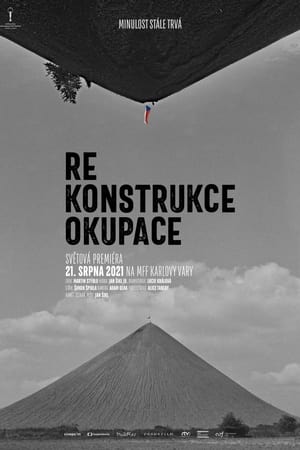
Documentary filmmaker Jan Sikl came across several hours of footage showing the Warsaw Pact invasion of Czechoslovakia in private film archives. 53 years later, historical memory awakens from a long slumber with this reconstruction of the occupation, a cinematic adventure of a truly archeological nature.
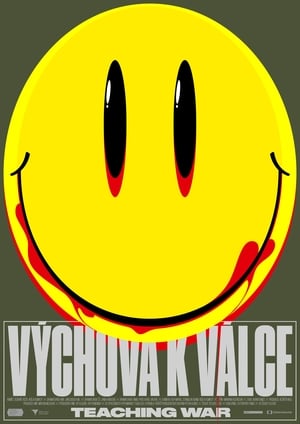
This episode from the Czech Journal series examines how a military spirit is slowly returning to our society. Attempts to renew military training or compulsory military service and in general to prepare the nation for the next big war go hand in hand with society’s fear of the Russians, the Muslims, or whatever other “enemies”. This observational flight over the machine gun nest of Czech militarism becomes a grotesque, unsettling military parade. It can be considered not only to be a message about how easily people allow themselves to be manipulated into a state of paranoia by the media, but also a warning against the possibility that extremism will become a part of the regular school curriculum.
How incomprehensible would a higher intelligence find the plodding human species and the way it treats the Earth? And do Czechs differ in the way they care for nature?
A stark documentary about young male prostitutes in Prague, aged 15 to 18, who work the streets, train stations, and clubs. Through candid interviews and behind-the-scenes footage of gay porn shoots, the film explores their lives, struggles, and dreams, touching on themes of exploitation, identity, AIDS, and survival.
Interviews with a procurer and with nineteen boys and young men who are prostitutes in Prague. The youths range in age from 14 to 19. They hustle at the central train station and at clubs. Most of their clients are foreign tourists, many are German. The youths talk about why they hustle, their first trick, prices, dangers, what they know about AIDS, their fears (disease and loneliness), and how they imagine their futures. The film's title, its liturgical score, much of it elegiac, and shots of the city's statues of angels underline the vulnerability and callow lack of sophistication of the young men.
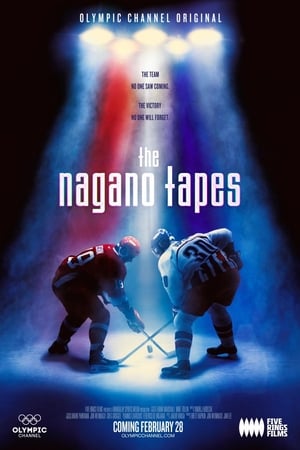
Five Rings Films presents the inspiring story of how Czech Republic won gold at the first Olympics to feature professionals from the NHL.
Czech hockey is back on top! The national team won the World Championship in a way that's never been seen before. Six key players and head coach Vladimír Růžička look back on the decisive moments and behind-the-scenes events of the tournament, the 2005 Ice Hockey World Championship in Vienna and Innsbruck.
A documentary about the record attendance at the Ice Hockey World Championships in Prague and Ostrava and Jaromír Jágr's farewell.
A personal and political biography of the Octopus, or the Prague National Library project, but also a biography of the last years of the life of the author of this design, Jan Kaplický, who wrote in his diary in 1998: to win the competition and have one love. With this entry, read by Eliška Kaplicky at the beginning of the film, it is as if the world-class Czech architect wrote not only the "script" for the final decade of his life, but also for a film that follows the dramatic social story of creative imagination and the intimate relationship between a man and a woman.
How does it feel like to become an occupier without your own intentions? With known but also never published archival materials from the whole Europe and Russia we tell a family story of the director Anna Kryvenko about how the big politics is destroying the lives of ordinary people. Just couple of years ago the director found a family secret of her grand-uncle who came to occupy Czechoslovakia in 1968 as a Soviet soldier. When searching for grand-uncle's story the author touches themes like fragmentation of personal and national memory, inherited guilt, interpretation of history, media manipulation, relationship towards nowadays Russia, but also relationship of Czechs and Slovaks towards foreigners - themes very actual in our times.
Documentary showing the Czechoslovakian political landscape in March 1968, when president Antonin Novotny, a hardline Stalinist, stepped down and moderate communist Ludvik Svoboda was elected. Five months later, in August 68, the Prague Spring would end with the military intervention of the Warsaw Pact.
Český Alláh
Six refugee stories experienced over several years in the Czech Republic. As a former member of the Soviet socialist bloc and now part of the European Union, the Czech Republic shows almost the greatest resistance to refugees from a pan-European perspective, without having any itself.
Moje století
A video essay about 1972 Giallo "Don't Torture a Duckling", focusing on accusations of misogyny against director Lucio Fulci.
A moving account, in his own words, of the personal life and work of the brilliant Czech filmmaker Miloš Forman (1932-2018): his tragic childhood, his major contribution to the cultural movement known as the Czech New Wave, his exile in Paris, his troubled days in New York, his rise to stardom in Hollywood; a complete existence in the service of cinema.
In its "velvet revolution" of 1989, the people of Czechoslovakia toppled its communist dictatorship and embraced democracy and capitalism. By January 1993, the country had peacefully split in two. In the early 1990s, thousands of American college graduates began flocking to Prague, where they could postpone entering the "real world," and live cheaply in a beautiful undiscovered European city. Throughout that decade more and more tourists crossed the statue-lined Charles Bridge in search of old world beauty previously hidden by communist isolation. But what of the people who cross the Charles Bridge on their way to work every morning? Who are the Czechs? What is their history? What is their future? My Prague Spring is an award-winning film that vividly humanizes a resilient people who have survived a tumultuous history. In the spring of 1990, a Czech-American filmmaker spent four months living with his Czech relatives, and opened an intimate window into an uncertain world.
Showing his own original footage of Prague Spring, director Evald Schorm describes the atmosphere these days in 1968.
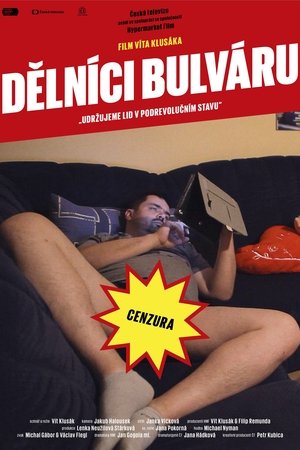
This documentary study of the mechanisms that turn the gears of the tabloids is conducted by the unique figure Pavel Novotný. This editor-in-chief of one of the most widely read Czech media outlets of the time, providing news from the world of show business and human misfortune, gets straight to the point. Readership is a fetish, an absolute alibi for all invasions of privacy and every transgression of good ethics. Seen up close, the whole cluster of disreputable reports looks like a staged tableau. Before the eager eyes of an anxious public, celebrities willingly or unwillingly perform acts that the scrutiny of the all-powerful tabloid workers attributes racy significance to.
A unique document of the 1968 Soviet invasion of Czechoslovakia, what began as a documentary about the liberalization of Czechoslovakia evolved into a record of the entry of Russian tanks into Prague.