After World War II, 4,000 Polish families came to Australia. They were Jews, Fascists, anti-Communists, and others dispossessed. In a large hostel, where even married men and women were housed in separate barracks, the adults lived for two years while they worked off the government's payment of their passage. Even though he is married to Anna and has a son, Julian falls in love with Nina and she with him. As they and others face the new situations and prejudices that await immigrants and as they take on aspects of Australian culture, old-country values reassert themselves. Julian decides what to do about love and family, and Nina must find a way to move on.
A dying man in his forties recalls his childhood, his mother, the war and personal moments that tell of and juxtapose pivotal moments in Soviet history with daily life.
A young prosecutor in postwar West Germany investigates a massive conspiracy to cover up the Nazi pasts of prominent public figures.
The story of a village woman given the grueling task of looking after (and fulfilling the sexual needs of) her quadruple amputee husband, a Japanese soldier in the Second Sino-Japanese War who has been decreed a "War God" by the Emperor.
A concentration camp survivor discovers her former torturer and lover working as a porter at a hotel in postwar Vienna. When the couple attempt to re-create their sadomasochistic relationship, his former SS comrades begin to stalk them.
In this drama at the end of World War II, the inhabitants of a small Japanese fishing village must come to terms with their nation's defeat and the sudden occupation of General MacArthur and his troops.
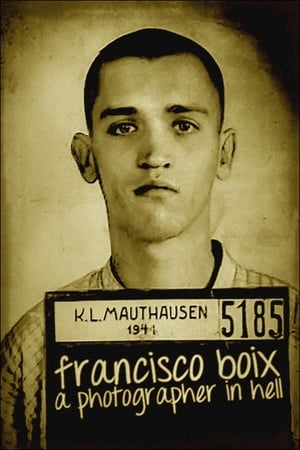
In 1939, just finished the Spanish Civil War, Spanish republican photographer Francesc Boix escapes from Spain; but is captured by the Nazis in 1940 and imprisoned in the Mauthausen concentration camp, in Austria, a year later. There, he works as a prisoner in the SS Photographic Service, hiding, between 1943 and 1945, around 20,000 negatives that later will be presented as evidence during several trials conducted against Nazi war criminals after World War II.
A faithful retelling of the 1942 "Vel' d'Hiv Roundup" and the events surrounding it.
In postwar Germany, a displaced Czech boy, separated from his family during wartime, is befriended by an American GI while the boy's mother desperately searches for him.
During the anti-Japanese war, truck driver Lee Sing's secret mission is to transport weapons and supplies for the resistance fighters. Sing has to deliver a signal gun to guerrillas at ten on that night for launching an attack against the Japanese soldiers. He works for the Ko's family and he has to send the gun to the provincial city to prevent it from being bombed. Sing carries on his vehicle a group of passengers including a Chinese traitor, a guerilla, a compassionate nurse, a comfort woman on the run, a teacher and his pregnant wife. Sing is given a hard time by the Japanese troops on the road. The Japanese ransack the vehicle and they find the signal gun. All the males on board are being interrogated with torture, but the passengers pool their efforts to subdue the traitor and accomplish their mission.
After World War II, fighter pilot Antonín Maděra returns from England to his native village in the Ore Mountains to forget the hardships and horrors of war and to "live, work, and love his neighbors," as he himself says. But Svatý Štěpán, which his family had to leave in 1939, is no longer the same place it used to be. However, even in his wildest dreams, he could not have imagined what really awaited him there.
For the first time, survivors talk about life after the camps. How does one return to a life that was interrupted with such violence? How does one reconstruct oneself when all or most of one’s family were butchered? How does one resume studies and earn a living in a society that had cast you out a few years earlier?
The documentary of the Nuremberg War Trials of 21 Nazi dignitaries held after World War II.
Based upon the final confession of Adolf Eichmann, made before his execution in Israel, of his role in Hitler's plan for the final solution.
A young academy soldier, Maciek Chelmicki, is ordered to shoot the secretary of the KW PPR. A coincidence causes him to kill someone else. Meeting face to face with his victim, he gets a shock. He faces the necessity of repeating the assassination. He meets Krystyna, a girl working as a barmaid in the restaurant of the "Monopol" hotel. His affection for her makes him even more aware of the senselessness of killing at the end of the war. Loyalty to the oath he took, and thus the obligation to obey the order, tips the scales.
An account of the last two centuries of the Anthropocene, the Age of Man. How human beings have progressed so much in such a short time through war and the selfish interests of a few, belligerent politicians and captains of industry, damaging the welfare of the majority of mankind, impoverishing the weakest, greedily devouring the limited resources of the Earth.
Israel, 1961. Nazi war criminal Adolf Eichmann, responsible for organizing the extermination of European Jews, is sentenced to death.
In post-World War II America, a woman, rebuilding her life in the suburbs with her husband, kidnaps her neighbor and seeks vengeance for the heinous war crimes she believes he committed against her.
In the aftermath of World War II, a British colonel and his wife are assigned to live in Hamburg during the post-war reconstruction, but tensions arise with the German widower who lives with them.
In November 1947, Wieslawa Pajdak was arrested for her activities in the anti-communist underground and sent to prison on Rakowiecka Street. A few days later, Jerzy Smiechowski was placed in the next cell. One night, they begin talking through the wall via Morse code. Although it's hard to believe, this is how they met and fell in love. They got engaged through a wall. Seven years later, they married in prison, where they met for the first time. They lived together for fifty years.