Over the course of two years, filmmaker Jamie Roberts meets those spreading extremist Islamic fundamentalism in Britain, including a bouncy castle salesman who is now one of the world's most wanted men.
Commissioned by the journal Présence Africaine, this short documentary examines how African art is devalued and alienated through colonial and museum contexts. Beginning with the question of why African works are confined to ethnographic displays while Greek or Egyptian art is celebrated, the film became a landmark of anti-colonial cinema and was banned in France for eight years.
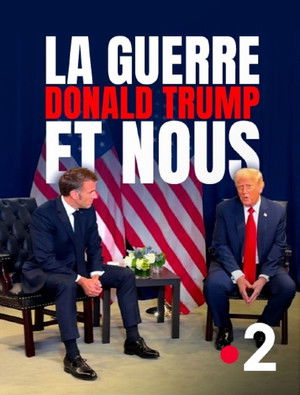
As the 2024 elections approach, Russian interference in American politics – through spies or agents of influence – is a troubling reality. Vladimir Putin is counting on Donald Trump’s victory to weaken support for Ukraine. Why does Trump almost always support Russia? Is he compromised? During his presidency, did he betray the United States in favor of the Kremlin? And why has the Republican Party shifted its stance toward Russia? Answering these questions means shedding light on a labyrinthine espionage and manipulation operation. Still ongoing, it began forty years ago, during the final years of the Cold War. Back then, Trump was merely a real estate developer, and Putin was a young KGB agent. This operation contains many dark areas, but some hold pieces of the puzzle. A former KGB leader, infiltrated “illegals,” a former Trump advisor, and former senior officials from the CIA and FBI, as well as a former prosecutor, provide testimony. . . . [taken from Nilaya Productions]
A look back at the life and career of Japanese guitarist hide, who died under questionable circumstances in 1998.
Filmmaking icon Agnès Varda, the award-winning director regarded by many as the grandmother of the French new wave, turns the camera on herself with this unique autobiographical documentary. Composed of film excerpts and elaborate dramatic re-creations, Varda's self-portrait recounts the highs and lows of her professional career, the many friendships that affected her life and her longtime marriage to cinematic giant Jacques Demy.
Asil is a young Syrian refugee awaiting documents in Turkey while processing the trauma of losing her home and family. Her story gives voice to a charming gigantic puppet named Amal, who represents millions of migrant and displaced children in a walk from the Syrian border in Turkey all the way across Europe. Escorted and animated by a group of puppeteers who are themselves refugees, Amal’s epic journey is one of compassion and discovery.
Elizabeth Windsor tells the story of the girl who was never supposed to be Queen. Born the first daughter of 'the spare', the Duke of York, Princess Elizabeth's life was destined to be nothing more than a bit part in the privileged shadows of the British Royal family.
A historical documentary and tribute to the legacy and influence of MAD Magazine, featuring interviews with MAD celebrity readers, along with MAD artists, writers, and editors—affectionately known as "The Usual Gang of Idiots".
Quite a few years have passed since November 1989. Czechoslovakia has been divided up and, in the Czech Republic, Václav Klaus’s right-wing government is in power. Karel Vachek follows on from his film New Hyperion, thus continuing his series of comprehensive film documentaries in which he maps out Czech society and its real and imagined elites in his own unique way.
A reflection on the works and thinking of the last years of production by Torquato. Such as the magazine "Navilouca", the film "Terror da Vermelha", the column "Geleia Geral" and the controversial Cinema Novo X Marginal, among other passages important aspects of Brazilian culture in the 60s and 70s.
Thomas Haemmerli is about to celebrate his fortieth birthday when he learns of his mother's death. A further shock follows when he and his brother Erik discover her apartment, which is filthy and full to bursting with junk. It takes the brothers an entire month to clean out the place. Among the chaos, they find films going back to the 1930s, photos and other memorabilia.
A secret museum in an art hotel sparks intrigue when it's revealed to be a creation of controversial artist, Banksy. Using art as a form of political resistance, the hotel highlights the reality of life under Israeli military occupation. The film journeys through the hotel, Palestine, and a relevant past to dismantle the mainstream media's bias towards the Palestinian struggle for freedom and equality.
Chris Marker and François Reichenbach document the massive anti–Vietnam War protest held in Washington, D.C., on October 21, 1967, where more than 100,000 demonstrators gathered at the Lincoln Memorial before marching on the Pentagon. Filmed amid the crowd, the short captures the tension, idealism, and growing radicalism of the American peace movement.
What makes European cinema so special? Find out in Paul Joyce’s feature-length documentary, Pictures of Europe, which examines the differences between American independent and Hollywood movies and films from European directors. Featuring luminary iconoclasts from European cinema such as Agnes Varda, Bernardo Bertolucci and Pedro Almodovar, as well as American counterpoints from Paul Schrader, and those who have crossed back and forth, such as Paul Verhoeven
A group of friends reunite in the north of Scotland during summer.
In a behind-the-scenes look at the biggest political upset in recent history, Mark Halperin, John Heilemann and Mark McKinnon offer unprecedented access and never-before-seen footage of candidate Trump, from the primaries through the debates to the dawning realization that the controversial businessman will become the 45th President of the United States.
Documentary on Les Charlots, known as The Crazy Boys in the English-speaking world, a group of French musicians, singers, comedians and film actors who were popular in the 1960s, 1970s, and early 1980s.
Macchie solari (Autopsy), L'etrusco uccide ancora (The Etruscan kills again), commandos are titles that refer to a category for lovers, that of B-movies, Italian thriller of the '60s and' 70s. But in the life and in the poetry of their director, Armando Crispino, there is more, says his son Francesco. Searching for a meeting with his father in the maze of his production, he finds himself investigating the world of Italian genre cinema. Finding that even in this area left in the shadows by the critical discourse we can find more, and better, than we think.
This documentary examines the media's coverage of the Canadian federal election of May 1979. Filmed over a 3-week period, it takes a fascinating look at journalists in action and the politicians who attempt to manipulate the media.
In autumn 1944, during the Liberation of Brittany, writer Louis Guilloux worked as an interpreter for the American army. He was a privileged witness to some little-known dramatic aspects of the Liberation: the rapes and murders committed by GIs on French civilians. He also discovered the racism of American military justice. This experience haunted the novelist for thirty years. In 1976, he recounted it in a short novel, "Ok, Joe", which went unnoticed. This film compares his account with the memories of the last witnesses to these forgotten crimes and their punishments.