James Franco interviews three experts on the poet Hart Crane, whose life was the subject of his feature The Broken Tower (2011).
A child of the Beat Generation, Gérald Leblanc conjoined urban-ness and American-ness, wandering and belonging, far beyond the boundaries of taboo. In so doing, he helped propel Acadia into the modern era.
In 1983, fifteen Cape Breton, Nova Scotia, landowners went to court to stop the spraying of herbicides by the local subsidiary of a Swedish multinational on forests adjacent to their properties. They found that the testimony of scientists and the support of public opinion, both here and abroad, were not enough to win their case. The film shows their ordeal and the landmark Sydney trial. Concerns raised included potential conflict-of-interest situations where a government must protect citizens' health while supporting certain kinds of industry; the relative value of the political and judicial processes in mediating social problems; and the need for a public forum for debating environmental issues. The film contains outstanding footage from chemical-industry films of the 1950s and recent material about Vietnam veterans affected by Agent Orange.
How can we prevent epidemics? Why do viruses and bacteria move? Rather than trying to contain epidemics one after another, why not stop the processes that encourage their emergence? The challenges are enormous, but scientists argue that solutions exist. Because if emerging diseases are the collateral consequences of our lifestyles, our lifestyles are under our control.
A look at the state of the global environment including visionary and practical solutions for restoring the planet's ecosystems. Featuring ongoing dialogues of experts from all over the world, including former Soviet Prime Minister Mikhail Gorbachev, renowned scientist Stephen Hawking, former head of the CIA R. James Woolse
The Battle At Our Shores is a documentary following over a period of a year the ground swell of opposition that has arisen over the first inshore/coastal oil and gas exploration licenses to be given out in Canada in the Province of Nova Scotia. Most other jurisdictions have put moratoriums on inshore marine oil and gas activity. This documentary tracks this ecological and political controversy, which pits citizens groups against their governments and industry. The Battle At Our Shores looks at citizen activism, governments that ignore democracy, and the fight against corporate globalism at a local level.
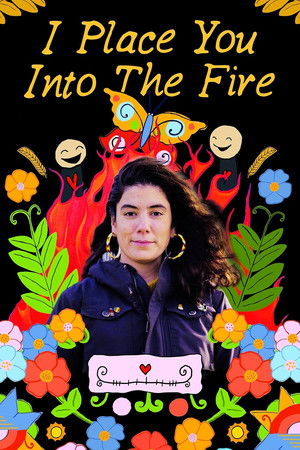
Peggy Robles-Alvarado is a Jerome Hill Foundation Fellow in Literature, a Latinx Playwrights Circle Fellow, and a three-time International Latino Book Award winner who authored Conversations With My Skin, and Homage To The Warrior Women. In this film by New York-based filmmaker Matt Haller, she recounts the grief and pain of losing her father, interwoven with her Puerto Rican heritage.
Light Upon Light: A Documentary on Hijab is an intimate and deeply personal exploration of the diverse, raw, and untold stories of hijabi women. Through open and vulnerable conversations with 7 women, the film dismantles stereotypes, highlights the challenges imposed by society, and celebrates the profound beauty of the hijab beyond a mere clothing choice. It captures the individuality of each woman’s story—how they came to wear the hijab, the struggles they’ve faced, and the strength they’ve found in it. More than just fabric, the hijab is a journey, often misunderstood, and influenced by the way the world perceives it. By amplifying voices that are often unheard, the documentary creates a space for empathy, challenges misconceptions, and invites a deeper understanding of what it truly means to wear the hijab; inspiring everyone to see hijab in a new light.
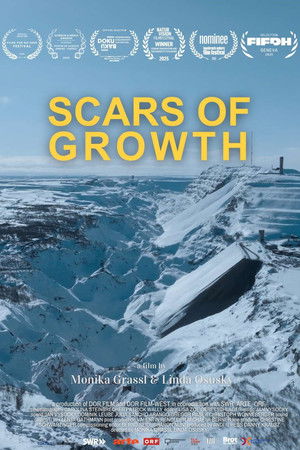
Unconventional portrayal of mining in the Swedish Lapland ore fields, a powerful image and sound symphony that can be experienced both as a documentary and symbolic work.
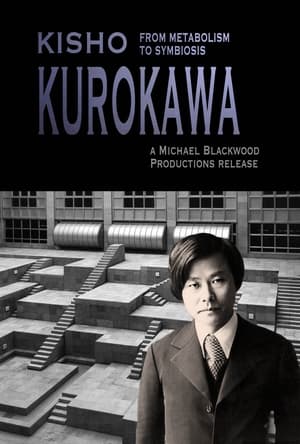
An intimate and moving portrait of two of the most influential architects of the second half of the 20th Century, Robert Venturi and Denise Scott Brown.
Celebrated as one of the masters of the short story, Frank O'Connor was also an important translator of classical Irish poetry. Cork poet and writer Liam O'Muirthile tells O'Connor's forgotten story. He argues you cannot understand O'Connor's voice in English without understanding his natural writing voice, which is rooted in Irish.
Niall Cunningham has spent his life on the waters of Dalkey, a place that has always felt like home. His father, Ken, served as the ferryman, a role steeped in tradition and community, until his passing two years ago. Now, Niall steps into his father’s place, navigating the tides of grief and responsibility as he becomes the new Ferryman of Dalkey, determined to keep a legacy alive.
Passionate about ocean life, a filmmaker sets out to document the harm that humans do to marine species — and uncovers an alarming global conspiracy.
Ben Fogle spends a week living inside the Chernobyl Exclusion Zone, gaining privileged access to the doomed Control Room 4 where the disaster first began to unfold.
Al Khadra is a renowned Sahrawi war poetess living in the al-Auin camp in the Algerian desert. A vivid testament to 30 years of the Sahara conflict, we see how she keeps her oral poetry alive and tries to pass on her activism to the next generation.
A poetic tribute to writer, poet and environmental activist, Ken Saro-Wiwa, who was executed alongside eight other activists for opposing the environmental damage done in their oil-rich homeland, Ogoni.
Three Swedish teenagers express their thoughts about bi- and homosexuality while navigating questions of identity, self-acceptance, and societal expectations. Through personal stories and reflections, the film explores their struggles, hopes, and the challenges of growing up as LGBTQ+ youth in Sweden.
At underground film of the 1st Popular Festival of Catalan Poetry filmed in the Proce Theater in Barcelona on May 25, 1970, in solidarity with political prisoners. The participating poets were: Agustí Bartra, Joan Oliver (Pere IV), Salvador Espriu, Joan Brossa, Francesc Vallverdú and Gabriel Ferrater.
A student's increasingly intimate line of questioning causes his interview with a local horror host to take a vulnerable turn.
Iggy Pop reads and recites Michel Houellebecq’s manifesto. The documentary features real people from Houellebecq’s life with the text based on their life stories.