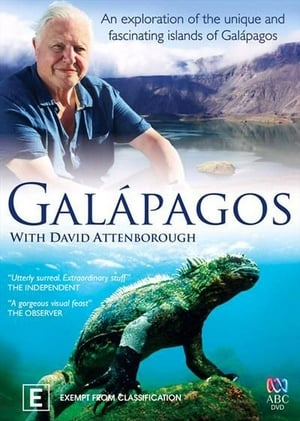
Two hundred years after Charles Darwin set foot on the shores of the Galápagos Islands, David Attenborough travels to this wild and mysterious archipelago. Amongst the flora and fauna of these enchanted volcanic islands, Darwin formulated his groundbreaking theories on evolution. Journey with Attenborough to explore how life on the islands has continued to evolve in biological isolation, and how the ever-changing volcanic landscape has given birth to species and sub-species that exist nowhere else in the world. Encompassing treacherous journeys, life-forms that forge unlikely companionships, and survival against all odds, Galápagos tells the story of an evolutionary melting pot in which anything and everything is possible.
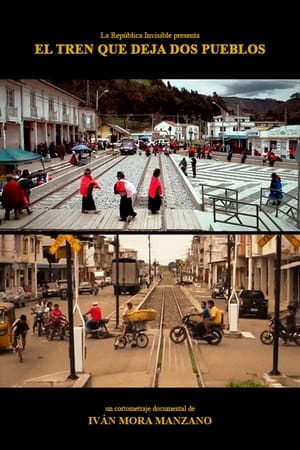
In Ecuador, in a single day, the train passes from the mountainous Andes to the tropical coast. The roads were built between 1861 and 1908 to connect the country. Until this date, the two regions live as separate countries, although the roads connect them in less than a day. The film is an observational work that talks about space and collective memory.
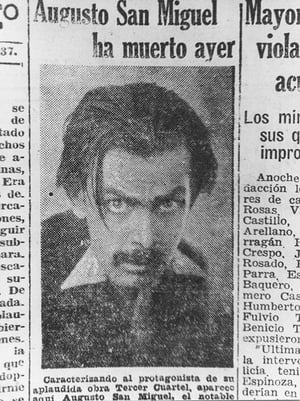
During the 1920's, Augusto San Miguel (1905-1937) directed, produced and starred in the first feature films made in Ecuador. Unfortunately, San Miguel's films -like many episodes of his life- disappeared in time. The only remains are the movie ads on old newspapers and a mysterious legend, by which San Miguel was buried with his films.
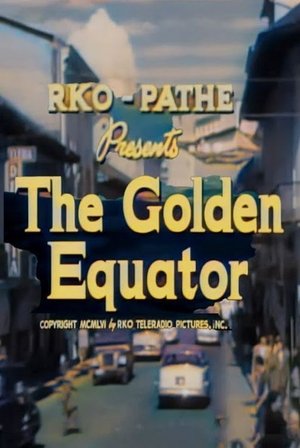
It is thanks to this film that the Marquis gained notoriety with a wider audience. The film is the result of film footage shot between May 1926 and June 1930 in several South American countries. Departing from Guayaquil, he first went to the Galapagos Islands in the Pacific. Upon returning to the capital of Ecuador, chance brought him to the Ocaina Indians, the Boro, the Napo, the Jivaro and the Piro. He explored the Incan mines of Machu Picchu, discovered only a few years prior, and ended his journey on the famed Guano islands. The musical score, inspired by traditional Indian music, was created by Maurice Jaubert.
A dog story about a stray traveling in the dense and swallowing Amazon jungle, the dusty streets of Quito, Ecuador, and a Switzerland. Arthur joined a race, and outpaced death, to find a new life with the adopted adventure seekers.
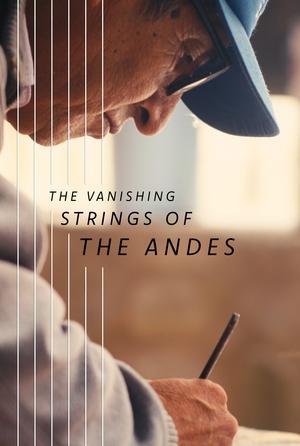
Discover the heart-wrenching tale of Ecuador’s forgotten guitar road in “Vanishing Strings of the Andes.” Witness the struggle to preserve an age-old generational craft practised high in the Andes mountains before it’s too late...
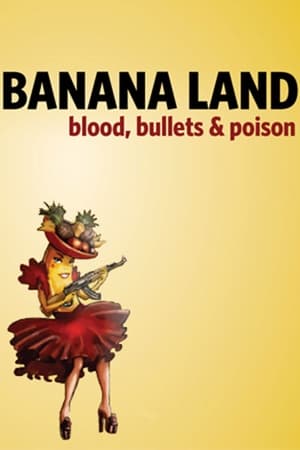
For consumers, bananas are a delicious and nutritious start to the day, a healthy snack and a fixture in our fruit bowls. For millions of residents in the banana lands, the production of bananas means social upheaval, violence and pesticide poisoning. Banana Land explores the origins of these disparate realities, and opens the conversation on how workers, producers and consumers can address this disconnect.
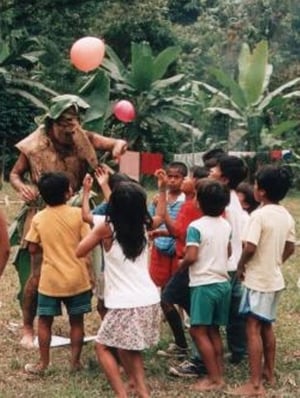
Scenes of daily life in the Indian communities of Ecuador.
The elders of the Kichwa community of Sarayaku preserve the history of their land for the youngest. They save the knowledge of their traditions against modernity and the invasion of their territory.
The Royal Tour is a groundbreaking series of television specials, produced and hosted by Emmy Award-winning journalist and CBS News Travel Editor Peter Greenberg. Guided by some of the most dynamic and powerful heads of state, Peter journeys deep inside each country to offer viewers an all access pass to extraordinary locations, historic landmarks, and cultural experiences. In this latest edition, Peter received a royal tour from the President of Ecuador, Rafael Correa. For an entire week, Mr. Correa became the ultimate guide, showcasing the visual gems that his country has to offer. They took four camera crews along as they swam with piranha in the Amazon rainforest, went whale watching off the coast of Manta, shopped like a local in a rural town in the Andes Mountains, returned to the President's hometown of Guayaquil and the school he attended, visited a cacao plantation (aka chocolate) farm in Cacao, and went diving with sharks in the Galápagos Islands.
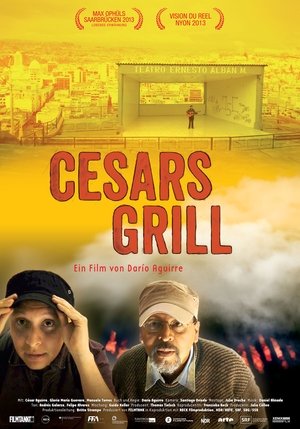
In order to rescue his father's ramshackle grill restaurant, filmmaker and vegetarian Dario Aguirre is traveling back to his homeland Ecuador. What starts out as a strange debate about opening times, chips and Excel spread sheets, develops into a moving family drama.
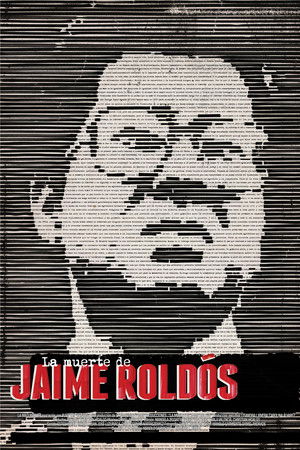
A portrait of Jaime Roldos, Ecuador's first democratically elected president, who died with his family when their plane crashed in the mountains.
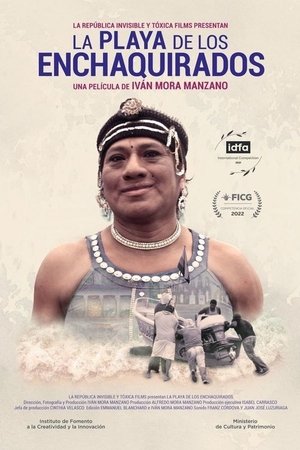
Vicky is fisherman by day and bar owner at night. When she was a little boy her dream was to be a radio soap opera star, nowadays she dreams of falling in love again. How is it possible that a small, barren place in the third world has managed to achieve this special form of freedom and tolerance?
This documentary profiles Rafael Correa, an established economist who was elected Ecuador's president in 2006 and quickly transformed a country with archaic structures into a participatory democracy.
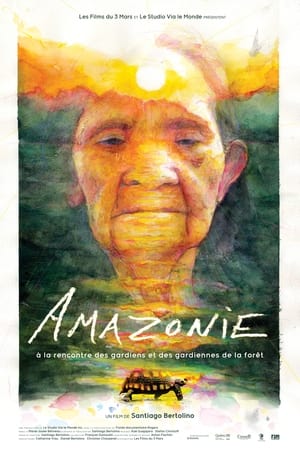
With a hybrid style blending political essay and road movie, this documentary by Santiago Bertolino takes us into the heart of the Amazonian reality. Following Marie-Josée Béliveau, an ecologist and ethnogeographer, they journey together along the 4000 km from the mouth of the Amazon River in Brazil to one of its sources in Ecuador where they meet with the guardians of the forest. As a result, we witness powerful and spontaneous testimonies from local communities who are doing everything to preserve what remains of their lands, which are disappearing due to the inexorable advance of Western modernity.
November 7th, 2001. After a seventy years absence, the Ecuadorian national soccer team is close to qualifying for the first time to a Soccer World Cup. This documentary follows the events that took place during that historic date, when a whole country lived under the shadow of a soccer game.
Paciente Cero
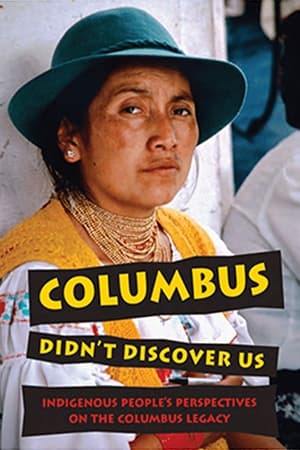
The historic gathering of three hundred indigenous activists from North, South and Central America who met in Quito, Ecuador, in July 1990 to organize a cross-continental indigenous resistance to the Columbus Quincentennial.
This short film focuses on the evolving country of Ecuador.
Until the 1950s, the Waorani were able to successfully defended their area of settlement – today’s Yasuni National Park in the Ecuadorian Amazon – with the aid of spears. Then Christian missionaries entered the thick rain forest and paved the way for an oil company. Nowadays many of the tribes are estranged as some want to benefit from the short-term money the company is offering while others fight to preserve their land, culture and independence under all circumstances.