Disciplined Italian composer Antonio Salieri becomes consumed by jealousy and resentment towards the hedonistic and remarkably talented young Salzburger composer Wolfgang Amadeus Mozart.
A celebration of love and creative inspiration takes place in the infamous, gaudy and glamorous Parisian nightclub, at the cusp of the 20th century. A young poet, who is plunged into the heady world of Moulin Rouge, begins a passionate affair with the club's most notorious and beautiful star.
La traviata (Italian: [la traˈviaːta], "The Fallen Woman"[1][2]) is an opera in three acts by Giuseppe Verdi set to an Italian libretto by Francesco Maria Piave. It is based on La dame aux Camélias (1852), a play adapted from the novel by Alexandre Dumas, fils. The opera was originally entitled Violetta, after the main character. It was first performed on 6 March 1853 at the La Fenice opera house in Venice. Piave and Verdi wanted to follow Dumas in giving the opera a contemporary setting, but the authorities at La Fenice insisted that it be set in the past, "c. 1700". It was not until the 1880s that the composer and librettist's original wishes were carried out and "realistic" productions were staged.[3]
Sensation in San Remo
La Cenerentola, ossia La bontà in trionfo (Cinderella, or Goodness Triumphant) is an operatic dramma giocoso in two acts by Gioachino Rossini. The libretto was written by Jacopo Ferretti, based on the fairy tale Cendrillon by Charles Perrault. The opera was first performed in Rome's Teatro Valle on 25 January 1817.---- IMDB id refers to Great Performances: Season 24, Episode 12 La Cenerentola (3 Apr. 1996) from Houston Grand Opera so release date is misleading.
Winter Fairy Tales: The Lost Memory is an online concert presented by the K-Pop group Oh My Girl. It is the third installment in their season themed concerts. The moon rising that signals the coming of winter. When the day we meet the snow begins. The glow of seven colors from the deepest part of the sea, Reveals its appearance to the world.
Giulio Cesare in Egitto
A musical romantic tragedy about a famous composer who moves back to his small hometown after having had heart troubles. His search for a simple everyday life leads him into teaching the local church choir, which is not easily accepted by the town yet the choir builds a great love for their teacher.
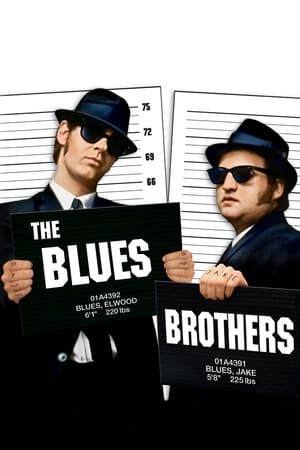
Jake Blues, just released from prison, puts his old band back together to save the Catholic home where he and his brother Elwood were raised.
One day, while Grigoris is working and singing at a construction site, a conductor, Vangelis, and two bouzouki musicians happen to pass by. They listen, enchanted by his limpid voice, and suggest that he becomes a member of their orchestra. Thus, the newly-wed day laborer gets a second job at Mr. Lefteris’ night club. His wife, Marina, soon joins him at the club, and, before long, she too goes on stage, cuts capers and charms everyone. Her success, however, has a negative impact on the couple’s relationship, since Marina’s admirers as well as those of Grigoris’, turn one away from the other.
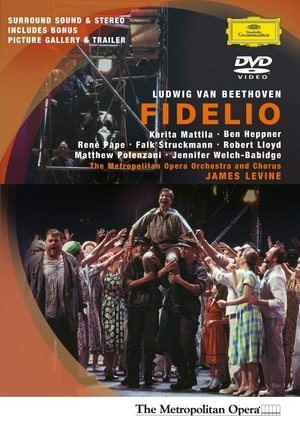
Two years prior to the opening scene, the nobleman Florestan has exposed or attempted to expose certain crimes of the nobleman Pizarro. In revenge, Pizarro has secretly imprisoned Florestan in the prison over which Pizarro is governor. The jailer of the prison, Rocco, has a daughter, Marzelline, and a servant (or assistant), Jaquino. Florestan’s wife, Leonore, came to Rocco’s door dressed as a boy seeking employment, and Rocco hired her. On orders, Rocco has been giving Florestan diminishing rations until he is nearly starved to death. Place: A Spanish state prison, a few miles from Seville; Time: Late 18th century.
From the Teatro dell'Opera di Roma Terme di Caracalla "Carmen" by Georges Bizet. Director Jesus Lopez-Cobos. Orchestra, Chorus and Corps de Ballet of the Teatro dell'Opera di Roma.
A 12-year-old boy tries everything to join a music lovers club.
A musical special promoting the then-upcoming release of the 1973 musical version of "Lost Horizon".
Gruber is a normal 16-year-old growing up in Budapest in 1962, but he has a problem -- how does he get to know the opposite sex? At the Sunday afternoon dance classes the young "ladies and gentlemen" hold each other while dancing, and that makes the lessons worth something. Otherwise, the pianist's attention wanders and the orchestra does not exactly play with a single-minded dedication. In fact, everybody seems to have other things on their minds, except for the enthusiastic dance instructor and his ever-smiling assistant.
A musician is offered a job in Vienna as stage director, but his disagreements with the aristocratic opera manager end in abrupt firing in spite of a mutual attraction. He's quickly engaged by another theatre and becomes famous for his lavish stage productions and fine acting, which begins their golden age with Suppé and Strauss.
This telecast offers a rare opportunity to see the legendary Joan Sutherland in the role that first catapulted her to international stardom. She drove audiences wild by the way her opulent voice caressed the music’s long phrases and sprinted effortlessly through the fiendish runs, trills, embellishments and stratospheric high notes. One of the glories of the operatic world, her portrayal of Donizetti’s hapless heroine is a multifaceted and moving characterization. The incomparable tenor Alfredo Kraus is Edgardo, the man Lucia loves but cannot have. (Performance taped November 13, 1982. Broadcasted September 28, 1983.)
A Pennsylvania band scores a hit in 1964 and rides the star-making machinery as long as it can, with lots of help from its manager. But behind the scenes, the group’s sudden fame tests their strength, their maturity and responsibility, and their ability to resist the temptations that money and notoriety always make possible.
In a small Japanese town, Ko-Ko is appointed to the unenviable position of executioner. Knowing he must successfully perform before the appearance of the Mikado in a month's time, Ko-Ko finds a suitable victim in Nanki-Poo, who is distraught over his unrequited love for the maiden Yum-Yum. Nanki-Poo agrees to sacrifice his life if he is allowed to spend his remaining days with Yum-Yum, who is betrothed to Ko-Ko. Opera Australia production filmed at The Arts Centre Melbourne.
Takarazuka Revue's Phantom based on the play by Maury Yeston and Arthur Kopit.