The priestess Norma loves Pollione, leader of the occupying force suppressing her people, and has borne two children by him. But Pollione’s love has withered, and he now loves Norma’s fellow priestess Adalgisa. Meanwhile, the people urgently look to Norma to lead their rebellion.
Met audiences were fascinated by Mariusz Treliński’s gripping, visionary production of Wagner’s epic opera. In the daunting title roles of the doomed lovers, Nina Stemme and Stuart Skelton are passionate, overwhelming, and heartbreaking as they battle every obstacle that separates them from their true destiny. René Pape is King Marke, betrayed not only by Isolde but by Tristan, the man he most trusts and loves like a son. With Ekaterina Gubanova as Isolde’s confidante Brangäne and Evgeny Nikitin as Kurwenal, Tristan’s loyal lieutenant. Simon Rattle conducts a surging, shimmering account of Wagner’s monumental score.
Její pastorkyňa
A man’s head is bursting with thoughts and decisions. A gardener is about to explode – somebody has trampled on her flowerbeds. The man is looking for somebody who is better at playing chess than his dachshund. The gardener is looking for a mysterious vandal who is missing a yellow boot. In the end, they might just be looking for the same thing.
Love blossoms between Maroc, a singing boat refugee, and Lisa, a collector of singing seashells who dreams about love.
Television play
Claude Debussy's fairy tale-based opera Pelléas et Mélisande is by now well known; at once a tale of doomed love and a meditation on the cycle of creation and destruction (adapted from Maurice Maeterlinck's 1893 symbolist play), it originally premiered in 1902 to mixed critical reception, but has since become a staple of the operatic repertory and one of the most popular works from Debussy's canon. This particular production emerged from the Opernhaus Zürich in 2004. It stars Rodney Gilfry as Pelléas, Isabel Rey as Mélisande and Michael Volle as Golaud. Franz Welser-Möst conducts the Zurich Opera Orchestra; Sven-Eric Bectholf directs for the stage.
Recorded at the Vienna State Opera house in 1989, this staging of Richard Strauss and Hugo von Hofmannsthal’s Elektra is one of the glories of live opera on film, deserving of eternal availability. The DVD picture has great clarity, despite the darkness of Hans Schavernoch’s set design. Other than the cliché of a huge statue head, toppled on its side, the set manages to be suitably representative of a decaying palace as well as an imposing, theatrical space, dominated by the mammoth body of the statue from which the head apparently dropped, draped with the ropes that seem to have enabled the decapitation. Sooner or later most of the characters cling to and twist around those ropes, an apt stage metaphor for the remorseless repercussions from the murder of Agammenon by his unfaithful wife Klytämnestra and her paramour, Aegisthus. Reinhard Heinrich’s costumes capture a distant era while sustaining a creepily modern look — part Goth, part homeless, part Spa-wear.
A familiar Biblical tale transformed into a cinematic opera of seemingly endless possibility. In expressive, melodic tones, the fraternal pair debate God’s true message and intent for His creations, a conflict that leads their followers towards chaos and sin. Set almost entirely within a Roman amphitheater whose history lends every precise line-reading and gesture, every startling camera move and cut, a totalizing force.
Serge Prokofiev's enigmatic work, this is a tale of the supernatural, religious hysteria and demonic possession which is set in Germany at the time of The Inquisition.
Madama Butterfly - Teatro alla Scala
An aggressive agent turns a hotel porter into an overnight sensation.
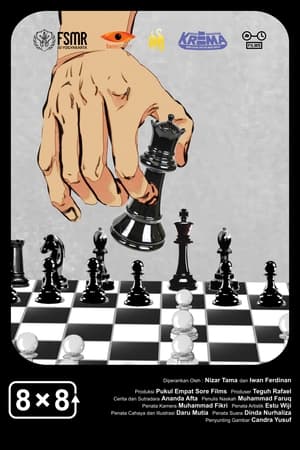
Based on the game of Chess that delves into the conflicts and confrontations of people between the rich and poor class and high and low strata of society. How does an ordinary boy, from the community of sanitation workers, become a grandmaster?
Maggie Cole is a research scientist who, after the sudden death of her husband, takes a position as an on-call doctor in an inner-city clinic. There, she must fight a battle on two fronts: against the medical conditions endangering her patients and against sexism toward a female doctor.
Chess is Henry's obsession. Unfortunately, his determination in winning, plus his never-ending battle against mental health, causes Henry's life to unravel.
A young woman, married to a wealthy man, but miserably lonely; trapped within a world ruled with an iron fist. Katerina is driven by a lust for life and for love. Her husband, though, is impotent; her father-in-law a tyrant. No wonder, then, that she longs to free herself from this yoke. When Sergei starts work on the family estate, she sees in him a chance for salvation. However, their subsequent affair marks the beginning of a descent into crime.
Jewish family man Marvin leaves his wife and son for a male lover during the height of the AIDS crisis in 1980s New York City.
An interesting look at love destroyed by the demon of drugs, which uses opera singing instead of spoken word. A story about the relationship of two young people and drug addiction.
During the height of the Cold War, American chess prodigy Bobby Fischer finds himself caught between two superpowers when he challenges the Soviet Empire.
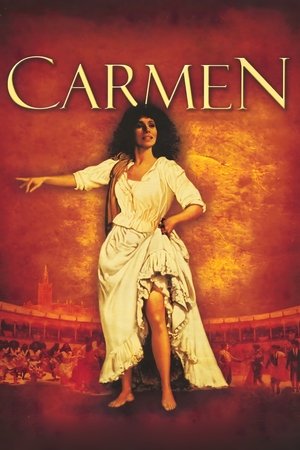
Richard Eyre’s stunning new production of Bizet’s opera was the talk of the town when it was unveiled on New Year’s Eve 2009. Elīna Garanča leads the cast as the iconic gypsy of the title—a woman desired by every man but determined to remain true to herself. Roberto Alagna is Don José, the soldier who falls under her spell and sacrifices everything for her love, only to be cast aside when the toreador Escamillo (Teddy Tahu Rhodes) piques Carmen’s interest. With dances created by star choreographer Christopher Wheeldon and conducted by rising maestro Yannick Nézet-Séguin, this Carmen brings every aspect of Bizet’s tale to thrilling life, from its lighthearted beginning to its inevitably tragic climax.