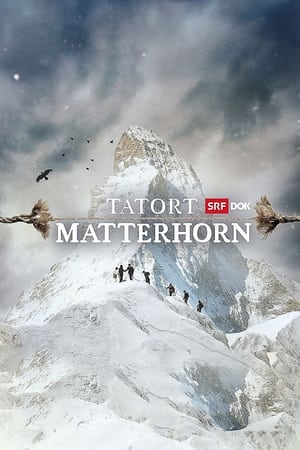
A fascinating chronology of 100 years of mountain film history in the Alps. This documentary focuses primarily on films shot on the Matterhorn, the Eiger, and the Grandes Jorasses, considered until the 1930s as the "last problems of the Alps," and shows the evolution of mountain filmmaking through numerous excerpts from documentaries and feature films – notably on the Matterhorn in 1901. The genre, appropriated as a means of mass exaltation by "fascist" regimes during the Second World War, was reinvented in the 1950s by Gaston Rebuffat, Marcel Ichac, and Lionel Terray in the Mont Blanc massif, avant-garde figures of French mountain cinema, who reintroduced, beyond performance, the values of the mountains – and in color – poetry, humor, and sharing among people from all walks of life.
Der Eiger "Ersteigung der Nordwand"
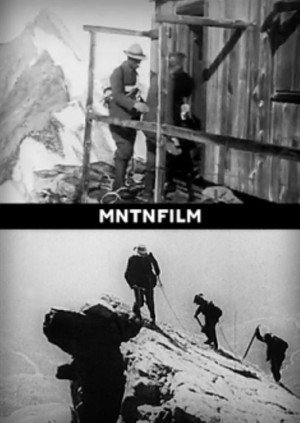
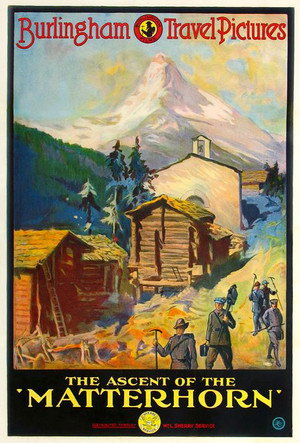
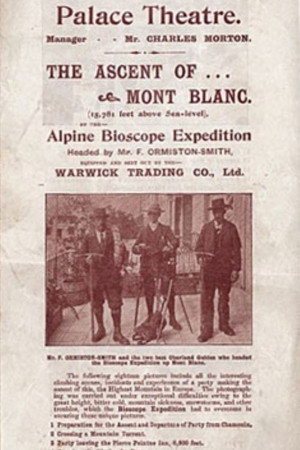
On september 28th, 1903, the Urban Mountaineering Expedition, headed by Frank Ormiston-Smith, left Zermatt to attempt the conquest of the Matterhorn. On the 29th, the conquest was completed by the filming of the panorama from the actual summit of the mountain. The film consists of 20 scenes and illustrates the whole ascent from Zermatt through the Hornli Ridge. A copy of the film was found in Zermatt in 1953 and was was erroneously attributed to Frederick Burlingham and dated 1901. Since then, the film has been widely publicized as the first mountain film under the title of 'Cervino 1901', but this is incorrect.
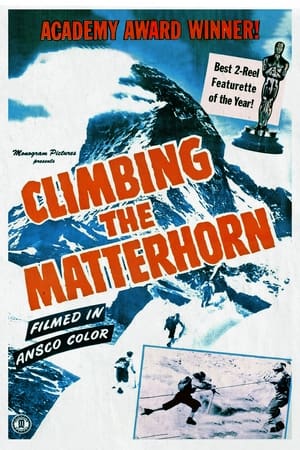
Starting from the Swiss village of Zermatt, two people and a guide make a perilous ascent of the Matterhorn. Local villagers mount a torchlight rescue of a British couple trapped on the famous mountain. Irving Allen shot footage for this documentary while filming his feature film 'High Conquest'. Filmed in Ansocolor, the documentary won the Academy Award for Best Short Film in 1947.
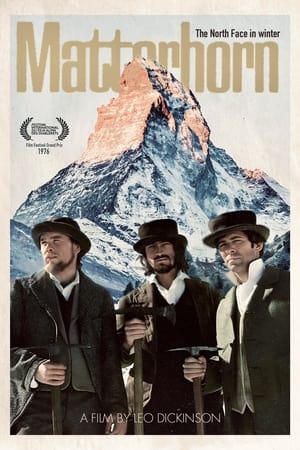
The first filmed winter ascent of the north face of the Matterhorn. To set the scene, the tragic story of Edward Whymper's first ascent is skillfully pieced together. The modern expedition, a team of three British climbers, is also plagued with epics: Eric Jones is hit by an avalanche and can only come to a dangerous stop at the edge of a 1000 foot drop. Then the worst storm ever recorded in Zermatt hits the Matterhorn. With time and weather against them, the team is forced to climb in the dark as thunderstorms rumble around them. This adventure captures the skill and courage of the climbers, their agony and tension, and the beauty of the assault on this spectacular mountain. Grand Prize at the Les Diablerets festival (Switzerland) in 1976.
Cervino - La montagna del mondo
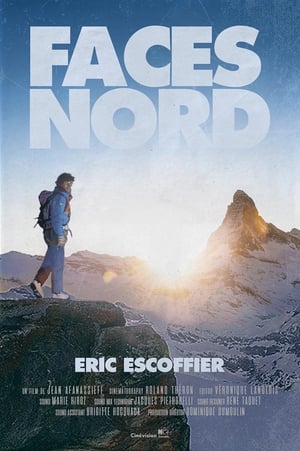
March 12, 1987. The young French mountaineer Eric Escoffier prepares his equipment, very reduced in material and food. He leaves the next day and intends to chain three north faces in the Alps: Eiger, Matterhorn and Grandes Jorasses. The ascent of the first summit, the Eiger is slow, difficult and full of pitfalls. It takes 17 hours to reach it. Without recognizing the terrain -he prefers to improvise- the mountaineer continues through the Matterhorn. When night falls, anxiety is felt on Zermatt's side. Help is organized to pick him up. Despite his refusal to return, Escoffier is finally hoisted. Christophe Profit, a few hours earlier, managed the chain of three summits.
The first ascent of the Matterhorn was made on July 14, 1865 by Edward Whymper, Francis Douglas, Charles Hudson, Douglas Hadow, Michel Croz and two guides from Zermatt, Peter Taugwalder father and son. Douglas, Hudson, Hadow and Croz are killed on the descent after Hadow slips and drags the other three men down the north face. Whymper and the two Taugwalders, who survive, are later accused of having cut the rope that connected them to the rest of the group so as not to be dragged into the fall, but the ensuing investigation finds no evidence of their guilt and they are acquitted. The Matterhorn is the last great peak in the Alps to be conquered and its ascent marks the end of the golden age of mountaineering. One hundred and fifty years later, a team undertakes the same expedition in order to unravel the mystery.
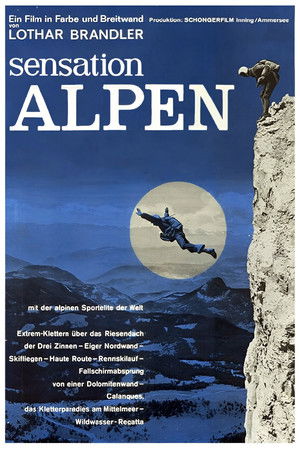
From Trento to Chamonix, via Zermatt; from the Morgiou cove to the Eiger's north face; from Planica to the Lavaredo peaks, the Alps are depicted, illustrated, and magnified in all their unique and sublime beauty, through the sports practiced there and the most typical customs and traditions of their inhabitants. A helicopter rescue and a parachute jump from the Red Wall by Wolfgang Weizenbocks are experiences not to be missed.
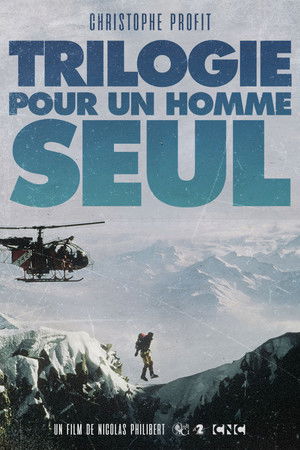
The most legendary 'sequence' ever achieved by a mountaineer: on 12 and 13 March 1987, in 40 hours, 26-year-old Christophe Profit managed to climb three of the highest north faces in the Alps, in winter: Grandes Jorasses, Eiger, and Matterhorn. But over and above this 'coverage' of the feat, we discover the wings, the story behind the project, the peaks and troughs of the preparations for it, and the personality of the man behind the climbs, a dancer on sheer rock faces, focusing all the energy and reflexes of life itself in his fingertips.
It was a dream of superlatives: to establish a new alpine skiing downhill classic at the foot of the Matterhorn. Sponsors, athletes and fans were on hand, but the weather didn't cooperate. A reflection on the relationship between sports, tourism and climate change.
Traumberg Matterhorn "Aufstieg über den Hörnligrat zum Gipfel des Matterhorn"
Struggle for the Matterhorn (German: Der Kampf ums Matterhorn) is a 1928 German-Swiss silent drama film co-directed by Mario Bonnard and Nunzio Malasomma and starring Luis Trenker, Marcella Albani, and Alexandra Schmitt. The film is part of the popular cycle of mountain films of the 1920s and 1930s. Art direction was by Heinrich Richter. Based on a novel by Carl Haensel, the film depicts the battle between British and Italian climbers to be the first to climb the Matterhorn. Trenker later remade the film as The Challenge in 1938.
Famous British mountaineer Winter wants to climb a difficult summit, the Citadel. He goes to a small village but no guide wants to accompany him. A young man from the village, Rudi Matt, whose father died fifteen years earlier during an attempt to climb the Citadel, is determined to accompany him, with the help of his uncle. Winter also manages to hire a guide from a neighboring village and competitor, Emil Saxo. The roped party of four men then begins the ascent of the still untouched summit.
In a dystopian Switzerland that has fallen under the fascist rule of an evil cheese tyrant, Swiss mountain girl Heidi transforms herself into a kick-ass female fighting force who sets out to liberate the country from a cheese-fueled machinery of hate.
In the 1980s, Catherine Destivelle, nicknamed "Rock Queen," won several world titles in climbing competitions. In the early 1990s, weary of competitions, world championships, and the pressure of elite sport, she chose to return to the essentials: the mountains, alone and facing the challenge. In 1991, she established a new route—solo—on the west face of the Drus in 11 days. Her ascent garnered admiration, but for many, she remained primarily a rock climber. On March 9, 1992, around 5:00 a.m., she proved the skeptics wrong. After months of preparation on ice with her friend Jeff Lowe, she set off alone on the icy north face of the Eiger, and 17 hours later, she reached the summit. The mountaineering world bowed in awe; she entered the pantheon of mountaineering. Catherine Destivelle will be the first woman to have climbed the three great north faces of the Alps: the Grandes Jorasses, the Matterhorn and the Eiger – solo.
Timo Novotny labels his new project an experimental music documentary film, in a remix of the celebrated film Megacities (1997), a visually refined essay on the hidden faces of several world "megacities" by leading Austrian documentarist Michael Glawogger. Novotny complements 30 % of material taken straight from the film (and re-edited) with 70 % as yet unseen footage in which he blends original shots unused by Glawogger with his own sequences (shot by Megacities cameraman Wolfgang Thaler) from Tokyo. Alongside the Japanese metropolis, Life in Loops takes us right into the atmosphere of Mexico City, New York, Moscow and Bombay. This electrifying combination of fascinating film images and an equally compelling soundtrack from Sofa Surfers sets us off on a stunning audiovisual adventure across the continents. The film also makes an original contribution to the discussion on new trends in documentary filmmaking.
Kindness, creativity, inclusivity, and a touch of magic makes the world a brighter place. Explore the story and impact of Canadian entertainer Ernie Coombs and his iconic series, Mr. Dressup, which enriched the lives of five generations.
A tribute to Nikos Kazantzakis, the great writer and thinker. Researchers, university professors, who dealt with the great Cretan and world creator, but also ordinary everyday people, tell stories they lived and heard, outlining his life and work. His relationship with God, travel, love, philosophy, friendship, love, music and dreams are recorded in filming that took place in Crete, Aegina, Thessaloniki and Athens. The tribute is the truth of his personal path, a path that is identified with his life and work.
“Puntapie” is kicking the ball with the tip of the foot. Eight of the best Latin American football players face each other in a special documentary.