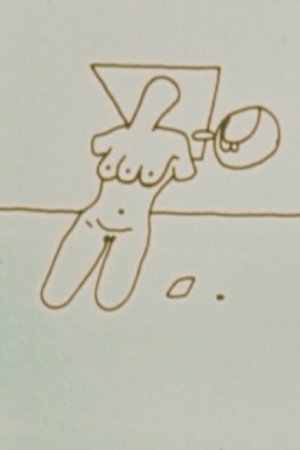
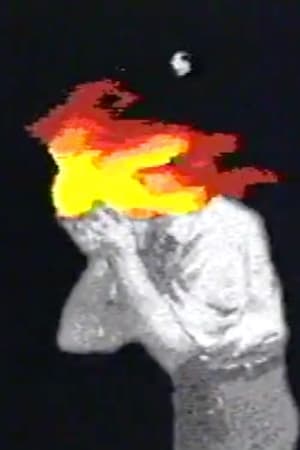
In Flesh Flows we see a balance of Beckett’s keen drawing ability, in the probing erotic forms, and his technical acuity, which transforms the carnal images into a compelling, transcendent experience. Preserved by the Academy Film Archive in partnership with iotaCenter and National Film Preservation Foundation in 2007.
Essai 2095
Dialogue between a man from Earth and an alien about the advantages and darker sides of earthly civilization.
An animated poem about a dog, her human, and the consequences of a nasty habit.
It is said that if a man is fading away, he sees his life running quickly in front of his eyes. What does a hundred-year old film strip see before it gives way to digital vehicles? Does it see broken frames, scratched film stock or something else? This is a film about time and its ephemeral nature.
Breathe deeply: in 3 years, your molecules will circle Earth, as today’s oxygen came from nature.
Two girls explore their relationship and what it means to be in the world and be vulnerable in this hand drawn graphite animation.
One of Rimmer's early 2000s video works which he made by hand-painting 35mm film, running it on a flatbed viewer, and shooting it off the screen with a video camera to then subject it to further manipulation.
A disturbing cinematic opera from Melbourne film-maker, Michael Lee, presenting an intense emotional collage of film clips, original footage and complex object animation, structured loosely in the form of a Catholic Mass, to communicate the film-maker's traumatic Catholic experience. The film is intended in part as 'anti-imagery' in response to the iconography of Catholicism.
Dilution is an experimental short film that explores the transit between resistance and (di)ssolution, between holding and releasing and a path towards obsessive repetition. They are layers, exposed pores, matter that oscillates between remaining or disappearing. The sound is not a background, but a puncture: friction, tearing, water that drags what still persists. A sensorial testimony of what refuses to vanish completely.
In 2057, a smart house remains standing in a world without humans after a nuclear war, along with the robots inside it. The robots continue their daily routines meaninglessly. While humanity has been destroyed by a power of its own making and greater than itself, this artificial order, in parallel, is also unable to withstand the greater force of nature for long.
Composed entirely of AI-generated visuals and providing an abstract representation of the evolution of AI video, processed entirely through a VCR.
An essay in colour harmonics and visual overtones. Conceived and produced as part of the Images Film Festival's Minute Movies.
The enduring romance of the lines. A visual exploration of Dave Brubeck's jazz classic "Take Five".
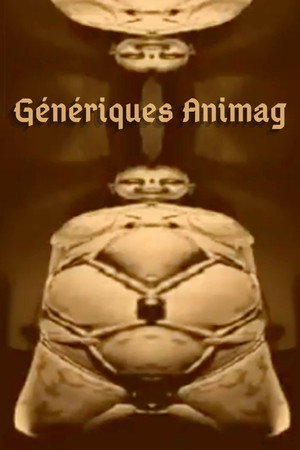
Three opening sequences for Arte’s animation magazine: Animag, featuring a series of distorted, quivering and mirrored human figures.
After a flat tire leaves her stranded in the woods, a woman revisits haunting memories of her self-destructive tendencies on the finger nails. As she peels the skin from her fingers, each strip draws her deeper into the past. With every layer, she steps closer to the hidden child within herself.
La dissolution du paysage
An experimental short from Oskar Fischinger
The Possible Fog of Heaven is a consideration of the dimensionality of metaphysics and the metaphysics of dimensionality. Elvis speaks for the first time from the afterlife, describing in voice over and graphic text, his experience in Heaven. The Structure of the tape follows the King’s last prescription.
"Leiberg embarks on a search for the interaction between painting and improvised music, tinkering with sound collages sets language and sounds against each other (...) Leiberg works with real-movie sequences and uses his pictorial color and form vocabulary as a design element in the film. He primarily uses the resulting films in their capacity as a depot of moving light images in order to project them onto the bodies of dancers in the performances. (Christoph Tannert in "Gegenbilder", p. 39f;)