This documentary follows two long-lost Ukrainian friends, Arsalan and Nastya, as they reconnect in Germany after russia's full-scale invasion against Ukraine. Arsalan, an actor now in Frankfurt after time in a refugee camp, and Nastya, journalist and producer who stayed in Kyiv, reflect on the divergent paths their lives have taken due to the war. Through their conversations and therapy sessions, the film explores themes of displacement, identity, and the emotional impact of war on youth.
Over the course of a single night, a convoy of cars carries intimate conversations on the representation of Black bodies in France.
Edward Said's book Orientalism has been profoundly influential in a diverse range of disciplines since its publication in 1978. In this engaging and lavishly illustrated interview he talks about the context within which the book was conceived, its main themes, and how its original thesis relates to the contemporary understanding of "the Orient" as represented in the mass media. "That's the power of the discourse of Orientalism. If you're thinking about people and Islam, and about that part of the world, those are the words you constantly have to use. To think past it, to go beyond it, not to use it, is virtually impossible, because there is no knowledge that isn't codified in this way about that part of the world." -Edward Said
Openland is an art film guided by issues surrounding micro states and its derivative definitions. Through intertwining interviews, meta-narratives, and digital landscapes, Openland unfurls a dialogue between consciousness, individuality and collectivity.
Paradise Morbid
MORENA tells the uplifting story of the Philippine National Surf Athlete Ikit Agudo, who overcame the pressure to blend into a society obsessed with skin whitening. Within the ocean, she found happiness, strength, and pride in her roots. Inspiring young girls around the world to embrace who they truly are. In the Philippines, skin-whitening remains a billion-peso industry, a legacy of colonial beauty ideals that for generations have led many to neglect their true identity and natural beauty.
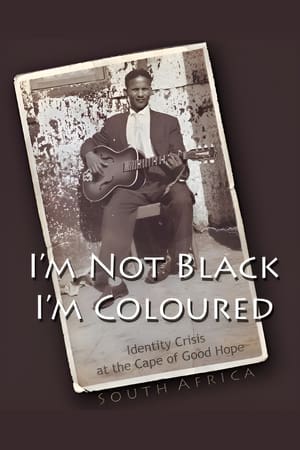
In the wake of one of the worst social experiments in the history of mankind, 'I'm not Black, I'm Coloured' is one of the first documentary films to look at the legacy of Apartheid from the viewpoint of the Cape Coloured. A people who in 1994, embraced the concept of Desmond Tutu's all encompassing 'rainbow nation', but soon thereafter realized that freedom, privilege, economic growth and equality would not include them. A people who for more than 350 years has been disregarded, ignored, belittled, and stripped of anything they can call their own enduring a complex psychological oppression and identity crisis unparalleled in South African history.
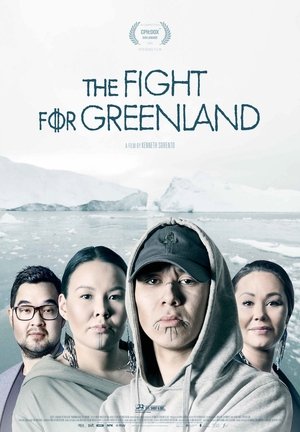
The world's largest island has been part of Denmark since 1721, but a significant majority of the 56.000 inhabitants now want independence. They feel their culture and language is threatened and is the main reason for the many suicides among young people. But the Danish speaking Greenlanders feel discriminated and want to keep the ties to Denmark. The film follows four strong young Greenlanders, who each in their own way insist on taking responsibility for the future of their country. The documentary explores the difficult balance between the right to self-determination and xenophobic nationalism. Between traditional culture and globalization.
What if you are made to feel ashamed when you speak your "mother tongue" or ridiculed because of your accent? "Pidgin: The Voice of Hawai'i" addresses these questions through its lively examination of Pidgin - the language spoken by over half of Hawai'i's people.
What kind of power is accessible through the discovery of a voice? Morgan Quaintance interlinks two anti-racist and anti-authoritarian liberation movements in South London and Chicago’s South Side with his own biography to explore what happens when speech is ignored, and the voice fades.
The Metaphor That Became a Room is a psychological drama exploring identity, communication, and the struggle for self-understanding. Divided into two parts, the film first delves into the protagonist’s frustration with the urge to persuade others, realizing that over-explaining only distorts meaning. A note from the past echoes a hard truth: “Someone’s unwillingness to understand will always outweigh your effort.” In A Symphony of Unfinished Selves, the narrative shifts inward, revealing the protagonist’s fractured identity. Trapped in a metaphorical room built from illusions and contradictions, he reflects on his dual persona—the social facade and the hidden, lost self. The film questions how we see ourselves versus how others see us and whether true self-recognition is possible. Through minimalist dialogue and layered symbolism, the film captures the silent tension between who we are, who we appear to be, and who we long to become.
Julie Wyman’s quest to find her place within the little people (LP) community at a moment when dwarf identity is poised to radically change. As Julie unpacks the rumors of “partial dwarfism” in her family she finds that hers is the last of a body type she has inherited. She joins forces with a group of dwarf artists to confront the legacy of being tokenized and put on display.
7-year-old Sasha has always known that she is a girl. Sasha’s family has recently accepted her gender identity, embracing their daughter for who she truly is while working to confront outdated norms and find affirmation in a small community of rural France.
A verité legal drama about Judge Kholoud Al-Faqih, the first woman appointed to a Shari'a court in the Middle East, whose career provides rare insights into both Islamic law and gendered justice.
La reserva del silencio
T'Day
Experimental ethnographic digital feature exploring International student and teacher identity expressed through musical performance at the University of Jinan, Shandong, China.
Talking About Visibility
Actress and filmmaker Robyn Adams discusses her experiences with autism, gender identity, and learning to embrace her flaws. Also, she's Frankenstein's Monster now.
How are biographies charted? How is identity constructed? Can we relive our past, reinvent it, rearrange or recycle it? Can we really know who we are if we ignore where do we come from?