These are the first images shot in the ALN maquis, camera in hand, at the end of 1956 and in 1957. These war images taken in the Aurès-Nementchas are intended to be the basis of a dialogue between French and Algerians for peace in Algeria, by demonstrating the existence of an armed organization close to the people. Three versions of Algeria in Flames are produced: French, German and Arabic. From the end of the editing, the film circulates without any cuts throughout the world, except in France where the first screening takes place in the occupied Sorbonne in 1968. Certain images of the film have circulated and are found in films, in particular Algerian films. Because of the excitement caused by this film, he was forced to go into hiding for 25 months. After the declaration of independence, he founded the first Algerian Audiovisual Center.
Alone in a small white house on the edge of national road 1, the Trans-Saharan road, which connects Algiers to Tamanrasset crossing the immensity of the desert, Malika, 74, one day opened her door to the director Hassen Ferhani, who came there to scout with his friend Chawki Amari, journalist at El Watan and author of the story Nationale 1 which relates his journey on this north-south axis of more than 2000 km. The Malika of Amari's novel, which Ferhani admits to having first perceived as a "literary fantasy", suddenly takes on an unsuspected human depth in this environment naturally hostile to man. She lends herself to the film project as she welcomes her clients, with an economy of gestures and words, an impression reinforced by the mystery that surrounds her and the rare elements of her biography which suggest that she is not from the region, that she left the fertile north of Algeria to settle in the desert where she lives with a dog and a cat.
For 18-year-old Finnish–Kosovan Fatu, a simple visit to the grocery store feels as nerve-racking as a lunar expedition: for the first time in his life, he’s wearing makeup in public. Luckily his best friend Rai, a young woman on the spectrum of autism, is there to ferociously support him through the voyage.
In an age when women were incapable of joining the artistic dialogue, Lilias Trotter managed to win the favour of celebrated critics.
Prehistoric Women
Festival panafricain d'Alger is a documentary by William Klein of the music and dance festival held 40 years ago in the streets and in venues all across Algiers. Klein follows the preparations, the rehearsals, the concerts… He blends images of interviews made to writers and advocates of the freedom movements with stock images, thus allowing him to touch on such matters as colonialism, neocolonialism, colonial exploitation, the struggles and battles of the revolutionary movements for Independence.
It is the evocation of a life as brief as it is dense. An encounter with a dazzling thought, that of Frantz Fanon, a psychiatrist of West Indian origin, who will reflect on the alienation of black people. It is the evocation of a man of reflection who refuses to close his eyes, of the man of action who devoted himself body and soul to the liberation struggle of the Algerian people and who will become, through his political commitment, his fight, and his writings, one of the figures of the anti-colonialist struggle. Before being killed at the age of 36 by leukemia, on December 6, 1961. His body was buried by Chadli Bendjedid, who later became Algerian president, in Algeria, at the Chouhadas cemetery (cemetery of war martyrs ). With him, three of his works are buried: “Black Skin, White Masks”, “L’An V De La Révolution Algérien” and “The Wretched of the Earth”.
This FitzPatrick Traveltalk short visits the cities of Casablanca, Rabat, and Marrakesh in Morocco, as well as the city of Algiers in Algeria.
In 1996 I took the conservatory exam. I missed it. A year ago I was asked to do a masterclass on acting in cinema. I went there. I met a lively, joyful and passionate youth. Among my students there was Clémence. The following year, she asked me to film their last show. I felt her urgency and the fear she had of leaving this mythical place. So I accepted. By filming this youth, I revisited mine.
By meeting his former comrades in combat, the film follows the journey of Yves Mathieu, anti-colonialist in Black Africa then lawyer for the FLN. When Algeria became independent, he drafted the Decrees of March on vacant property and self-management, promulgated in 1963 by Ahmed Ben Bella. Yves Mathieu's life is punctuated by his commitments in an Algeria that was then called "The Lighthouse of the Third World". The director, who is his daughter, returns to the conditions of his death in 1966.
Known for her intimate films, director Kim O’Bomsawin (Call Me Human) invites viewers into the lives of Indigenous youth in this absorbing new documentary. Shot over six years, the film brings us the moving stories, dreams, and experiences of three groups of children and teens from different Indigenous nations: Atikamekw, Eeyou Cree, and Innu. In following these young people through the formative years of their childhood and right through their high school years, we witness their daily lives, their ideas, and aspirations for themselves and their communities, as well as some of the challenges they face.
Move over, King Tut: There's a new pharaoh on the scene. A team of top archaeologists and forensics experts revisits the story of Hatshepsut, the woman who snatched the throne dressed as a man and declared herself ruler. Despite her long and prosperous reign, her record was all but eradicated from Egyptian history in a mystery that has long puzzled scholars. But with the latest research effort captured in this program, history is about to change.
Every year, approximately 800 Sahrawi boys and girls leave the refugee camps to study in Cuba, Algeria and Libya… 15 years later, they return biologists, doctors, engineers… but when they get back to the refugee camps all they have is the desert…
Young people who decide to leave their home to seek opportunities for the future face different difficulties on a daily basis. The inevitable estrangement with family and lifelong friends. The constant lack of understanding, the coldness and individualism of the new city. The stress and even the feeling of being a stranger back home. This journey to the future sets out issues about identity, nostalgia and courage, while they fight to find their place in a changeable world.
Moudjahidate
The autobiographical account of the tormented life of a witness of the century: Louisa Ighilahriz, activist and leading figure in Algerian independence. A student, she joined the independence struggle at the age of 20, joining the ranks of the FLN on the eve of the Battle of Algiers in late 1956 under the name Lila. She took part in the high school students' strike, then fled into the maquis when she was actively sought after. She was part of the French FLN support network of "suitcase carriers" during the Battle of Algiers. Seriously wounded alongside her network leader, Saïd Bakel, during an ambush in 1957, hospitalized and then imprisoned, she suffered numerous tortures in French prisons. She will be saved from certain death by an anonymous person, she will seek, for forty years, to find him just to show him her gratitude... Emblematic of the painful Franco-Algerian history, Louisa's story is poignant and imbued with humanism.
This film presents, through the eyes four students - Gemma, Colo, Cristian and Mireia - their experience of the trip, the feelings that moved them, the work carried out in the camps and, above all, their contribution to raising awareness of the unresolved difficulties the Sahrawi people face.
Perdus entre deux rives, les Chibanis oubliés
In May 2005, after 30 years of Moroccan occupation, Saharawi students initiated a series of peaceful demonstrations demanding their right to the United Nations-mandated referendum on Western Saharan independence. The Moroccan authorities responded with a brutal campaign of repression, detaining and torturing human rights activists as well as Saharawi students and children as young as eight years old.
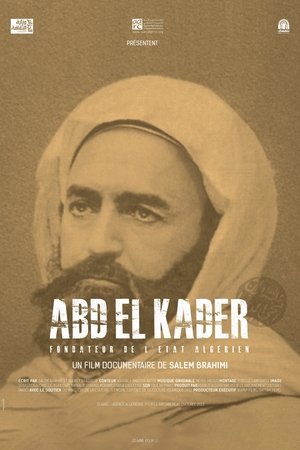
Illustrated with archival photographs, animations and live action, this film explores the history and historical and spiritual heritage of Emir Abd El-Kader. Algerian leader of the 19th century, was admired by Abraham Lincoln and celebrated to this day by the Red Cross as a great humanitarian. Emir Abd el-Kader, the man who challenged the French armies from 1832 to 1847 before creating the bases of a real Algerian state, is today considered by independent Algeria as one of the most outstanding figures. of its history. The nobility of his attitude after his capture and the very effective protection he brought to the Christians of Damascus at the end of his life also earned him great prestige among his former adversaries. A documentary told in dialectal Arabic by the voice of Amazigh Kateb.