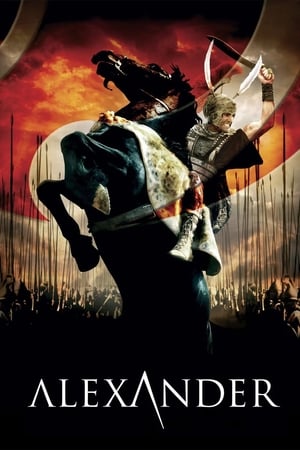
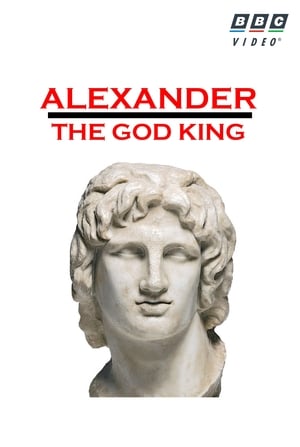
Alexander, the King of Macedonia, leads his legions against the giant Persian Empire. After defeating the Persians, he leads his army across the then known world, venturing farther than any westerner had ever gone, all the way to India.
The 300 Spartans is an account of the 480 B.C. Battle of Thermopylae, in which the Greek Spartan King Leonidis, played by Richard Egan, led a remarkably small number of Greek Sparta to victory over an invading Persian army led by evil King Xerxes that was thought to number over 25,000. This spectacular conflict gave the Grecians enough time to organize a force to ultimately repel the Persians, and thus change the course of Western civilization.
In year 1250 B.C. during the late Bronze age, two emerging nations begin to clash. Paris, the Trojan prince, convinces Helen, Queen of Sparta, to leave her husband Menelaus, and sail with him back to Troy. After Menelaus finds out that his wife was taken by the Trojans, he asks his brother Agamemnon to help him get her back. Agamemnon sees this as an opportunity for power. They set off with 1,000 ships holding 50,000 Greeks to Troy.
Oidipus Rex
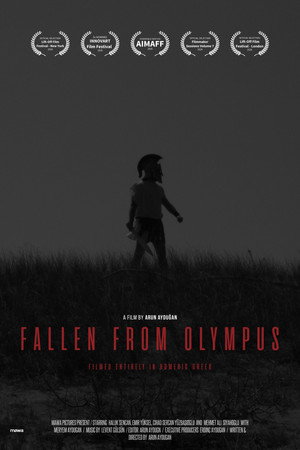
A Greek soldier leads the fight against an invading Persian army.
A performance film following the young ballerinas of Na Ponta dos Pés, an art school founded by Tuany Nascimento in Rio de Janeiro.
A visual documentary of Einstürzende Neubauten, the German underground band, by Japanese cult director Sogo Ishii, made during their 1985 tour of Japan. The band makes an elaborate and remarkably choreographed appearance in the ruins of an old ironworks which was scheduled for demolition; footage of same was incorporated into the movie and a brief appearance on stage.
Keratin is a collaboration with the London Sinfionetta, visually responding to Gavin Higgins' Seven Welsh Folk Songs: I. Dacw 'Nghariad i. The film tells the journey of a mating of elements, two bodies grieve over a lost third: a child separated from their womb. The three bodies bound by their keratin, regain connection in a wombic journey which spiritually networks the three into a fused collective body.
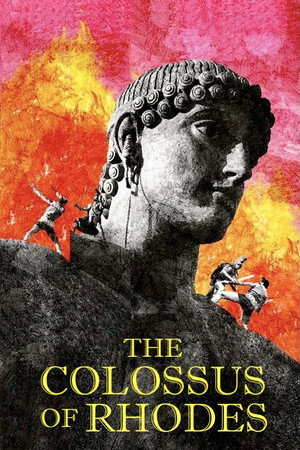
While on holiday in Rhodes, Athenian war hero Darios becomes involved in two different plots to overthrow the tyrannical king, one from Rhodian patriots and the other from sinister Phoenician agents.
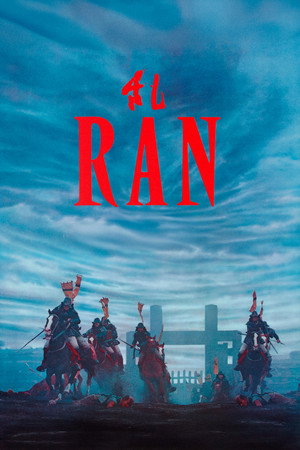
Shakespeare's King Lear is reimagined as a singular historical epic set in sixteenth-century Japan where an aging warlord divides his kingdom between his three sons.
A mesmerizing showcase of artistic excellence, where intricate choreography and cinematography tell a story of pure, unbridled joy and creativity. Its about honoring the past, recognizing the present and looking into the future.
A man kills a monster and a woman becomes a goddess.
Set in a derelict theater, “Heartache” deploys tensely expressive movement in a darkly playful take on the dynamics of seeing and being seen. At once kitschy and confrontational, the dancers move with deadpan gazes through tight trios with razor-sharp precision and evocative gestures. Glimpses of private moments and vivid bodily imagery highlight the tension between the individual and society.
Athens, 405 B.C. The city finds itself devoid of talented poets. Consequently, the god Dionysus, accompanied by his slave Xanthias, embarks on a journey to the Underworld to retrieve the renowned tragedian Euripides and to save the city of Athens. Meanwhile, Heracles, Dionysus' brother, receives a visit from King Admetus, who is mourning the recent loss of his wife Alcestis. Frogs is the world’s first (feature-length) film entirely spoken in Ancient Greek. Apart from some self-written passages, the tragicomedy is directly based on the following original works of Ancient Greek literature: The Frogs (405 B.C.) by Aristophanes Alcestis (438 B.C.) by Euripides Symposium (380 B.C.) by Plato Battle of the Frogs and Mice (3rd century B.C.)
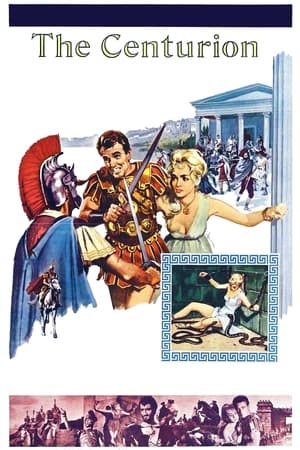
A Roman soldier falls in love with the daughter of a Greek city's anti-Roman leader.
A false accusation leads the philosopher Socrates to trial and condemnation in 4th century BC Athens.
Following the Trojan War, a soldier facing death encounters Thanatos and is drawn into a mythological confrontation about life, fate, and the meaninglessness of war.
A fashion influencer collapses on set and falls into a dream disturbingly real. As she struggles to escape, she finds herself drawn closer to a truth she’s never dared to face.
AKIN examines the tension between collective synchronicity and the hidden inner reality of the individual. One protagonist describes her overwhelming feelings, while three other figures appear as aesthetic mirrors of her inner states. In a world that demands perfection and smooth functioning, everyday life continues like a mechanical system even when the inside has long overflowed. The bodies increasingly come under pressure until the structure discharges in synchronous, yet faulty movements. The encounter with an antagonist opens a moment of silent perception and raises the question of whose emotions are actually at work in the space. AKIN reveals a raw, deeply human choreography between adaptation and authentic expression.
An unnamed passer-by is forced to trace a circular route inside an abandoned tram station, facing loss and time. The broken walls act as a channel, transmitting fragmentary, blurred and analogical memories.