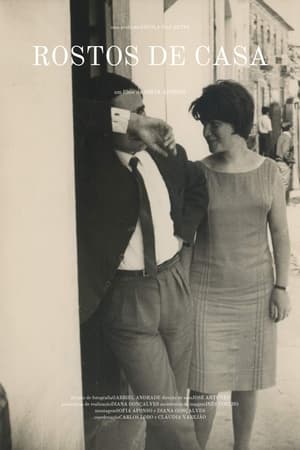
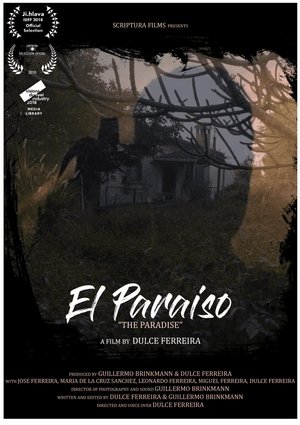
Abroad at the time of her death, a grandson returns to revisit the house of his late grandmother, now occupied by another family. A reflection on the love for a home where one grew up and yet made by a grandmother missing another life, in another house, in another country.
Thanks to DNA, this documentary establishes the identity of Marilyn's biological father, thus revealing her new paternal family, 60 years after the icon's death.
The story is set at the beginning of the 20th century in Sicily. Salvatore, a very poor farmer, and a widower, decides to emigrate to the US with all his family, including his old mother. Before they embark, they meet Lucy. She is supposed to be a British lady and wants to come back to the States. Lucy, or Luce as Salvatore calls her, for unknown reasons wants to marry someone before to arrive to Ellis Island in New York. Salvatore accepts the proposal. Once they arrive in Ellis Island they spend the quarantine period trying to pass the examinations to be admitted to the States. Tests are not so simple for poor farmers coming from Sicily. Their destiny is in the hands of the custom officers.
Boris was a Ukrainian-Canadian mountaineer whose love for mountains was deeply spiritual. Now, his family must face their first expedition without him as they take his ashes to Patagonia – a place he considered Heaven on Earth. A contrast of laughter and tears, BORIS is a story about finding meaning after loss, and the power of nature to heal and unite us.
Eliza Dushku takes on her homeland of Albania.
Home movie collection of the Bohulano Family of Stockton, CA. Footage dates between the 1950s-1970s.
Filmmaking icon Agnès Varda, the award-winning director regarded by many as the grandmother of the French new wave, turns the camera on herself with this unique autobiographical documentary. Composed of film excerpts and elaborate dramatic re-creations, Varda's self-portrait recounts the highs and lows of her professional career, the many friendships that affected her life and her longtime marriage to cinematic giant Jacques Demy.
Brenda’s first memories were of growing up in a loving white foster family, before she was suddenly taken away and returned to her Aboriginal family. Decades later, she feels disconnected from both halves of her life, so she goes searching for the foster family with whom she had lost contact. Along the way she uncovers long-buried secrets, government lies, and the possibility of deeper connections to family and culture.
Kekaiulu Hula Studio follows the Proclaimed Hula Halau of the same name, showcasing their twist on what the real reason for hula is and what life as a dancer in the halau is really like. Something previously unseen in the public eye.
The director explores the birth origins of actress Merle Oberon, traveling to Tasmania and India in search of the truth, but her quest ultimately results in probably more questions than it answers.
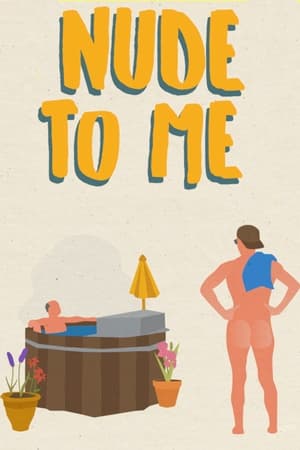
Danny Berish’s grandparents met at a nudist camp in 1949. In an effort to understand his grandparents’ radical lifestyle, he meets and mingles with members of Van Tan, Canada’s oldest naturist club.
A short documentary about wine, vulnerability, and queer experiences. It explores the effects of alcohol on intimate conversations and the tone of discourse between young adults, taking into account that this is a method of facilitation often used during social interactions.
A lonely, heartbroken man, Philip, builds his own radio in an attempt to make contact with his wife, who is lost in space. He won't lose hope, but will he reach her?
Stone Street documents the life and experiences of a Trinidadian diaspora family and their enduring connection to the long standing family home in Port of Spain. Through the intersecting journeys of this extended and extensive family, the filmmaker explores themes of home, belonging and identity in a life defined by the fragmentary nature of a migratory Caribbean culture. This experimental documentary combines a lyrical first person voice with a family archive of home made audio visual artifacts, interviews and events. As the documentary explores the fragmentary nature of Caribbean identity, it simultaneously celebrates the fragments of domestic memorializing found in home movies, videos and photographs. Stone Street uses these various forms to evoke the experience of a complex and diverse Caribbean and Caribbean diaspora identity.
Two middle-aged men embark on a spiritual journey through Californian wine country. One is an unpublished novelist suffering from depression, and the other is only days away from walking down the aisle.
Raj is a rich, carefree, happy-go-lucky second generation NRI. Simran is the daughter of Chaudhary Baldev Singh, who in spite of being an NRI is very strict about adherence to Indian values. Simran has left for India to be married to her childhood fiancé. Raj leaves for India with a mission at his hands, to claim his lady love under the noses of her whole family. Thus begins a saga.
“Don’t end up alone like I did.” This plea expressed by her grandmother before passing, haunts Tatiana, a single, 40-year-old documentary filmmaker. Filled with questions about what it means to “not end up alone,” Tatiana explores her grandma Teresa’s life: an imposing woman who owned an iconic movie theater, divorced three times and challenged the Dominican social norms of her era. The filmmaker embarks on a journey through family archives, old films and hundreds of letters, constructing —or trying to deconstruct— a story about love, expectations and solitude.
At the edge of the Yangtze River, not far from the Three Gorges Dam, young men and women take up employment on a cruise ship, where they confront rising waters and a radically changing China.
Fear and fascination arise in Muriel Grey when she remembers the figure of her father, who passed away when she was still very young. Thirty years after his death, Muriel will tell us the story of José Carlos Grey, a Black Holocaust survivor, freedom fighter in the Spanish Civil War and the French Resistance, and one of the only Black men known to have been imprisoned at the Mauthausen concentration camp in Austria.
Two young people walk together late at night, sharing a cigarette. They search the smoke for connection and finally say the things that have been long left unsaid.