A Russian and a German sniper play a game of cat-and-mouse during the Battle of Stalingrad in WWII.
A German Platoon is explored through the brutal fighting of the Battle of Stalingrad. After half of their number is wiped out and they're placed under the command of a sadistic captain, the platoon lieutenant leads his men to desert. The platoon members attempt escape from the city, now surrounded by the Soviet Army.
A Soviet documentary chronicling the Battle of Stalingrad, one of the turning points of World War II. Filmed on the front lines, it depicts the brutal devastation of the city, the resilience of its defenders, and the eventual Soviet counteroffensive that encircled and defeated the German 6th Army. Released internationally—with the U.S. version retitled The City That Stopped Hitler: Heroic Stalingrad—the film served both as a record of the Red Army’s victory and as a powerful work of wartime propaganda.
In the winter of 1943, against the background of battle scenes, a young German Lieutenant who increasingly distrusts the inhuman Nazi ideology struggles with the concept of war.
Featuring excerpts from diaries and letters written by local residents and soldiers from both sides, the documentary tells the story of the Battle of Stalingrad through the voices of those who lived it.
The story of the Battle of Stalingrad from the perspective of a Panzer commander and an officer in a penal battalion.
In July 1942, in the Second World War, the rearguard of the Russian army protects the bridgehead of the Don River against the German army while the retreating Russian troops cross the bridge. While they move back to the Russian territory through the countryside, the soldiers show their companionship, sentiments, fears and heroism to defend their motherland.
The convoluted and moving story of Russian writer Vassili Grossman (1905-64) and his novel Life and Fate (1980), a literary masterpiece, a monumental and epic account of life under Stalin's regime of terror, a defiant cry that the KGB tried to suffocate.
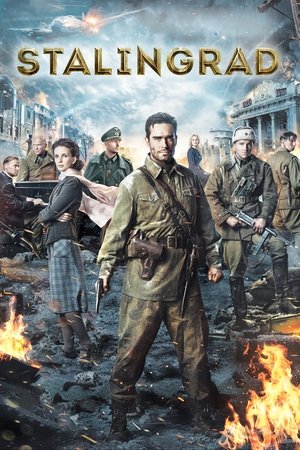
A band of determined Russian soldiers fight to hold a strategic building in their devastated city against a ruthless German army, and in the process become deeply connected to a Russian woman who has been living there.
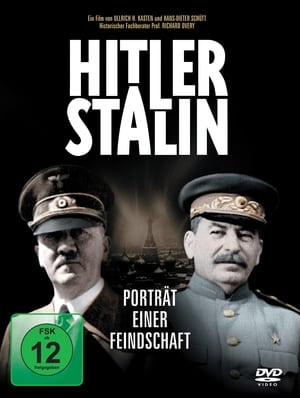
A double portrait of two dictators who were thousands of miles apart but were constantly fixated on each other.
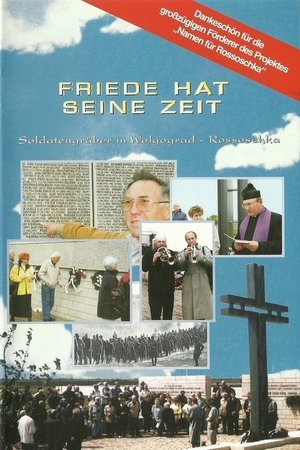
In November 1942, shortly after the Wehrmacht launched the attack on Stalingrad, the Soviet counteroffensive called "Operation Uranus" began. The German troops were encircled and met their deaths or fell into captivity. Only about 6000 German soldiers eventually returned from the Russian prison camps. This documentary focuses on the construction of a cemetery for the fallen soldiers in the battle for Stalingrad.
Two young Russian historians are going to Ukraine to take part in the reconstruction of the Lvov-Sandomierz operation in July 1944. On sight they fall into conflict with Ukrainian nationalists, and some magical twist of fate, move into the middle of real warfare from more than 60 years. Miraculously avoiding death at the hands of Ukrainian nationalists, caught in the middle of fighting between the Red Army and the Nazis.
Cremaster 5 is a five-act opera (sung in Hungarian) set in late-ninteenth century Budapest. The last film in the series, Cremaster 5 represents the moment when the testicles are finally released and sexual differentiation is fully attained. The lamenting tone of the opera suggests that Barney invisions this as a moment of tragedy and loss. The primary character is the Queen of Chain (played by Ursula Andress). Barney, himself, plays three characters who appear in the mind of the Queen: her Diva, Magician, and Giant. The Magician is a stand-in for Harry Houdini, who was born in Budapest in 1874 and appears as a recurring character in the Cremaster cycle.
Jeannie and her estranged business partner Amanda have a falling out leading to Amanda getting back with an ex and Jeannie bonding more with her non-paralyzed twin Lauren.
Two bumbling plumbers are hired by a socialite to fix a leak. A case of mistaken identity gets the pair an invitation to a fancy party and an entree into high society. As expected, things don't go too smoothly.
In Rain of the Children, Ward further explores the subject of his earlier film, In Spring One Plants Alone when, as a young film student he travelled to the Ureweras and documented the lives of an elderly Māori woman (Puhi) and her schizophrenic son (Niki).
In an Arctic village in 1931, British mapmaker Walter Russell selects 12-year-old Eskimo Avik as his guide. When the boy contracts tuberculosis, Walter flies him to a Montreal hospital, where Avik meets Albertine and is infatuated. A decade later, a grown Avik encounters Albertine again in London, where he's serving as a British combat pilot. Despite her relationship with Walter, she and Avik begin an affair.
Tony is a homosexual law student who quits his studies. With a van and a handful of cash, he hits the road hoping to become a salesman. This, however, turns out to be harder than he expected.
Seven lost children wander the night streets while their mothers await their return home.