Daniel, an arrogant, restless young Londoner is bored with his meaningless life. He seeks sympathy from his old Jewish grandmother, who sends him on a mission to Europe to find the grave of her father who disappeared during World War II.
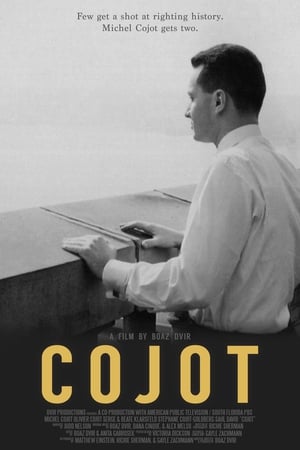
A documentary feature by award-winning filmmaker Boaz Dvir, “To Kill a Nazi” tells the story of a French family man who sets out in to kill his father’s Gestapo executioner and ended up playing a pivotal role in history’s most audacious hostage rescue.
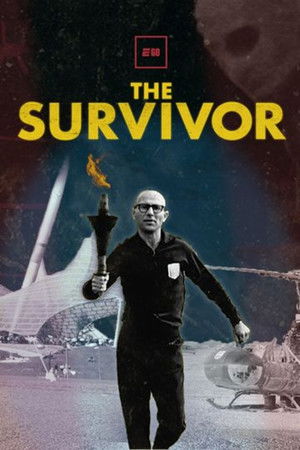
A powerful and emotional new episode of ESPN E60 will look back 50 years to one of the darkest moments in sports history – the Munich Massacre, when Palestinian terrorists murdered 11 Israeli sportsmen at the 1972 Summer Olympics. E60 will tell the story of one Israeli athlete, now 86, who survived, just as he had survived World War II and the Holocaust when he was a child.
This film, produced by the Museum’s Spielberg Film Archive staff, features 55 minutes of previously unseen interviews from the Claude Lanzmann Shoah Collection. SHOAH: The Unseen Interviews includes the testimony of Abraham Bomba, a barber in the Treblinka killing center, who escaped, was smuggled back into the ghetto, and tried to warn friends, who refused to believe what was happening; details of American responses to the Holocaust from Peter Bergson, who tried to rally American Jews and the US government to act sooner to save the Jews in Europe; and Ruth Elias’s harrowing tale of survival in Theresienstadt and Auschwitz-Birkenau.
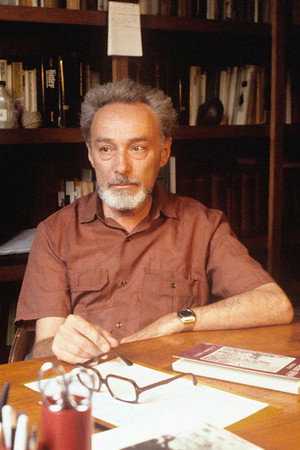
Thirty years after Primo Levi's death, Rai Cultura assembles a portrait that refuses to reduce him to the single label of Holocaust witness. Ten scholars, journalists and friends - among them the historian Carlo Ginzburg, the survivor and senator Liliana Segre, and his editor Ernesto Ferrero - each take up a different facet of a man who was novelist, poet, essayist, industrial chemist, amateur astronomer and mountaineer. Running through the film is the testimony of Ives Francisco, the young partisan arrested alongside Levi in the Aosta Valley in December 1943; the skis Levi left behind later carried Francisco into Switzerland and back again after the war, and give the film its title. Archive interviews return Levi's own voice on memory, work, writing and his Jewish roots.
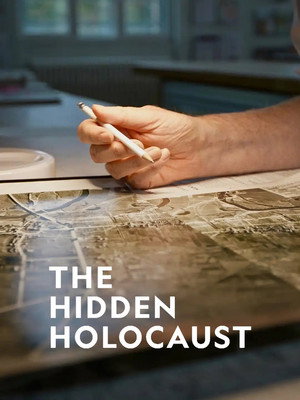
We think we know the full extent of the Holocaust. We don’t. Teams of investigators work to uncover the true scale of the Holocaust.
This 38-minute film introduces the history of the Holocaust. It begins by looking back at the major changes from 1918 to 1933 that created the political climate for the birth and rise of the Nazi Party in Germany. It explores the basis for the party’s support among ordinary Germans and the military, government, and business establishment before and after Hitler was appointed chancellor in January 1933.
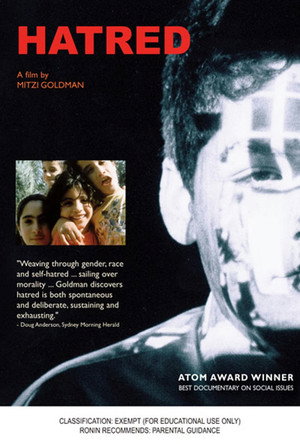
Born in Australia, filmmaker Mitzi Goldman embarks on a deeply personal journey back to her father's hometown in Germany to uncover the roots of the hatred and prejudice that forced her German-Jewish family to flee during the Holocaust. From this personal exploration of inherited trauma, the documentary expands globally to examine the mechanisms of intolerance. Through interviews and real-life footage, the film bridges the past and present, drawing parallels between historical European antisemitism, racial tensions in New York, and the geopolitical complexities of the Israeli-Palestinian conflict.
33-year-old Roman decides to tackle his drug addiction by undergoing group therapy as part of a community holed up on an isolated farm in the Šumava mountains. Twelve people, men and women of varying ages and social status, voluntarily subject themselves to a tough regime under the supervision of three therapists. Many of them have stared death in the face already – overdoses, suicide attempts, and aggression heightened by the use of hard drugs, outwardly affecting even the strongest of them. Each brings something of his past into the group, which he has to experience again, both for himself and for those assembled. Past anguish, wrongs and guilt give rise to new problems: in this thickening atmosphere of suspicion and lies, who can still be trusted? This intimate psychological drama deliberately sets out to break up the tight narrative form through retrospectives in which we learn about the past life of each individual.
The story of Lafayette, the 19 year old pacifist who takes the side of the Colonials during the American war of Independence.
In a lighthouse off the coast of Brittany, a young man slowly goes mad following a bite by a rabid dog while his father looks on helplessly. Thwarted by a raging sea, they are prisoners of the lighthouse. In a rustic Brittany village, a young bride waits, unaware of the tragedy.
An eccentric teacher (Marie-Chantal Perron) causes children at her elementary school to change the way they look at themselves.
Former boxer Iwano, teamed up with Sada and Maru, who live in the same apartment building, makes his daily living as a punching bag for drunken businessmen in some corner of the amusement quarters. The three have continuously avoided putting themselves in a situation that could tie them down, especially Iwano, who is totally clueless about what he wants to do with his life. One day, they receive notice that their apartment building will be torn down. As a compensation for the eviction, their remaining rent is considered as settled. Having lost their place to live, the three each try to find their way.
The true story of explorer, journalist and writer Isabelle Eberhardt, originally from Switzerland. She moved to Annaba in Algeria in 1897 with her mother, who preferred to live in the Algerian neighborhoods rather than the European neighborhoods that she hated, and converted to Islam. Her lifestyle shocked the French colonialists: she dressed like a man, frequented cafes and smoke shops. Fascinated by the desert, she traveled the Sahara under the identity of Si Mahmoud, she published articles and books on the world she discovered in southern Algeria, strongly criticizing the colonial authorities. Arriving in El Oued, the soldiers prevent him from continuing his journey. She disobeys and overhears officers shooting Arab prisoners. Arrested, she was accused of espionage and was expelled from Algeria. She married Slimane, a Muslim non-commissioned officer in 1901. Having become French through this marriage, she could now reside in Algeria.
Although he was once a colonel in Argentina, the principal character in this film is now a wealthy exile living in Paris with his beloved wife, who has been unable to bear children. To fill this void in their lives, he feeds and clothes abandoned children, raising them in his mansion as if they were his own. As would never be the case in real life today, in this fantasized story set in 1925, no one objects to this behavior, and they live pleasantly and enjoyably together. Things grow considerably more animated when a stage magician places his very attractive daughter in the colonel's household, which stirs a lively romantic interest from his boys and from the great man himself.
It's a simple love story. Antonio likes Claudie. But Claudie is not so simple ... Claudie is a young woman who stumbles into reality. Little by little, we discover the life of her and those around her. Her friends, her family, her past ... And Antonio, who loves her and takes her by the hand and does not want to let go. He would certainly like to succeed in understanding her. And it's important to understand when you love. Claudie has her whole life in front of her, what is she afraid of?
A young horse wishes to be one of the king's horses, and while trying to achieve it, finds out that one of the king's horses mysteriously disappear every night.
A businessman leaves his country home, and wife and young son for a business trip to Paris. While there he develops a sexual and spiritual bond with a call girl.
After being burned in romance just one time too many, Quentin has become a master at amiable, superficial relationships. In fact, most people can't help but like him, as he is clearly a sensitive and thoughtful fellow, in addition to being friendly. He frequently pulls up stakes and moves to a new town when things grow too intimate for his liking. Now he has fallen in love with a single mother who makes settling down look more attractive than wandering on. However, achieving the breakthrough to real intimacy will cost him a good deal of pain.
For those who were young, living under the delusions of love and soft drugs in Paris, May 1968 - even if the guitar is still playing, they can't hear it any longer.