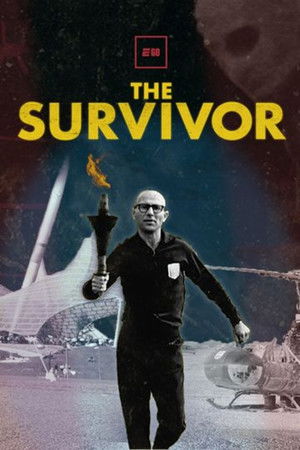
A powerful and emotional new episode of ESPN E60 will look back 50 years to one of the darkest moments in sports history – the Munich Massacre, when Palestinian terrorists murdered 11 Israeli sportsmen at the 1972 Summer Olympics. E60 will tell the story of one Israeli athlete, now 86, who survived, just as he had survived World War II and the Holocaust when he was a child.
This film, produced by the Museum’s Spielberg Film Archive staff, features 55 minutes of previously unseen interviews from the Claude Lanzmann Shoah Collection. SHOAH: The Unseen Interviews includes the testimony of Abraham Bomba, a barber in the Treblinka killing center, who escaped, was smuggled back into the ghetto, and tried to warn friends, who refused to believe what was happening; details of American responses to the Holocaust from Peter Bergson, who tried to rally American Jews and the US government to act sooner to save the Jews in Europe; and Ruth Elias’s harrowing tale of survival in Theresienstadt and Auschwitz-Birkenau.
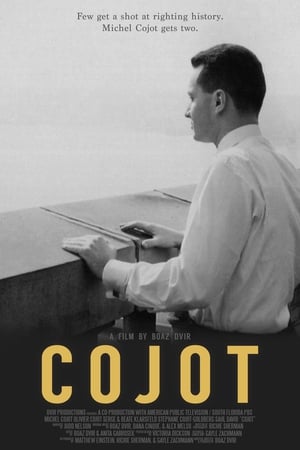
A documentary feature by award-winning filmmaker Boaz Dvir, “To Kill a Nazi” tells the story of a French family man who sets out in to kill his father’s Gestapo executioner and ended up playing a pivotal role in history’s most audacious hostage rescue.
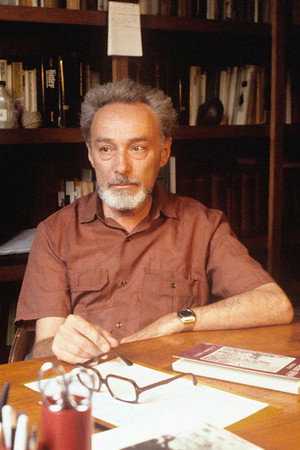
Thirty years after Primo Levi's death, Rai Cultura assembles a portrait that refuses to reduce him to the single label of Holocaust witness. Ten scholars, journalists and friends - among them the historian Carlo Ginzburg, the survivor and senator Liliana Segre, and his editor Ernesto Ferrero - each take up a different facet of a man who was novelist, poet, essayist, industrial chemist, amateur astronomer and mountaineer. Running through the film is the testimony of Ives Francisco, the young partisan arrested alongside Levi in the Aosta Valley in December 1943; the skis Levi left behind later carried Francisco into Switzerland and back again after the war, and give the film its title. Archive interviews return Levi's own voice on memory, work, writing and his Jewish roots.
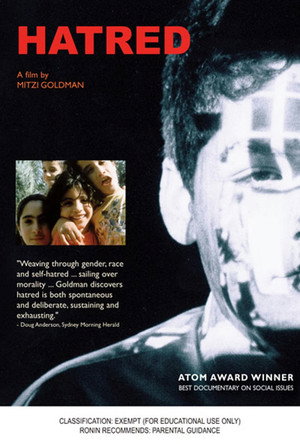
Born in Australia, filmmaker Mitzi Goldman embarks on a deeply personal journey back to her father's hometown in Germany to uncover the roots of the hatred and prejudice that forced her German-Jewish family to flee during the Holocaust. From this personal exploration of inherited trauma, the documentary expands globally to examine the mechanisms of intolerance. Through interviews and real-life footage, the film bridges the past and present, drawing parallels between historical European antisemitism, racial tensions in New York, and the geopolitical complexities of the Israeli-Palestinian conflict.
Daniel, an arrogant, restless young Londoner is bored with his meaningless life. He seeks sympathy from his old Jewish grandmother, who sends him on a mission to Europe to find the grave of her father who disappeared during World War II.
Years after surviving the Holocaust, Alex Koves sees Michael Barna, the man who killed his family, on the streets of Toronto. Barna is now an upstanding citizen and a loving husband, but Alex will not rest until justice is served.
This 38-minute film introduces the history of the Holocaust. It begins by looking back at the major changes from 1918 to 1933 that created the political climate for the birth and rise of the Nazi Party in Germany. It explores the basis for the party’s support among ordinary Germans and the military, government, and business establishment before and after Hitler was appointed chancellor in January 1933.
Filmed in his home in Paris one late summer, the philosopher and political figure Antonio Negri takes as a starting point a short story — a parable written by Marine Hugonnier — and transforms it into a political hypothesis. It is the story of a community of children who live in roofless houses in a world where two suns shine permanently. When an eclipse is about to take place, the children get scared. They are terrified as they do not know the darkness, they’ve never seen the stars. To cope with their fear, they decide to burn their houses to generate light. From there Antonio Negri weaves anecdotes, evokes Alexis de Tocqueville and Saint Francis of Assisi, protests against biopolitics and formalises arguments which reveal his unconditional engagement for activism, absolute democracy, the need to recreate communities, and his restless quest to find joy in the heart of “the multitude”.
A legendary Polish driver returns to take part in one of the most difficult car races in the world. Will Sobiesław Zasada win the next car race at 91?
Shot in Claude Monet’s Garden in Giverny (France) this film is a search for its cusp — a possible point of passage, set at the limit of the scope of representation and at the beginning of the animal and the vegetal realms. The film shows the microscopic ecosystem that constitutes Monet’s “pictorial Garden”. It is an attempt to capture it from a non-perspectival point of view. Shot as a single sequence running the duration of a 400-foot reel, it features views of the edges of water-lily’s leaves and of Monet’s iconic green bridge, until the lens of the camera is intentionally removed to place the analogue film directly in contact with the environment, recording its presence with no interface. The abstract image resulting from this process captures the shimmering lights and movements of all beings during this quiet summer night.
Full moon above the city of Paris. A young man crosses the city neighborhoods on his bike, when elsewhere a group of distinguished young people that seem to come from another planet, stroll, smoke and chat.
Divadlo Svoboda
A high school editor loses all the footage of a film. As deadlines close in, the crew spirals into chaos. This is a film about making a film and learning the cost of finishing a movie.
Trafačka: Chrám svobody
Řepka: Hříšník
The story of a young woman entering the world of filmmaking as assistant director to Bilge Olgaç and the two years they worked together. Through her diary, Belmin Söylemez explores what she learned from Bilge Olgaç, the most productive woman director in the history of Turkish Cinema. The film also gives us clues on filmmaking in Turkey in the late 80’s. From tough shooting conditions to 35 mm editing, we discover Olgaç’s world through her assistant’s eyes. ‘Bilge and Her Apprentice’ pays tribute to the life and work of Bilge Olgaç, who passed away in 1994.
A partial differential equation is illustrated by mathematician Tariah Gatlin.
Agnes was diagnosed with dementia in her fifties. Five years have passed and she is still struggling with her new identity, and the loss of who she once was. She decides to pay a visit to Nancy, who eight years ago was also diagnosed with dementia in her fifties. We follow Agnes in her quest for renewal and along the way our notions of what it means to have dementia are challenged and given a fresh perspective. A film about friendship and living with dementia.
A simple mans life who lives very close to the Estonian main transportation railroad. The constant vibrations that slowly disintegrate his house and the incredible loud noise are just a few things he has to deal with.