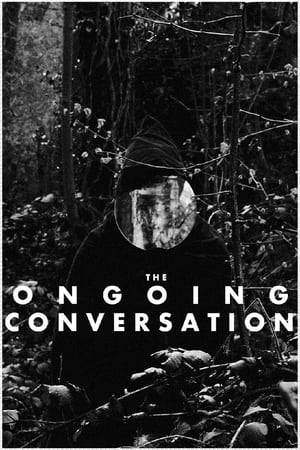
A man trapped in an aimless routine becomes the spectator of his own life as he wanders through the urban landscapes of his city in search of something that gives him meaning. Between memories and ghosts, he faces his doubts and longings, questioning what is real and what is just a projection of his loneliness.
Kaito lost his sister who was his lover in his childhood. He severed all contact with the outer world for twenty years and devoted his time to writing down memories of his sister. One day, a week before the manuscript is to be completed, a woman visits his room. She burns all his papers and takes him to the city to cut him off from his memories. Nevertheless, Kaito cannot stop writing about his sister. The woman decides to lead him on a journey to ultimate hell.
A visceral journey through dysphoria in the internet age.
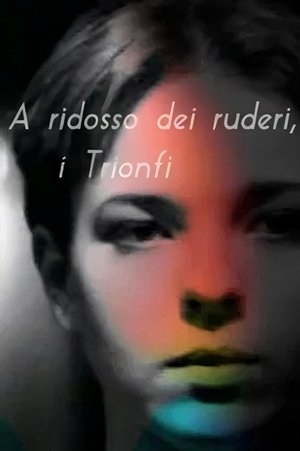
History as immersion and dispersion in the fragments of the past, a visionary journey accompanied by the voice of Patty Pravo. Presented at the Taormina Festival '97.
Sketch Fragments
In the rural desert of Bolivia, where the most important presence is the wind moving between papa flowers and animals, the people who harvest the land, those who built the ancient artifacts and sacred objects and the musicians who play moseñada – songs linked to the first products of the harvest – on the streets of the city have one point in common: labor. With a successful inclusion of stories of enchanted lakes, legends that pass from mouth to mouth – or from orality to audiovisual, in this case – and give a fantastic aura to those lands, Luciana Decker Orozco not only manages to capture life without oscillations . field, but resorts to the incessant movement of images and sound accompaniment to define a sensory and transcendental experience for the viewer.
A young scientist studies the mechanics of time travel by having a conversation with a group of her future selves.
Experimental short-film made by brazilian students about the trópicalia and cinema novo movement. The narrative revolves around the song Géleia Geral from the album Tropicália ou Panis Et Circensis and also around the political, artistical and social time from that period.
The Tiger God project originated during the artist’s residency at Cien Art Village in Hualien in 2021, inspired by a Sikawasay (Amis priest) who said a concrete tiger carried a soul. The work explores encounters between Han folk beliefs and Amis spiritual traditions, reflecting on suppressed indigenous histories in eastern Taiwan under colonial and religious forces. Nighttime fireworks symbolize external impacts on the land, linking concrete animals, mining, and colonial imagination. The ritual opera returns the footage to the land and gods, weaving ritual, research, and reflection into a narrative about silent objects and memory.
3IRTH
In an attempt to represent reality, the boundary between life and art blurs between fragmentary images of someone and the praxis of an essay film.
Omniac
A fictionalised essay read by Ben Wishaw exploring the complicated relationship between British espionage and male homosexuality. An anonymous narrator talks through the various chapters of his life as a spy and a gay man in late 20th-century Britain. His vivid stories of intimacy and surveillance play out over shots of the luscious countryside, busy Central London streets, and nighttime cruising zones.
As one of his generation's quintessential Mad Men, television commercial director Joe Sedelmaier's work was iconic, dynamic, and instantly recognizable--some twenty to thirty years later, people are still wondering 'Where's the beef?” He turned the advertising world on its brain-damaged head by casting offbeat non-actors in still-unforgettable spots. His brilliant, frequently hysterical commercials for Wendy's, Alaska Airlines, Federal Express and others were snappy slices of cultural quirk that tapped into the Cold War-fearing, corporate workaholic zeitgeist of the '70s and '80s with a sense of humor that cracked billions of smiles, sold billions of burgers, and sped up the default rhythm of time-based media.
"Meat Joy is an erotic rite — excessive, indulgent, a celebration of flesh as material: raw fish, chicken, sausages, wet paint, transparent plastic, ropes, brushes, paper scrap. Its propulsion is towards the ecstatic — shifting and turning among tenderness, wildness, precision, abandon; qualities that could at any moment be sensual, comic, joyous, repellent. Physical equivalences are enacted as a psychic imagistic stream, in which the layered elements mesh and gain intensity by the energy complement of the audience. The original performances became notorious and introduced a vision of the 'sacred erotic.' This video was converted from original film footage of three 1964 performances of Meat Joy at its first staged performance at the Festival de la Libre Expression, Paris, Dennison Hall, London, and Judson Church, New York City."
A sock puppet explores a family history told from the perspective of a mother and father.
Through interspersed conversation and prose, this experimental documentary follows a poet and a neuroscientist as they explore the definition of love, what it means, and why it matters.
How do German couples communicate in private? What are they arguing about? Is the way to a man’s heart really through his stomach? This docu-fictional hybrid production discusses such questions with the help of authentic interview snippets that were edited under the staged plot. We get an insight into the life of an animal couple, who experience typical everyday situations on behalf of us humans. At first, our fox is emotionally contained, while the penguin lady may get wild as hell. With a wink, the filmmakers hold up a mirror to the audience in the cinema.
Ali takes a personal look at the complexities of his childhood through old photographs, vivid memories and a bunch of tunes in an attempt to reconnect with his feelings at that time.
An orphaned raccoon happens to have a unique talent.