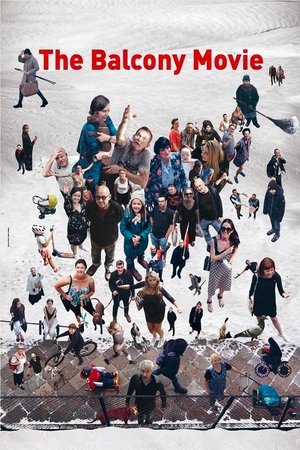
Composed from the conversations that the director holds with people passing by in the street under his Warsaw apartment, each story in 'The Balcony Movie' is unique and deals with the way we try to cope with life as individuals. All together, they create a self-portrait of contemporary human life, and the passers-by present a composite picture of today's world.
Exploring Moscow and paying tribute to Laika, the first dog in space.
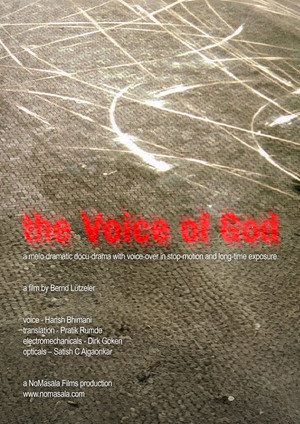
If God came down to earth and try to earn a living in Bombay, most probably he would become successful as a voice over artiste, lending his voice to thousands of Hindi movies and even more documentaries and public service films in India.
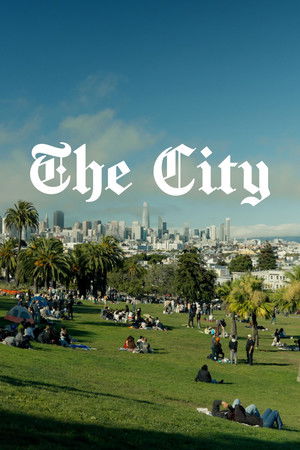
Beyond the sensationalized stories dominating the news, real people share their unfiltered experiences of life in San Francisco, a city far more complex and human than any headline can capture.
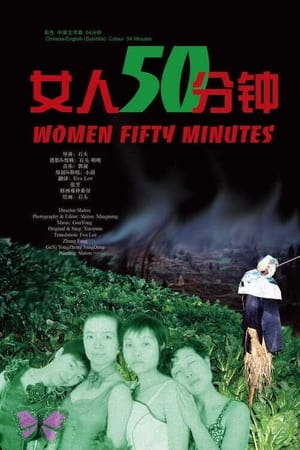
A representation of queer and feminist imagery that was mainly shot in the Qinghai-Tibetan Plateau, remote and developing areas in southwest China, and metropolitan cities like Beijing from 2000 to 2004 to document the social changes in contemporary China. The director sympathetically and erotically represents a variety of women, including women as laborers, women as prayers, women in the ground, women in marriage, and women who lie on the funeral pyre with their dead husbands. Her camera juxtaposes the mountains and rivers in old times, the commercialized handicrafts as exposition, the capital exploitation of the elders’ living space, and the erotic freedom of the young people in a changing city.
A history of the bridges of Paris, through modern views and historical engravings.
This short documentary shows how a city's water supply is purified at a filtration plant. The complex system of the underground mains that supply all parts of the city with water is also illustrated, as is the safeguarding of water supplies on trains, ships and aircrafts.
A film about the planned city of Belo Horizonte in Brazil.
The Posada Ruiz family began calling Montreal home two decades ago, leaving everything they knew back in Colombia. Navigating their memories, the family retraces their journey, their relationship to the city, and the challenges that arise when trying to find a new home.
Devastating hurricanes, torrential rains, the inexorably rising waters: coastal megacities are now up against the wall. The filmmakers have chosen three emblematic cities: New York, Singapore and Rotterdam. Cities that each face unique problems and must revisit their relationship with water in order to survive on the long run. In 50 years, all surge barriers in the world will be out of order. What solutions will then remain for coastal cities?
Stadt, Land, Fuchs!
In the heart of the city of Buenos Aires, amongst the grey of the cement and the noisiness of the cars and buses, everyone seems to look down. Even the cameras put there to watch the people’s every move. But, what happens if we finally decide to look up? What’s coming after the clouds?
Dubai was a city once built on pearls. This documentary follows four "invisible" workers, the pearls, living far from their families to keep other people's dreams alive while quietly pursuing their own in the land of opportunity.
A city that's a canvas for dreams and a battleground for survival, offering a price for legacy with no guarantees.
A day in the life of London and the Home Counties in 1962, seen from the perspective of the use of London Transport facilities from buses and tubes to long distance coach routes, accompanied by extracts from BBC radio.
Jasper Wood's short film "Streetcar" is a poetic documentary of life in a big American city centered on the experience of riding its streetcars. The film is 15 minutes long and was shot in Cleveland, Ohio, largely in and around West 25th Street, Public Square, and the Central Market area (East 4th Street and Bolivar Road) during the summer of 1953, just before the ending of streetcar service in the city of Cleveland. Jasper Wood was assisted in the production of the film by Harry Schulke, Nick Hlobeczy, Tony Denison, Vlad Maleckar and Ed Feil. Jasper's son Denis (then nine years old) made the final title in the film, which depicts a man running after a streetcar. The film was shown at the Edinburgh International Film Festival in 1955 or 1956.
An experimental film following a trip made by three friends in which the contrast between the agitated city of São Paulo, Brazil and the calmness of the beach leads the flow. No script. No story. Just vibes.
Tourists eating and taking photos. Tourists strolling and taking photos. Tourists bathing on the beach and taking more photos. Barcelona has become an overexploited photocall to the point of paroxysm, and this is what this film shows by turning the camera and pointing towards the visitors. A small gesture that, added to a powerful sound contrast and a caustic sense of humour, exposes without subterfuge a grotesque normality.
Nostra Torino Oscura
An documentary exploring what the city of Liverpool means to the people who call it home.