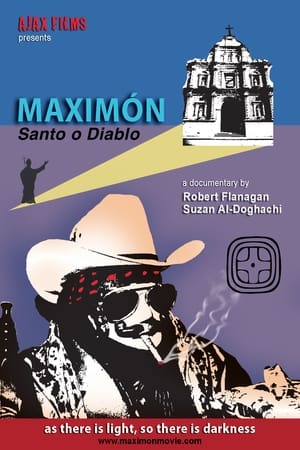
MAXIMÓN - Devil or Saint is a documentary about the controversial Maya deity, also known as San Simon or the drinking and smoking saint of Guatemala. He is a mixture of ancient Maya beliefs and Christianity. The movie concentrates on the people who surround Maximón with their strong personalities, opinions and faith. The documentary gives us a rare view into the rituals and fiestas honoring Maximón. The cult of Maximón is flourishing because he performs miracles. He is also feared and despised because he is used to cast curses that can result in death. Ultimately, Maximón transcends the duality of good and evil, reflecting the Maya cosmovision in which everything in the universe co-exists.
Acclaimed filmmaker Werner Herzog travels to Antarctica, where he finds a desolate, beautiful landscape, largely untouched by human hands, and a group of truly unique people who risk their lives to study it. Centered at McMurdo Station, the United States' largest Antarctic research center, Herzog explores the minds of the scientists willing to abandon civilization and endure volatile conditions to learn more about the continent's wildlife and awe-inspiring natural wonders.
Enduring 28 days of relentless construction labor, Frank struggles to prep a house for painting amidst Phoenix's scorching pandemic summer.
From Sierra de las Minas to Esquipulas, explore Guatemala's cultural and geological wealth, including ancient Mayan cities and other natural wonders.
Marko Röhr's film crew takes the viewer to Europe's last unexplored area: Iceland's unique underwater world. We explore the geysers of boiling waters and the crystal clear lakes off the coast of Iceland. We dive under the icebergs, into the tears between the continental plates and into the deep caves.
Werner Herzog takes a film crew to the island of Guadeloupe when he hears that the volcano on the island is going to erupt. Everyone has left, except for one old man who refuses to leave.
From the shadows of a Guatemalan neighbourhood scared into silence, two sisters lead a luminous rebellion—unleashing joy, art, and radical truth in a fight for survival.
Birth of an island is a film that gives the viewer a unique opportunity to experience the creation of Iceland, the youngest country in Europe; an island that is still in the making! And why is that? Birth of an island explores how Iceland was created through volcanic eruptions on the Mid-Atlantic submarine ridge, why they continue and what effects they have on the island today. Why there are geysers and how the Icelanders learned how to harness the power of the natural hot water from deep below, as well as that of glacial rivers. It also shows how natural forces, such as glaciers, rivers, waterfalls, the Atlantic ocean and volcanoes constantly sculpture and mold the island. Explains why the island lost most of its vegetation, so Iceland is now the only country in Europe that has deserts. Also, what measures Icelanders have taken to recover the island´s woodlands.
After 200 years, the Fugen-Dake volcano awoke in 1991. Journalists, cameramen and scientists flocked to Mount Unzen to study the eruption. For some of them, it would be a fatal choice.
In the 6th century AD, large parts of the world were affected by mysterious weather events causing temperature drop, crop failures and famines. All this might be the result of a large volcanic eruption in the tropics. But can a local natural disaster impact the global weather, thus influencing the course of history? Using stunning re-enactments and unique animation techniques, “The Power of Volcanoes” makes it clear: Volcanoes might be sleeping giants. But they can wake up quicker than you think and in the worst case trigger a fatal chain of events.
Denese Joy Becker, a manicurist living in Iowa, discovers she is indeed Dominga Sic Ruiz, a survivor from a 1982 Guatemalan massacre, when more than 200 people were killed in the small village of Rio Negro, after opposing the construction of a dam, sponsored by World Bank. She then tries to unveil the truth.
Hawaii, with its tropical rainforests and diverse coral reef is a spectacular natural paradise for travellers, surfers and all fans of breathtaking sandy beaches and lush green mountains. But life on the American island chain also has a dangerous side: permanently active volcanoes, lava caves, and even burning lava pours into the sea! Here you can see black smoke rise up, spray the red-hot magma into the sky and feel how the earth trembles. Located on the Pacific plate is unusual for volcanoes, Hawaii is thus researchers a fascinating destination. At Kilauea, the most active volcano on earth, the inhabitants have to live in constant danger found over the centuries cope. Lava Land - Glowing Hawaii takes you into the world of researchers and residents on the Big Iceland, the largest island of Hawaii.
Ring of Fire is about the immense natural force of the great circle of volcanoes and seismic activity that rings the Pacific Ocean and the varied people and cultures who coexist with them. Spectacular volcanic eruptions are featured, including Mount St. Helens, Navidad in Chile, Sakurajima in Japan, and Mount Merapi in Indonesia.
Features volcano watches in Iceland from 1984-91, showing the country's highlands, Askja, Kverkjoll, Herdubreidarlindir, Sprengisandur, and Jokulsa Canyon. Presents Landmannalaugur and the popular trek from this Myvatn, Skaftafell, and glacier bursts from the Grimsvotn and Graenalon lakes. Depicts scenes of winter traveling in Iceland, Reykjavik, the Blue lagoon, Geysir hot spring, the site of Parliament in Thingvellir, and Kulusuk on the east coast of greenland. Includes the earthquake sequence that shook the island in September 1986 and sequences from the volcanic eruptions at Mount Hekla (1947-48, 1970, 1980-81, and 1991), Surtsey (1963-67) Heimaey Island (1973), Lake Myvatn (1975-84) and Grimsvotn Lake (1983).
In the coastal village of Amed, Bali, life moves to a rhythm set by the sea and the volcano. However, an unexpected change is taking shape on the courts: the global rise of pickleball. "Shifting Courts" is an observational documentary short that explores how this sport has become a silent bridge between the local community and the outside world, capturing an intimate look at Balinese identity in the face of globalization and international tourism.
In May 2018, Kīlauea volcano erupted, obliterating neighborhoods with devastating force and uprooting thousands of local residents. It is Hawaiʻi’s most destructive volcanic eruption in generations. How can one of the most beautiful places on Earth suddenly transform into a roaring inferno, sputtering molten lava and bombs of volcanic rock the size of refrigerators? On the ground in the early days of the eruption, NOVA joins scientists and residents alike on a breathtaking journey to investigate Kīlauea’s recent spike in activity. Along the way, some of Hawaiʻi’s biggest secrets are revealed: Why did these geologically distinctive volcanoes form in the middle of the Pacific? How did life establish itself on the remote islands? What does this tell us about the future of Hawaiʻi? And what dangers yet lurk for the inhabitants of the island paradise?
Si j'étais sage-femme
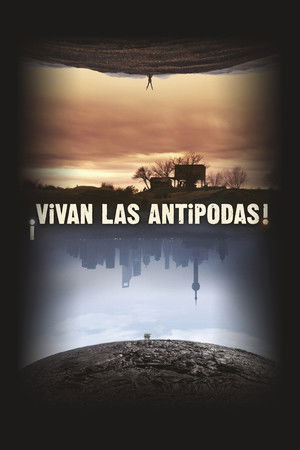
What would be the shortest route between Entre Rios in Argentina and the Chinese metropolis Shanghai? Simply a straight line through the center of the earth, since the two places are antipodes: they are located diametrically opposite to each other on the earth's surface. During his visits to four such antipodal pairs, the award-winning documentary filmmaker Victor Kossakovsky captured images that turn our view of the world upside down.
Les enfants de la Soufrière, 50 ans après
A story of destinies joined by Guatemala's past, and how a documentary film intertwined with a nation's turbulent history emerges as an active player in the present.