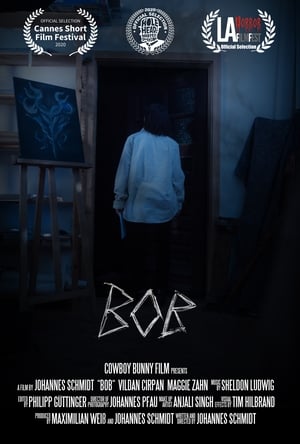
Two unsuspecting friends tempt fate when they explore a derelict mansion that harbors a dark secret within its depths.
Something is living in my house.
You've never watched a cheeky animated horror anthology with the aesthetic of a children's stop-motion TV show quite like this.
Deep from within the ocean, a monster arises to reclaim the earth.
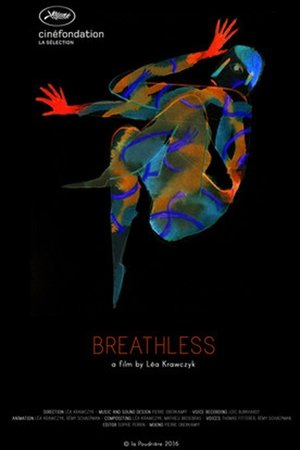
Inspired by the love story of his parents, Erik Vos brings their meeting and romance to life in exuberant colours and gorgeous animation.
Kiera, an orphan, continuously experiences a trail of misfortunes, constantly having to adapt to her short-lived identities.
A lone swan named Kishika is born in a chicken-filled world. Being outcast due to her differing physical appearance, she is tormented daily to the point of isolation. Her escape? Ballet.
An animated adaptation of David Whitaker's opening chapter from Doctor Who in an Exciting Adventure with the Daleks.
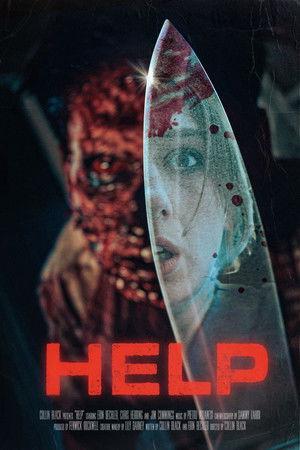
THE HUNT is a one-minute fever dream in an uncanny suburban town where reality transforms into a lurid nightmare of classic horror films.
Nice looking Travelogue takes us to the Northeast corner of Wyoming as we visit Yellowstone National Park.
"She Climbs to Conquer" shot by W.J. Oliver, was a noteworthy film which gained well merited acclaim. Made in 1933 it pictured the climb of Georgia Engelhard, a professional mountain climber, from Abbot's Pass to the peak of Mount Victoria.
Account of the first French expedition to the Himalayas, which attempted to climb the hidden peak (Gasherbrum I) in 1936, from the preparations for the trip to the end of the ascent. After a long approach walk through quasi-desert regions, then on a huge glacier, the caravan of 700 porters arrives at the foot of Hidden Peak. The expedition was led by Henry de Ségogne, with Jean Charignon, Pierre Allain, Raymond Leininger, Jean Carle, Jean Deudon, Louis Neltner, Jacques Azémar, doctor Jeand Arlaud and director Marcel Ichac. Weather conditions, logistical problems and a strike among Sherpas forced the team to retire at 6900m on the south face. The film received the Silver Lion at the Venice Film Festival in 1938.
Documentary on one of the first editions of the Trofeo Mezzalama, the highest ski mountaineering race in Europe, at more than 4,200 meters above sea level, which takes place on the glaciers of Monte Rosa, from Breuil to Gressoney-La-Trinité, crossing the summits of Castor (4,199 meters) and Nez du Liskamm (4,100 meters). The film recounts the last hours of feverish preparation before the start, the teams preparing for the race linked in ropes, then follows the stages of the competition by following the groups of skiers from a plane. Created in 1933, the Trofeo Mezzalama was contested until 1938, before falling into oblivion during the war. A second version was organized from 1970 to 1973. A third biannual version has been organized since 1997.
Danube upstream from Vienna, with its images of monasteries and castles. It's hard for an American to realize the age of civilization in Europe. This Burton Holmes travelogue hints at it.
A recluse old man who watches and times paint dry for a living is thrown into chaos when one day he encounters a paint that won't.
Britain's first complete rock climbing film, by Stanley Watson. A film about climbing in the Lakes. Norah Johnstone, a teacher at Keswick Grammar School and later Watson's wife, starred as a Victorian climber. The film includes footage of Stanley Watson himself climbing Kern Knotts blindfolded and a young girl, Vivian Verity, whose first climb at aged 9 was up Napes Needle. Stanley Watson is a keystone in the history of British climbing. He established the British Mountain Guides Organisation in 1930.
An expectant couple is on the move, traveling through a country struck by unexpected weather phenomena.
"During the 1927, AGM Geddes on behalf of the Huts Committee, gave the report on the progress made on the completion of the Club's first hut, the Fay Hut in Prospectors Valley. Tragedy struck later in August when Geddes was killed while descending Mt. Lefroy. A twelve minute silent film was made during part of this expedition entitled, Way Up and Back and is available for viewing at the Whyte Museum in Banff."
Released on December 14th, 1919. Produced by Burton Holmes.
The negative affects from ingesting "The Spirit of Wine" are demonstrated here through experiments on the Students of Northwestern University Medical School.