Derek Vineyard is paroled after serving 3 years in prison for killing two African-American men. Through his brother, Danny Vineyard's narration, we learn that before going to prison, Derek was a skinhead and the leader of a violent white supremacist gang that committed acts of racial crime throughout L.A. and his actions greatly influenced Danny. Reformed and fresh out of prison, Derek severs contact with the gang and becomes determined to keep Danny from going down the same violent path as he did.
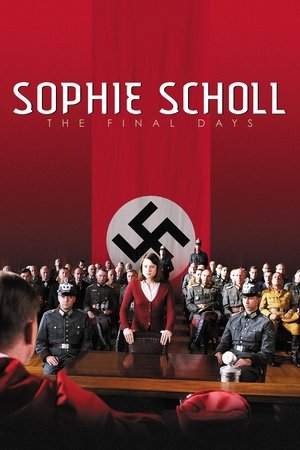
In 1943, as Hitler continues to wage war across Europe, a group of college students mount an underground resistance movement in Munich. Dedicated expressly to the downfall of the monolithic Third Reich war machine, they call themselves the White Rose. One of its few female members, Sophie Scholl is captured during a dangerous mission to distribute pamphlets on campus with her brother Hans. Unwavering in her convictions and loyalty to the White Rose, her cross-examination by the Gestapo quickly escalates into a searing test of wills as Scholl delivers a passionate call to freedom and personal responsibility.
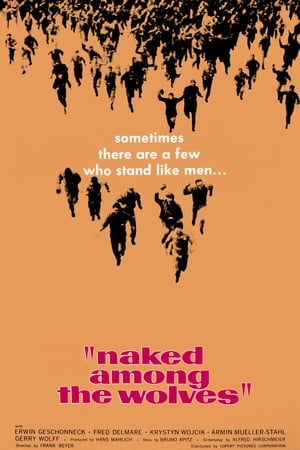
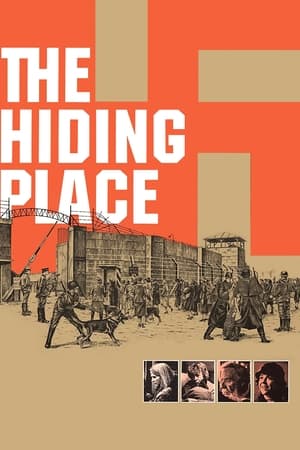
Based on a true story of inmates at KZ Buchenwald that risked their lives to hide a small Jewish boy shortly before the liberation of the camp.
Four corrupted fascist libertines round up 9 teenage boys and girls and subject them to 120 days of sadistic physical, mental and sexual torture.
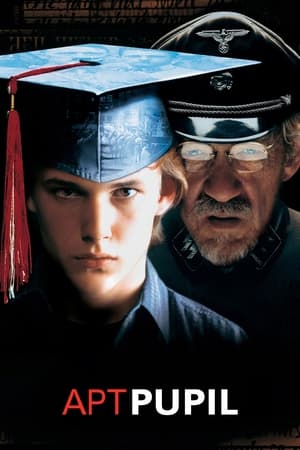
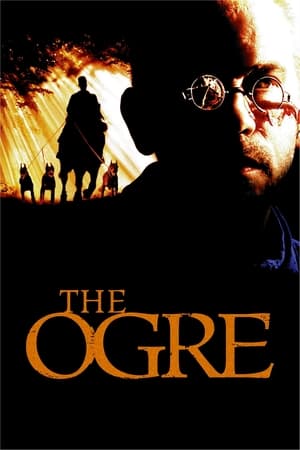
One day in 1984, Todd Bowden, a brilliant high school boy fascinated by the history of Nazism, stumbles across an old man whose appearance resembles that of Kurt Dussander, a wanted Nazi war criminal. A month later, Todd decides to knock on his door.
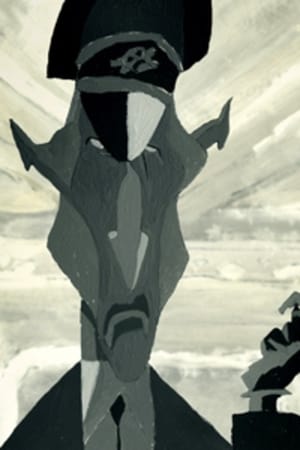
Among the millions of victims of the Nazi madness during the Second World War, Pierre Seel was charged with homosexuality and imprisoned in the Schirmeck concentration camp. He survived this terrifying experience of torture and humiliation, and after the war he married, had three children, and tried to live a normal life. In 1982, however, he came to terms with his past and his true nature and decided to publicly reveal what he and thousands of other homosexuals branded with the Pink Triangle had undergone during the Nazi regime. Il Rosa Nudo (Naked Rose), inspired by the true story of Pierre Seel, depicts in a theatrical and evocative way the Homocaust, focusing on the scientific theories of SS Physician Carl Peter Værnet for the treatment of homosexuality, which paved the way for the Nazi persecution of gay men.
In Nazi-occupied France during World War II, a group of Jewish-American soldiers known as "The Basterds" are chosen specifically to spread fear throughout the Third Reich by scalping and brutally killing Nazis. The Basterds, lead by Lt. Aldo Raine soon cross paths with a French-Jewish teenage girl who runs a movie theater in Paris which is targeted by the soldiers.
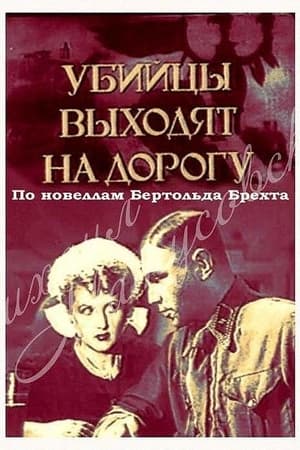
Brecht's play Fear and Misery of the Third Reich consists of a series of playlets, portraying National Socialist Germany of the 1930s as a land of poverty, violence, fear and pretence. Nazi antisemitism is depicted in several of the sketches, including "the Physicist", "Judicial Process", and "the Jewish Wife".
After the fall of the Third Reich, all Nazi SS officers ran away in Latin American countries. There they created special laboratories to crate beautiful women for satisfaction of their guards' sexual desires. The main warden in this prison is a cruel woman. Their main plan is to revenge for defeat of Nazi's Germany.
Former Danish servicemen Lars and Jimmy are thrown together while training in a neo-Nazi group. Moving from hostility through grudging admiration to friendship and finally passion, events take a darker turn when their illicit relationship is uncovered.
Master filmmaker Alexander Sokurov (Russian Ark) transforms a portrait of the world-renowned museum into a magisterial, centuries-spanning reflection on the relation between art, culture and power.
A group of people are imprisoned in a rail car bound from Berlin to a concentration camp in 1945.
Corrie and Betsie ten Boom are middle-aged sisters working in their father's watchmaker shop in pre-World War II Holland. Their uneventful lives are disrupted with the coming of the Nazis. Suspected of hiding Jews and caught breaking rationing rules, they are sent to a concentration camp, where their Christian faith keeps them from despair and bitterness.
Berlin, 1930, during the rise of Nazism. Hermann Hermann, a Russian emigrant and chocolate manufacturer, married to the capricious Lydia, loses his temper more and more every day when dealing with his workers and other businessmen; until he meets Felix, a vagrant, who seems to be physically identical to him; a disconcerting fact that leads Hermann Hermann to plot a particular way out of a fake world he actually hates.
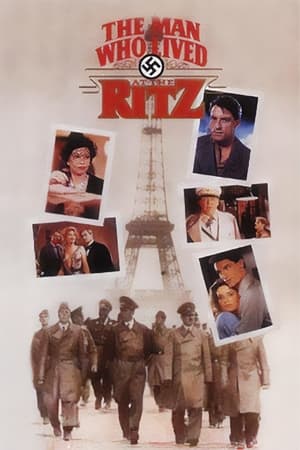
In this drama, an American art student is trapped amidst the political turmoil of war-torn Europe while visiting Paris and staying at the fabulous Ritz hotel. Rather than cope constructively with it all, the fellow opts to ignore it and continue living the high-life for as long as possible.
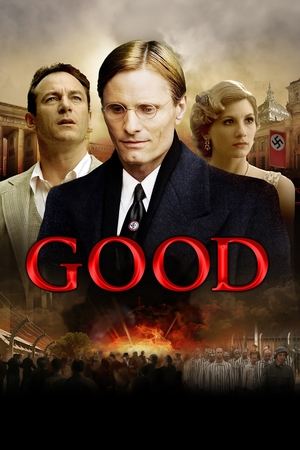
When John Halder's latest novel is enlisted by powerful political figures in the Nazi party to push their agenda, his career and social standing instantly advance. But after learning of the Reich's horrific plans for the future and the devastating effects they will have on people close to him, John must decide whether or not to take a stand and risk losing everything.
In the last days of the Nazi-occupied France, writer Marguerite Duras awaits the return of her husband, Robert Antelme, arrested for being a Resistance fighter and then deported, while she maintains a tense relationship with her ambiguous lover and a dangerous game with a French collaborationist. Even when the Liberation arrives, she must still endure the unbearable pain of waiting.
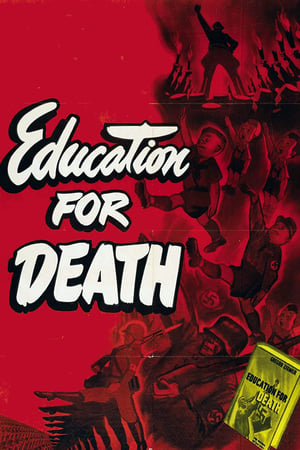
A propaganda film during World War II about a boy who grows up to become a Nazi soldier.
A man's story parallels Hitler's rise. Austrian Klaus Schneider, wounded in World War I, recovers in the care of Dr. Emil Bettleheim. Bettleheim discovers that Schneider possesses powers of empathy and of clairvoyance, such that could aid suicidal patients. After the war, with one friend as his manager and another as his lover, Schneider changes his name to Eric Jan Hanussen and goes to Berlin, as a hypnotist and clairvoyant performing in halls and theaters. He always speaks the truth, which brings him to the attention of powerful Nazis. He predicts their rise (good propaganda for them) and their violence (not so good). He's in pain and at risk. What is Hanussen's future?
Le Temps des assassins