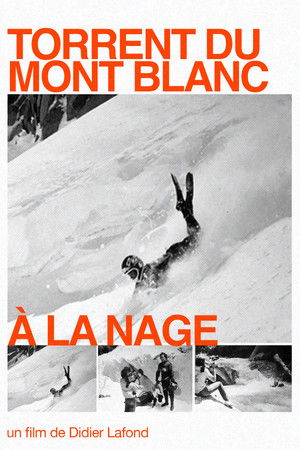
A documentary about André Payraud's descent of the Mont Blanc torrent by swimming down it. "I've always had a thirst for adventure. At 19, I was in a diving club and I loved Jacques Martin's show, 'Incroyable mais vrai' (Incredible but True). I dreamed of participating in this hit program." After careful consideration, André Payraud had the idea of the century, an idea that would attract media attention: to descend the Grands-Montets glacier on his stomach, wearing a full wetsuit (mask, snorkel, fins, and neoprene suit). A crazy idea that drew a flood of press coverage. The film, "Swimming Down the Mont Blanc Torrent," directed by Didier Lafond, was broadcast twice on France 2 and even won an award.
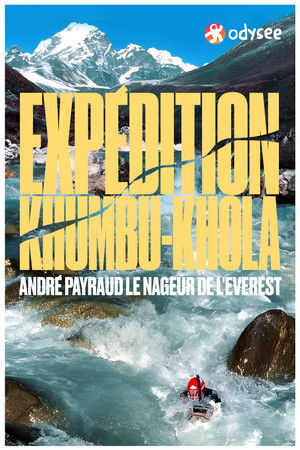
André Payraud, a pioneer and specialist in torrents and raging rivers, is nicknamed "the highest swimmer in the world." In October 1999, after the great monsoon, he swam down the Khumbu-Khola, a torrent that originates at 4,807 meters at the foot of Mount Everest, over five days. Furthermore, André Payraud wanted to connect with the people and culture of Nepal.
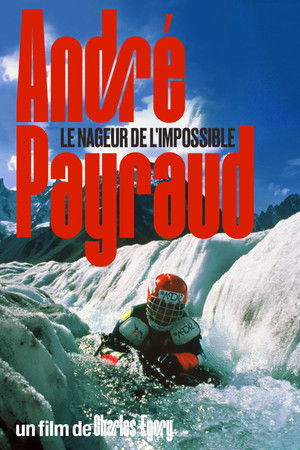
André Payraud, born in 1948 in Passy, Haute-Savoie, nicknamed "the swimmer of the impossible," is a major figure in French whitewater swimming, known by the nickname "Dédé the Carpet." He is renowned for his daring descents of large mountain rivers and for having helped popularize the sport from the 1980s onward. His achievements include swimming down the Mont Blanc torrent in 1980, the first in a long series of filmed feats: swimming Everest in 1982; the Ganges in 1985; the Colorado; Annapurna; the Jordan River—no river can stop Dédé in his quest for adventure. For his whitewater exploits, André Payraud was made a Knight of the National Order of Merit and received the Silver Medal for Youth and Sports. Alongside his exploits around the world, Dédé set up the first rafting company in Haute-Savoie in 1982, in Domancy, Session Raft, Aventures Payraud mont-Blanc..
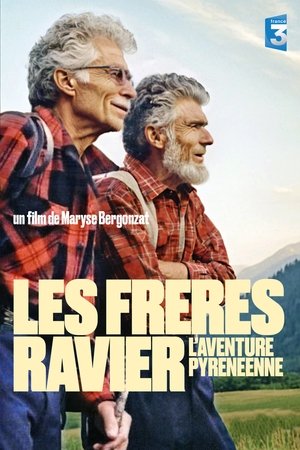
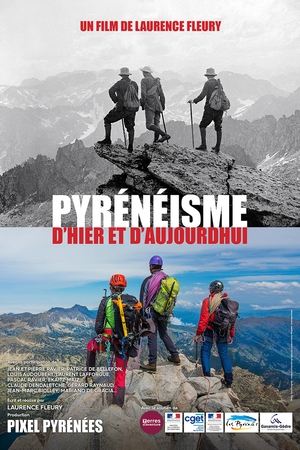
The two brothers Jean and Pierre Ravier have opened almost all the "classic" (difficult) routes in climbing and mountaineering in the Pyrenees. Roped together at the waist using a few flat knots and little equipment, the two twin brothers achieved more than 200 firsts across the entire massif. A unique style and commitment, a state of mind made up of adventure, literature, inventiveness and friendship. Unclassifiable and outgoing, after 60 years of Pyrenees, their desire for the mountains is intact. When does a race start? How does the idea, the desire, come about? What sense does it make to only achieve firsts? And what is the role of the Pyrenees themselves in this reciprocal and endless game of attraction?
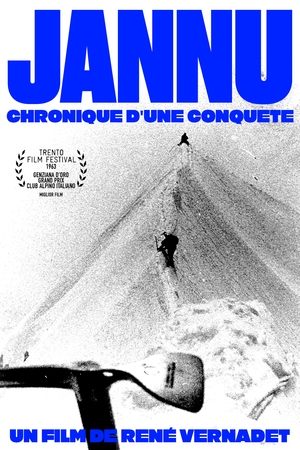
Three years after the 1959 expedition, abandoned 350m from the summit, Lionel Terray leads a new assault on Jannu, one of the most demanding peaks in the Himalayas. At the base camp, equipment and food rations are prepared. The conditions are optimal and the ascent can begin. The camera follows the progress of the mountaineers and Sherpas as closely as possible, from one high-altitude camp to another: installing fixed ropes, progressing over crevasses, in the middle of frozen towers, vertically down immense ice falls or along the edge of sharp ridges. From 7000m, oxygen bottles become essential, as the difficulty of the climb prevents acclimatization. The expedition is a total success: the majority of its members reach the 7710m summit.
The word Pyreneism was invented by the writer Henri Beraldi at the end of the 19th century. Its definition did not come down to a simple practice of mountaineering in the Pyrenees. To be recognized as a Pyrenean, it was necessary to “ascend, write and feel”. An approach to the mountains, according to him, necessarily accompanied by an artistic or intellectual activity. This documentary looks back at the Pyrenees who have left their mark on history, before interviewing contemporary mountain dwellers who, through their mountain practice, consider themselves, or not, Pyreneanists. What prompted Beraldi to coin this term? Does it result from a Pyrenean complex facing the Alps? Chauvinism or a demand for identity? And today, does this word still have meaning? Beyond the reflection on the subject, this film is a wonderful tribute to the massif.
The story of the ascent of the Aiguille de la République by mountaineers Jacques Fromentin and Michel Bastien. The Aiguille de la République, in the Mont-Blanc massif, culminates at an altitude of 3,305 meters among the Aiguilles de Chamonix group of summits. In the Fontainebleau forest, children learn mountaineering techniques on the bouldering climbing site. In 1954, rock climbing was also practiced in the Chamonix valley. The Montenvers train crosses the viaduct taking tourists or athletes to the Mer de Glace viewpoint. The two climbers take an approach step and reach the Envers des Aiguilles refuge. They then climb this steep and smooth wall, progressing along the ridge. On the platform, a rope throw allows them to climb up and sit at the top to dominate the panorama. Then the return: abseiling from the summit block.
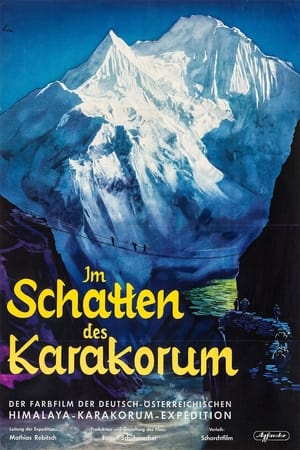
In 1954, a German-Austrian expedition led by Mathias Rebitsch set off for the difficult-to-access Karakoram Mountains, geographically north of the Himalayas. They come across the Hunza, a people who live in the valley of the same name and believe they are descended from the soldiers of Alexander the Great. The documentary conveys impressions of the poor life of the Hunza people, the harvest, a court hearing, festivals and the children's everyday school life. Finally, the expedition sets off again and sets up its main camp on the moraine ridge of a glacier, where they measure the glacier and the earth's magnetic field. Finally, some men from the research community set off for a sub-peak of Batura.
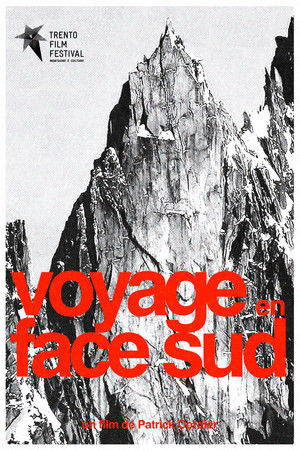
Voyage en face sud (Journey to the South Face) is a mountaineering documentary by Patrick Cordier and Jacques Ramouillet that shows the first solo ascent of the south face of the Aiguille du Fou in 1976 by Patrick Cordier himself. The climb was filmed by Jacques Ramouillet from a nearby ridge. Pierre Torlasco was tasked with belaying Jacques Ramouillet while he filmed. For this filmed ascent, Patrick Cordier opted for the dress code of his time—white clothing, bell-bottom trousers, and a headband—rather than the traditional mountaineering attire. The film was presented at the Trento Film Festival in 1977 and at the Gala de la Montagne (Mountain Gala) at the Salle Pleyel in Paris.
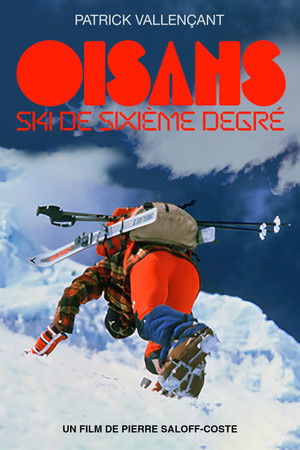
In 1975, Patrick Vallençant skied in some very challenging couloirs in the Oisans region: the north couloir of the Col du Diable, the north couloir of the Coup de Sabre, the couloir of the Pic sans Nom, the Barre Noire couloir in the Écrins massif, and the Gravelotte couloir on the Meije. He was accompanied by Jean-Marc Boivin, P. Guillet, P. Perrier, Gérard Pétrignet, Jacques Ramouillet, Pierre Saloff-Coste, and Joseph Spagnolo. In the second part of the trip, Vallençant completed a circuit of the Meije in three mixed-mountain ascents and, above the avalanche debris, skied off-piste through the steep couloirs and glaciers of the Oisans. He then climbed the routes to the summit of the Meije alone, following the stages of a high-mountain itinerary from the Refuge de l'Aigle.
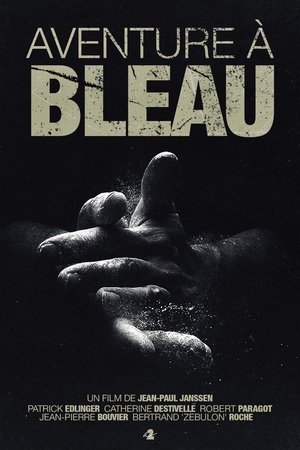
Aventure à Bleau is a documentary about bouldering in Fontainebleau. Directed by Jean-Paul Janssen in 1980 and produced by Antenne 2, it is part of the series Les Carnets de l'Aventure and was broadcast on the same television channel. It features various generations of the elite of the free-climbing scene at the time, including Patrick Edlinger, Catherine Destivelle, Robert Paragot, Jean-Pierre Bouvier, and Bertrand Roche—known as "Zébulon."
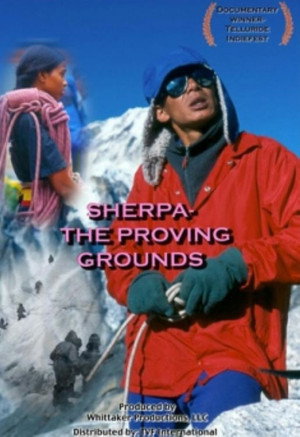
When Tenzing Norgay, a Sherpa, joined Edmund Hillary as the first men to summit Mount Everest in 1953, it alerted the world to the indispensable role of the Sherpas on any Himalayan expeditions. By 1954 the Himalayan Mountaineering Institute (HMI) was founded to marry the high-altitude strengths of the Sherpa with technical climbing skills. The HMI’s arduous training program has been developing mountaineers who play crucial roles in the success of Himalayan ascents. In 1967, HMI’s field director Nawang Gombu, a Sherpa and the first man to summit Everest twice, was charged with training women as well. In Sherpa: the Proving Grounds we follow a team of intrepid young women as they attack the grueling 28-day course.
Mountaineering documentary on the Nanga Parbat expedition, in India, in 1982. Led by mountaineer Pierre Mazeaud, this international expedition brings together eight French people, two Germans, an Iraqi, an Austrian and an Englishman including Michel Afanassieff, Michel Berrueux, Walter Cecchinel, Kurt Diemberger, Hans Engl, Shah Jehan, Karim Imamdad and others. On July 14, 1982, Hans Engl reached the summit after twelve hours of struggle.
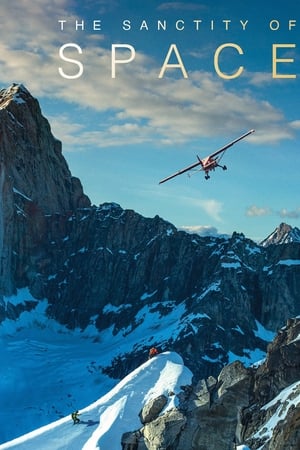
Seventy-five years after Brad Washburn, one of the greatest aerial mountain photographers of all time, first shot Alaska’s Denali Mountain from the open door of an airplane, climbing buddies Renan Ozturk, Freddie Wilkinson, and Zack Smith look at some of his mountain photographs and have this crazy idea. Rather than go up, their dream is to go sideways across the range’s most foreboding peaks, the Moose’s Tooth massif. It’s a fresh new way to explore the same landscape Washburn first discovered. As the group endures rough conditions, disintegrating ropes, and constant rockfall, their desire to be the first to complete the audacious line grows into an obsession. But friendships begin to fray when Renan suffers a near-fatal brain injury, forcing all three partners to decide what’s most important to them.
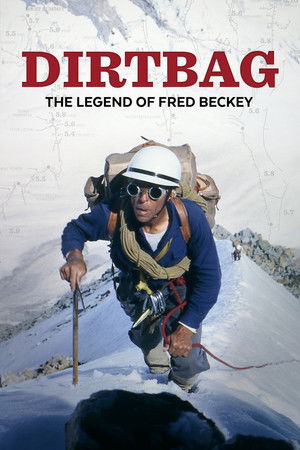
Fred Beckey is the legendary American "Dirtbag" mountaineer whose name is spoken in hushed tones around campfires. This rebel climber's pioneering ascents and lifestyle form an iconic legacy that continues to inspire generations.
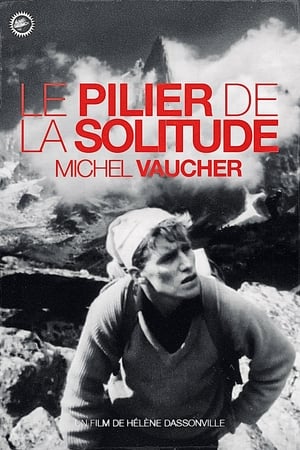
The Pillar of Solitude
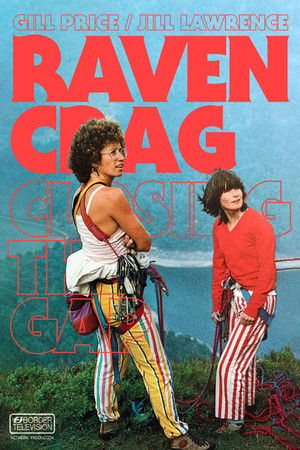
In the late 1970s and early 1980s, Jill Lawrence and Gill Price, members of the women's climbing club Pinnacle Club, made the first female ascents of difficult routes, laying the foundations for what would develop in the 1980s. In 1984, in the Lake District, Gill Price and Jill Lawrence were filmed climbing Empire E3 6a at Raven Crag, Thirlmere, for a Channel 4 program, Lakeland Rock, with Chris Bonington, broadcast on Channel 4 on 25 May 1985. This event marked a turning point in British women's climbing, as few, if any, women appeared on television climbing difficult sport routes.
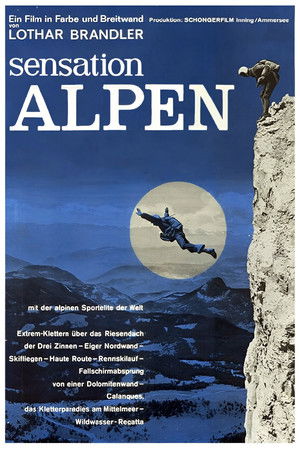
From Trento to Chamonix, via Zermatt; from the Morgiou cove to the Eiger's north face; from Planica to the Lavaredo peaks, the Alps are depicted, illustrated, and magnified in all their unique and sublime beauty, through the sports practiced there and the most typical customs and traditions of their inhabitants. A helicopter rescue and a parachute jump from the Red Wall by Wolfgang Weizenbocks are experiences not to be missed.
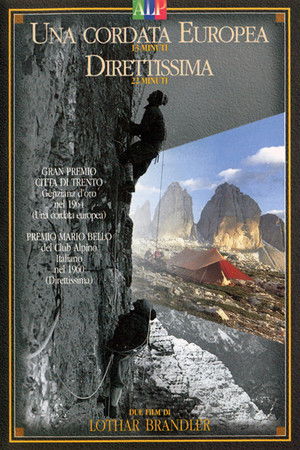
Three famous climbers, the Frenchman Pierre Mazeaud, the German Winfried Ender and the Italian Roberto Sorgato, meet up at the bottom of the Tre Cime di Lavaredo and decide to join together in a single roped party, climbing the 'Direttissima' on the north face of the Cima Grande di Lavaredo. The beautiful film illustrates with precise sequences the climb of the route, that was opened in 1958 by the filmmaker himself, Lother Brandler. The film wants to highlight the idea of frienship, cooperation, fraternity and peace showing three men from historically-confronted nationalities roped and working together as a single team. The film won the Grand Prix at the Trento Film Festival in 1964.
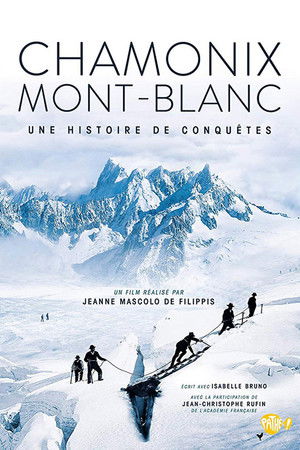
Chamonix - Mont Blanc, A History of Conquests