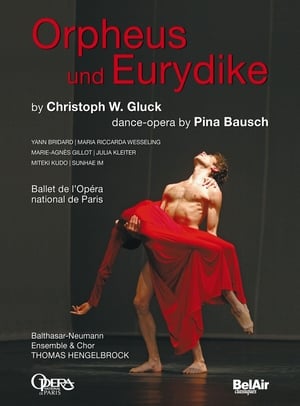
The Ballet de l'Opera National de Paris mounted this production of the late Pina Bausch's dance-opera Orpheus und Eurydike, which Bausch had adapted from composer Christoph Willibald-Gluck and Ranieri de' Calzabigi's 1762 opera Orfeo ed Euridice. As the title suggests, it takes its basic narrative from the myth of Orpheus, and his courageous but ill-fated attempt to rescue his lover Eurydice (also known as Eurydike) from the jaws of the underworld. This particular production finds Yann Bridard dancing as Orpheus and Marie-Agnès Gillot dancing as Eurydike , with mezzo-soprano Maria-Riccarda Wesseling accompanying Bridard and soprano Julia Kleiter accompanying Wesseling. Pina Bausch did the choreography and stage direction, while Rolf Borzik designed the sets, costumes and lighting. The Balthasar-Neumann Ensemble & Choir, under the direction of Thomas Hengelbrock, lend musical accompaniment.
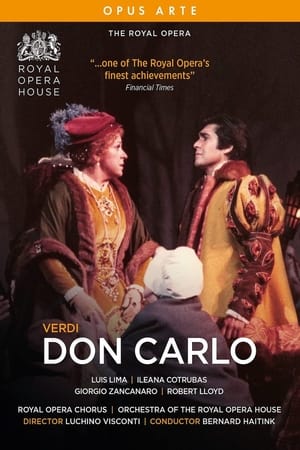
A 1985 performance of Luchino Visconti's 1958 staging for the Royal Opera House, Covent Garden. Bernard Haitink memorably directs a superb cast that includes Ileana Cotrubas at the height of her powers and Luis Lima, unequalled in his tortured introspection, in the title role. (5-act version, sung in Italian)
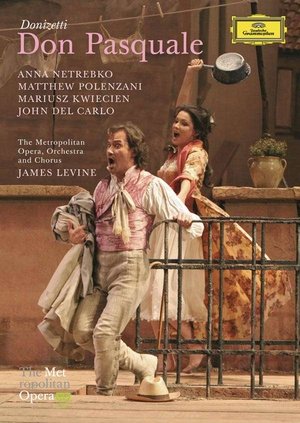
Donizetti’s timeless comedy shines in Otto Schenk’s enchanting production, conducted by James Levine and featuring a remarkable cast. The incomparable Anna Netrebko is Norina, the young widow beloved by Ernesto (a suave Matthew Polenzani), who is about to be disinherited by his miserly uncle, Don Pasquale (John Del Carlo). It takes the clever scheming of Dr. Malatesta (Mariusz Kwiecien) to set things right and to teach the old curmudgeon a lesson—fits of temper, mistaken identities, and all kinds of comic confusion included.
IL CAMPANELLO DI NOTTE, Farce in one act by Gaetano Donizetti, is set in Naples. Don Annibale Pistacchio, an old apothecary, have just married the young Serafina. Enrico, former lover of Serafina, interrupts constantly the wedding night showing on several disguises and calling at Pistacchio's drugstore by ringing the night bell, asking the unfortunate groom a preposterous list of prescriptions.
A short opera about the assassination of poet and dramatist Federico García Lorca at the hands of Nationalist forces at the beginning of the Spanish Civil War.
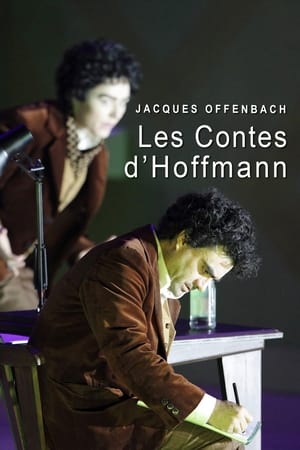
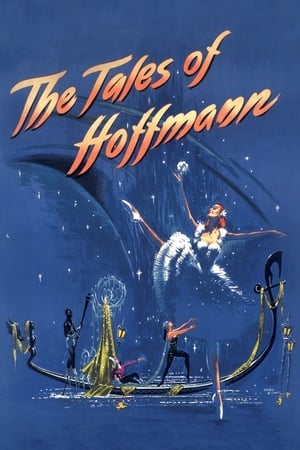
Live performance, Bayerische Staatsoper, 2011. The Tales of Hoffmann (French: LES CONTES D'HOFFMANN) is an opéra fantastique by Jacques Offenbach that combines three short stories by E.T.A. Hoffmann into a haunting whole: a melancholy poet reflects on three women he loved and lost in the past: a mechanical performing doll, a Venetian courtesan, and the consumptive daughter of a celebrated composer. One of the questions this opera poses for any director is how to link the 'tales' of Hoffmann's three lost loves together and knit them satisfactorily into the Prologue and Epilogue. In this production, Richard Jones solves the puzzle by turning it into an autobiographical journey which ends with a grand meet-up of all the characters Hoffmann has encountered: for once, Hoffmann is not presented as a rollicking kind of drunken story-spinner, but rather a sad-eyed, sobered-up depressive, who reaches for the bottle only because his disastrous love life has gone wrong yet again.
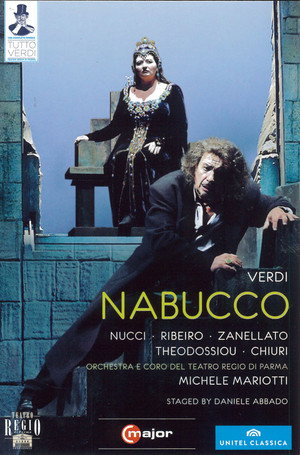
‘Nabucco’, or ‘Nebuchadnezzar’ (Italian: Nabucco), is an opera by Giuseppe Verdi with a libretto by T. Solera, based on events described in the Bible. (Nabucco is a shortened Italian rendering of the name of King Nebuchadnezzar II). It was this opera, the third in Verdi’s oeuvre, that brought him true fame. It tells of the tribulations of the Jews, their captivity by the Babylonians, and their subsequent release to their homeland by Nebuchadnezzar, King of Babylon. Giuseppe Verdi’s opera ‘Nabucco’, is a monumental work that tells the story of the enslavement of the Hebrew people by the Babylonian king Nebuchadnezzar (Nabucco) and their journey towards redemption. The premiere took place on 9 March 1842 at La Scala in Milan. The first performance of the final version was held at the Teatro San Giacomo in Corfu in September 1844. From the box set of 27 Verdi operas, ‘Tutto Verdi’. Recorded live at the Teatro Regio in Parma, 12–14 October 2009.
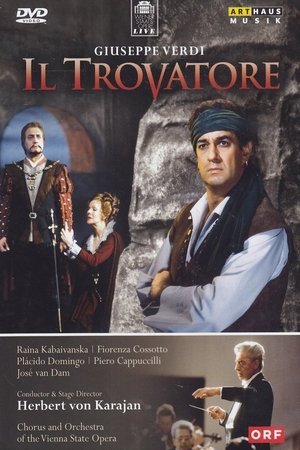
The gypsy Azucena (Fiorenza Cossotto) takes revenge for her mother who was accused of putting a curse on one of the old Count di Luna's two sons: she decides to abduct the younger child and throw it in the flames. But when she is about to carry out this fatal act, the gypsy sacrifices her own child and keeps the old Count’s son, whom she names Manrico (IL TROVATORE, Plácido Domingo). Later, as adults, the troubadour Manrico and the Count di Luna’s elder son (Piero Cappucilli) do not know each other, but become rivals for the beautiful Leonora (Raina Kabaivanska). Manrico succeeds in winning the young woman’s heart, and she sacrifices herself for him, deceiving the Count’s son. Mad with jealousy, the latter orders the execution of the troubadour in front of his mother. Azucena reveals to him that Manrico was his brother. This legendary performance of Giuseppe Verdi's most successful opera was recorded at the Vienna State Opera under the baton of Herbert von Karajan.
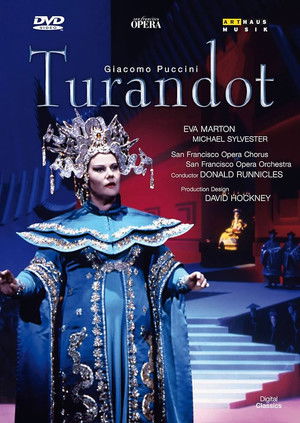
Donald Runnicles directs the San Francisco Opera in this lavish production of Giacomo Puccini’s final masterpiece, which was left unfinished upon his death and was later completed by Franco Alfano. Declaring himself a suitor of the beautiful Princess Turandot (Eva Marton), the son of a conquered king (Michael Sylvester) must correctly answer three troublesome riddles. According to tradition, if he fails, it will mean his death.
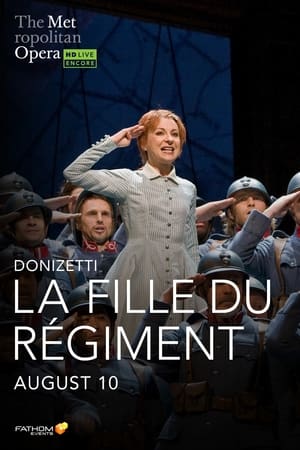
Madcap physical comedy and impeccable coloratura come together for Natalie Dessay’s indelible portrayal of the feisty tomboy raised by a regiment of French soldiers. Juan Diego Flórez is the young Swiss villager who conquers her heart—and a slew of high Cs. Also featuring uproarious performances by Felicity Palmer and Alessandro Corbelli, as well as a cameo by Tony Award winner Marian Seldes, this laugh-out-loud production was a runaway hit that left audiences exhilarated.
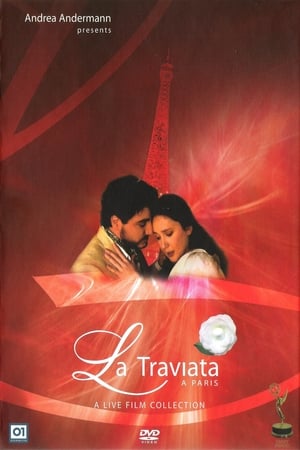
La traviata in Paris is a film-opera of Giuseppe Verdi's La traviata filmed live on television and worldwide, directed by Giuseppe Patroni Griffi, conceived and produced by Andrea Andermann in 2000. A Traviata that takes place live, with a television reporter who, amid the events of the day that took place in France on June 3, 2000, connects live to the scene of the action but at the time exactly a century earlier, in the Paris of June 3, 1900 (the setting of the opera is thus postdated from the original, which was conceived for the 1850s).
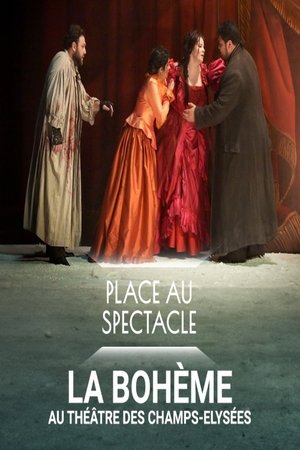
La Bohème
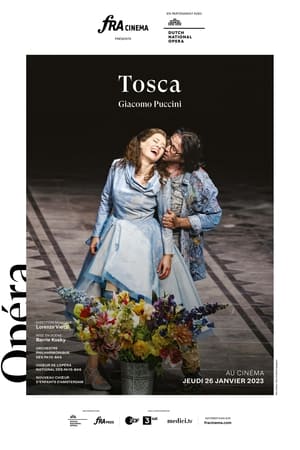
Tosca is a melodrama of love, betrayal and death set in the revolutionary unrest of 1800. The story concerns the opera singer Floria Tosca who tries to save her lover, the painter Mario Cavaradossi, from the brutal chief of police, Scarpia. Through-composed and expertly orchestrated it contains some of Puccini’s best-known lyrical arias and remains one of his most performed operas. In this 2022 production, an eminent cast is directed by the acclaimed Australian director Barrie Kosky – ‘the Amsterdam audience was completely swept off its feet by Kosky’s stunning production’ (Opera News).
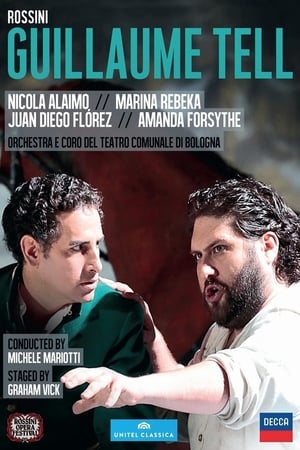
The hero of this admirably complete August 2013 Guillaume Tell from Pesaro is homegrown maestro Michele Mariotti. The inimitable overture is (mercifully) unstaged and terrifically played, with splendid cello and flute solos: the fine standard never flags. Rossini’s extraordinary 1829 score audibly presages Meyerbeer, Berlioz, Glinka, Verdi and Wagner, among many others. Graham Vick’s direction privileges class conflict, with a clenched fist on the red-and-white forecurtain. The Edwardian costumes place Austrians in white evening garb; the black-clad Swiss polish the floor while the rulers savor a filming (much of that to follow) — the fisherman Ruodi, in a boat with a blonde and fake scenery, with Tell and his family providing tech support. Vick deploys geographical and historical kitsch liberally but not (always) pointlessly. Ron Howell’s pretentious, mannered choreography, however, beggars belief.
Dorothea Roeschmann, Katharina Kammerloher, Hanno Mueller-Brachmann, Werner Guera, Daniela Bruera, and Roman Trekel star in this 2002 Deutsche Staatsoper production of the Mozart opera conducted by Daniel Barenboim.
Interrupted Melody is the inspirational filmed biography of world-renowned Australian soprano Marjorie Lawrence. She’s a foremost Wagnerian, equal to the vocal and physical demands of the composer’s oeuvre. And she’s a beacon of triumph to anyone who fights back when personal tragedy strikes.
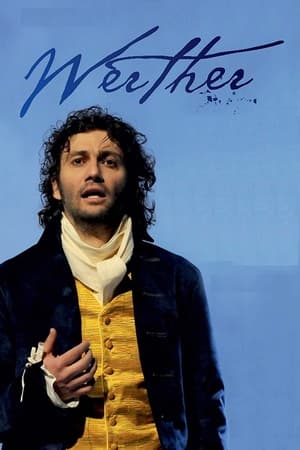
Werther loves Charlotte, but she promised her mother on her deathbed that she would marry Albert. After the marriage Charlotte suggests that Werther should travel - but not forget her. In addition to the singing and orchestral accompaniment, the entire cast acts very convincingly. And, there's no backstage mugging, entrances and spoken nonsense to spoil the experience of the drama.
A melancholy poet reflects on three women he loved and lost in the past: a mechanical performing doll, a Venetian courtesan, and the consumptive daughter of a celebrated composer.
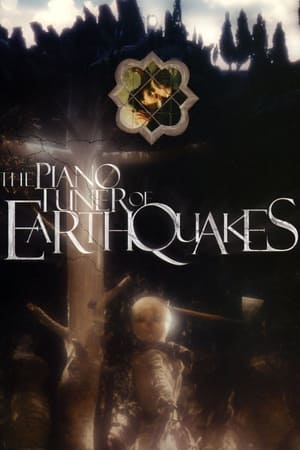
Dark fairytale about a demonic doctor who abducts a beautiful opera singer with designs on transforming her into a mechanical nightingale.
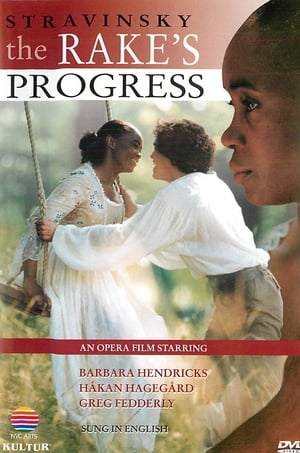
This lavish, cinematic realisation of Stravinsky's neo-classic masterpiece, performed in English, is filmed both in studio and on location. The imaginative richness in the music is complemented by costumes and sets which are, by turn, exquisitely garish and darkly grotesque to intoxicating effect.