A short documentary on Toronto’s punk & music scene and how spaces like S.H.I.B.G.B’s create a non-institutional platform for artists to engage an audience. Featuring 20+ local bands, the film applies a retrospective to the current direction of D.I.Y. culture in Toronto.
An evocative portrait of people having orgasms, lingering on the silent classical face of ecstasy.
La remise des décorations
Filmed in 1896 by Alexandre Promio for the Lumière company, this short actuality presents one of the earliest traveling shots in cinema. With the camera mounted on a gondola, the film glides along Venice’s Grand Canal, capturing passing gondolas, bustling waterfront activity, and the city’s iconic architecture from a moving perspective. This simple yet groundbreaking technique introduced audiences to a new way of experiencing motion on screen.
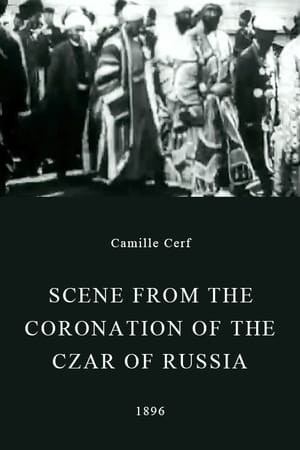
100 seconds-long six-scene footage consisting of selected coronation ceremonies of the Russian Tsar (Emperor) Nicholas II. Shows distinguished guests entering a carriage, parade of troops and carriages, Nicholas II and his wife empress Alexandra Feodorovna descending the Kremlin Red Staircase, procession of the newly crowned Emperor and his wife under the baldacchino, guests from the Asian parts of the Russian Empire.
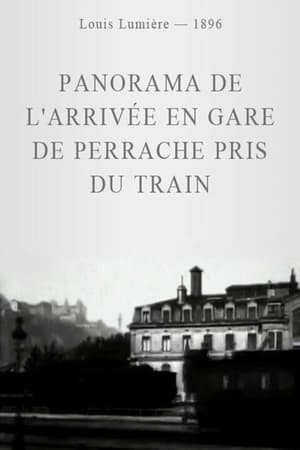
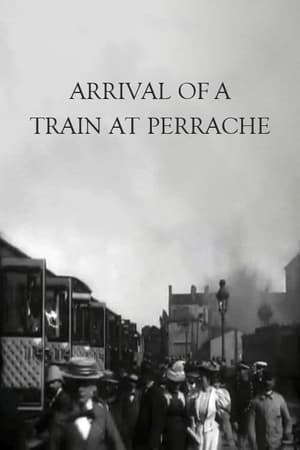
A train arrives at Perrache station. We see the view from aboard the train.
Five black and white minstrels dancing and playing musical instruments in Rupert Street, London.
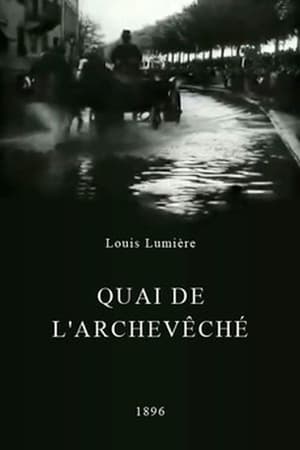
The floods of the Saône river during the first week of November, 1896.
Considered a remake of Lumière's La Voltige from 1895.
This picture was taken at one of the curves on the Lehigh Valley Railroad, along the beautiful Susquehanna River. The train is seen rapidly approaching in the distance, clearly outlined against the grey mountains. Smoke can be seen pouring in volumes from the stack of the locomotive, and as the train approaches closely, she sounds a whistle, warning some section men, who are working on the tracks in the foreground. As she rushes by the camera, the swing motion of the train gives a vivid idea of the lightning speed at which she is traveling. (Edison film catalog)
Boules Game
A large number of workers, mostly young women, leave by the front door of their work place at lunch time. The building has an impressive colonnaded facade, and is located at 181, Santa Catarine St., Porto - one of the city's main streets. A passengers' horse cart crosses from right to left of the screen, and a few seconds after an ox cart carrying merchandise crosses in the opposite direction. All the while, workers keep leaving the factory, giving a sense of a large work force.
A Berlin street scene.
A trains arrives at Perrache station and people disembark.
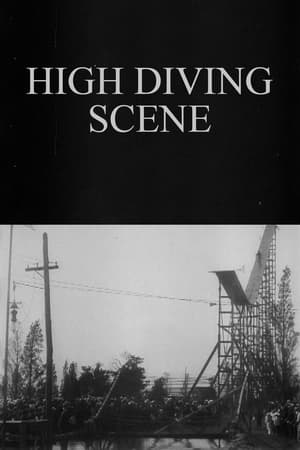
A daredevil rides his bicycle down a ramp and attempts to land in a pool of water as a crowd of spectators watches.
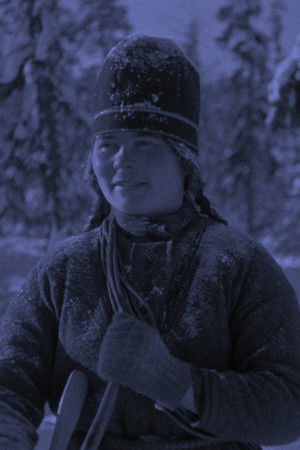
Everyday wintertime life of Sámi reindeer herder Inka Länta and her family, mingling authentic and fictionalized takes.
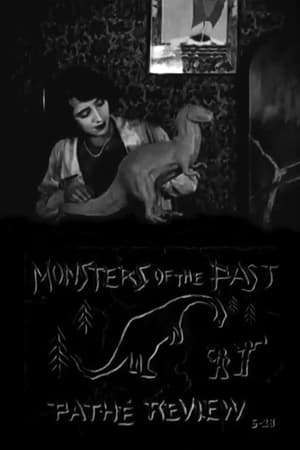
Sculptress Virginia May is seen making a clay model of a tyrannosaurus rex, which is animated using stop motion, and then fights a stop-motion triceratops. Although Miss May's only known relationship with the movies is this particular short, her contemporary, Willis O'Brien and his student Ray Harryhausen certainly made the field a lively one until computer animation caught up in the 1990s -- and arguably their artistry is still unsurpassed.
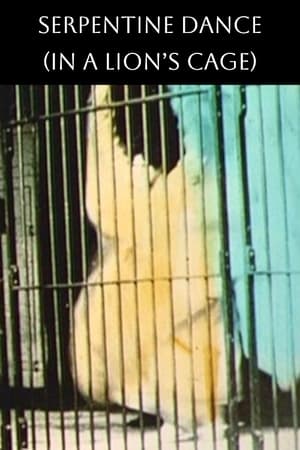
Madame Ondine performs a serpentine dance surrounded by big cats.
Consisting of a single shot, Spiders on a Web is one of the earliest British examples of close-up natural history photography. Made by one of the pioneers of the British film industry, G.A. Smith, this short film details spiders trapped in an enclosure, and despite the title, does not actually feature a web.
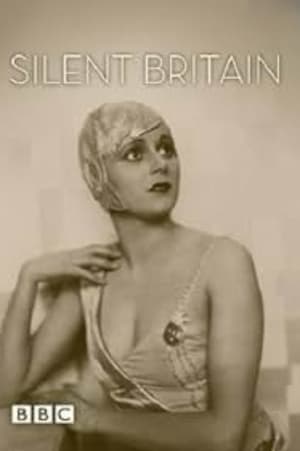
Long treated with indifference by critics and historians, British silent cinema has only recently undergone the reevaluation it has long deserved, revealing it to be far richer than previously acknowledged. This documentary, featuring clips from a remarkable range of films, celebrates the early years of British filmmaking and spans from such pioneers as George Albert Smith and Cecil Hepworth to such later figures as Anthony Asquith, Maurice Elvey and, of course, Alfred Hitchcock.