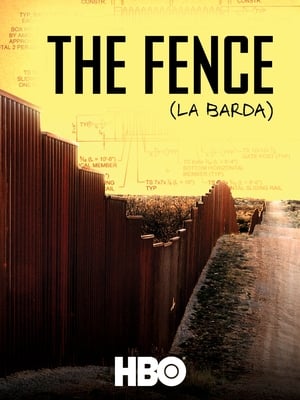
In Oct. 2006, the U.S. government decided to build a 700-mile fence along its troubled 2000-mile-plus border with Mexico. Three years, 19 construction companies, 350 engineers, thousands of construction workers, tens of thousands of tons of metal and $3 billion later, was it all worth it? When Arizona recently enacted one of the most extreme immigration laws in the country, the Obama administration responded by filing a lawsuit against the state. This dispute was merely the latest symptom of a greater national problem: the lack of a comprehensive, workable U.S. immigration policy. In its place, lawmakers have resorted to a series of half-measures, the most expensive of which — the U.S.-Mexico border fence — extends through the desert 150 miles south of the Arizona state capital.
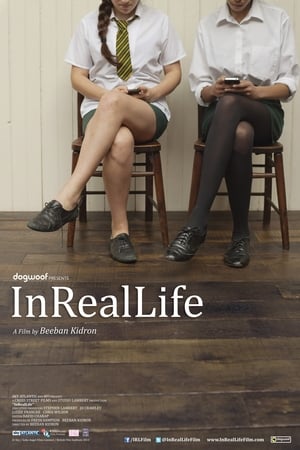
InRealLife takes us on a journey from the bedrooms of British teenagers to the world of Silicon Valley, to find out what exactly the internet is doing to our children.
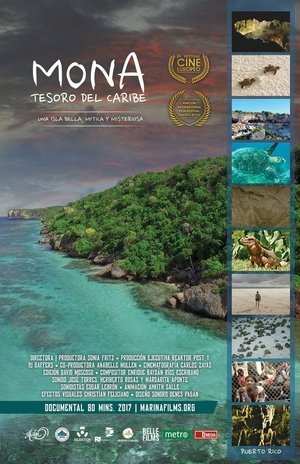
Mona is a beautiful island, distant, mythical, mysterious, full of caves and legends. It is also unknown. This documentary reveals the history and the fauna of Mona Island, while also audiovisually preserving it.
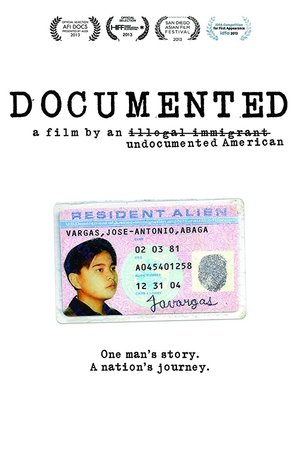
In 2011, Pulitzer Prize-winning journalist Jose Antonio Vargas outed himself as an undocumented immigrant in the New York Times Magazine. 'Documented' chronicles his journey to America from the Philippines as a child; his journey through America as an immigration reform activist/provocateur; and his journey inward as he re-connects with his mother, whom he hasn't seen in 20 years.
For years, filmmaker Sacha Polak has known that she carries the BRCA1 hereditary cancer gene, responsible for breast cancer, but she can't decide what to do. Does she have her breasts removed as a preventive measure to minimize the risk of developing cancer? What if she had them removed, thus forsaking her femininity, for nothing? Sacha decides to make a personal and open documentary about her search.
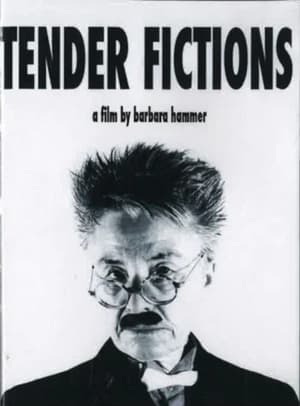
Childhood stories of the artist as a young lesbian and intimate tales of the lesbian as a young artist underscore the filmmaker's life of performances. With a Swiss army knife she robs an American Express Bank in Morocco, accosts a shepherd in a field on International Women's Day, and tap dances on Shirley Temple's star on Hollywood Boulevard. This child movie star was the ideal by which Hammer's ambitious mother measured her own Barbie. Grandma, already a cook for Lillian Gish in Hollywood, introduced the cute, loquacious child and her mother to D.W. Griffith. Lesbian autobiography is a slender genre, so Hammer draws from general culture studies for critique and to provide an ironic edge to the synthesized "voices of authority".
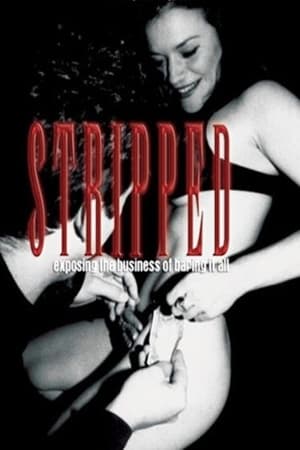
Nonfiction filmmaker Jill Morley documents her exploration of the exotic dancer (stripper) experience. Through tactfully selected and edited sequences, you get an insider's view into the job itself, how clubs chauffeur dancers, protect them, what's required of them, how much money they can make, tricks that dancers use to make more money, and keep clients at bay. By trying to work as a dancer, Morley gives the viewer a very personal perspective on the experience. Long-time professional dancers reveal personal anecdotes and feelings about how the job effects them in candid, personal interviews. A group discussion with several dancers is likewise illuminating.
In 1988, 20-year-old Kirsi Marie Liimatainen travels from Finland to the GDR, to study Marxism-Leninism at the International Youth Academy. In summer of´89 the course ends and the students spread out over the world. Afew months later, the Berlin Wall falls. 24 years later Kirsi, sets out on a cinematic journey to Nicaragua, South Africa, Chile, Bolivia, Lebanon, Germany and Finland to meet up once more with her former fellow students. What remains of their dream of the liberation of the oppressed?
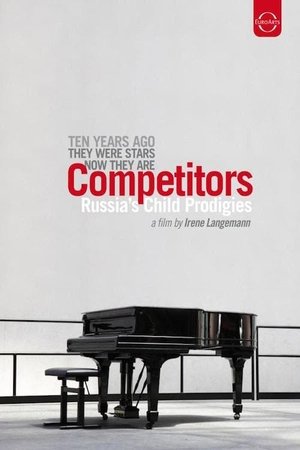
At the age of seventeen, Irina Chistyakova looks back at an international concert career spanning ten years. Irina is the youngest of the four protagonists of the film Russia's Wonder Children made in 2000. By now seventeen years old, she is going through a drama that many prodigies experience: while they were children, they were able to stun audiences with the contrast of their delicate appearances and precocious talents. Like Irina, Nikita Mndoyants (18), Dmitry Krutogolovy (19), and Elena Kolesnichenko (25), are still showered with praise and distinction. But what price did they have to pay for it?
A documentary on women in St. Petersburg who enroll in a program which will help them land millionaire husbands.
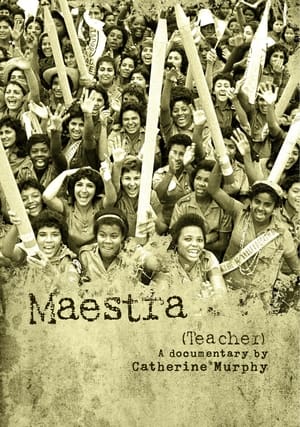
Cuba, 1961: 250,000 volunteers taught 700,000 people to read and write in one year. 100,000 of the teachers were under 18 years old. Over half were women. MAESTRA explores this story through the personal testimonies of the young women who went out to teach literacy in rural communities across the island - and found themselves deeply transformed in the process.
Documentary on the life and accomplishments of the members of this uniquely talented musical family. The film focuses on the Figueroa family’s history within the context of its creative universe, dating back to the 19th century. Through the use of photographs, historic film footage, recordings, sheet music, newspaper clippings, and posters, the musical trajectory of the family is brought to life and their role in transforming the musical history of Puerto Rico and the world is portrayed.
This short documentary illustrates rural French Canadian life in the early 1940s. The film follows Alexis Tremblay and his family through the busy autumn days as they bring in the harvest and help with bread baking and soap making. Winter sees the children revelling in outdoor sports while the women are busy with their weaving, and, with the coming of spring young and old alike repair to the fields once more to plough the earth in preparation for another season of varied crops. One of the first NFB films to be produced, directed, written and shot by women.
This is a David and Goliath story of one veterinarian's battle to protect her patients (tigers, lions and even house cats) from big corporations, with their big corporate money, that will shamelessly do anything to animals to increase their bottom line. She starts a grassroots movement that is fueled by passion, but appears to be losing the battle. Then, unexpectedly, she realizes that the corporations accidentally left her a giant loophole. In a scramble to take advantage of this unforeseen gift, she leads the crusade passing legislation protecting animals from de-clawing in seven cities in just six weeks.
We Came Home is the story of Afghanistan through Afghan American musician, Ariana Delawari. Born in LA, the year the Soviets invade Afghanistan, her home's filled with refugees, Afghan music and her father's dedication to Afghanistan, a country nobody else seemed to care about. After 9/11, her parents move to Kabul to help reconstruct. Ariana spends ten years between LA and Afghanistan, documenting her father's homeland in photographs, film and music. During the Taliban resurgence, Ariana records an album with master musicians in Kabul, revealing the challenges of building anything in this country. Ariana experiences firsthand the threat of war and corruption when her father is arrested. Through this, she unexpectedly realizes why her father could never abandon his people. She now understands Afghanistan cannot be forgotten.
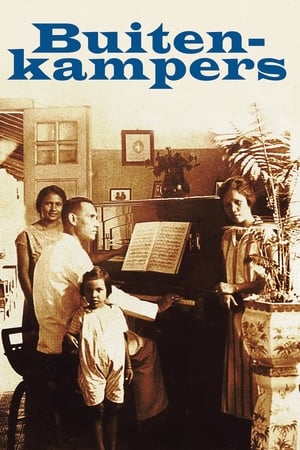
Buitenkampers
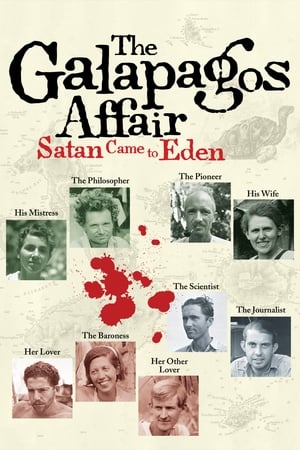
Darwin meets Hitchcock in this documentary. Directors Dan Geller and Dayna Goldfine have created a parable about the search for paradise, set in the brutal yet alluring landscape of the Galapagos Islands, which interweaves an unsolved 1930s murder mystery with stories of present day Galapagos pioneers. A gripping tale of idealistic dreams gone awry, featuring voice-over performances by Cate Blanchett, Diane Kruger, and Gustaf Skarsgard.
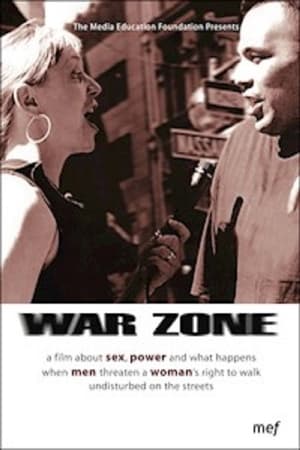
Maggie Hadleigh-West walks crowded urban streets carrying a video camera and microphone, trailed by one or two women also with cameras. Whenever a man harasses her, with ogling or words, she turns the camera on him, moves in close, and questions his behavior.
The multilingual Bombay, the Bombay of intolerance, the Bombay of closed textile mills, of popular culture, sprawling slums and real estate onslaughts, the metropolis of numerous ghettos, the El Dorado. This film is a tale of the cities of Bom Bahia / Bombay / Mumbai, through a tapestry of fiction, cinema vérité, art objects, found footage, sound installation and literary texts. It is a chronicle of the journey of a scattered bunch of insignificant fishing hamlets to the coveted stature of a prime metropolis. The narrative is structured around fictional exchanges between Ismat Chugtai and Sadat Hasan Manto, the two legendary writers who lived in this metropolis, over the art of chronicling these multi-layered overlapping cities.
J. Carlos - O Cronista do Rio