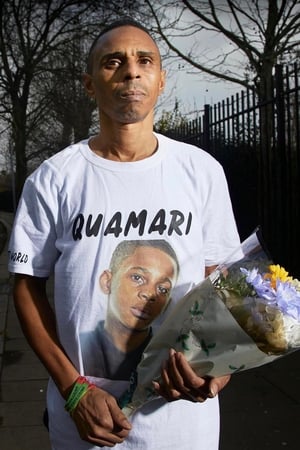
The story of the murder of British backpacker Grace Millane and how her killer was caught.
The world knows the image of the good Canadian. But what if there was a dark secret behind a national identity? THE GOOD CANADIAN exposes the truth behind the idea of a True North strong and free. In this unflinching and eye-opening documentary, directors Leena Minifie and David Paperny move us through the corridors of systemic inequity, from the Indian Act to residential schools, to modern-day family separation. Fusing shocking footage with detailed interviews with experts, advocates, whistleblowers and politicians, THE GOOD CANADIAN challenges national myth-making, while offering Canadians the chance to forge a new identity from the truth.
In the eyes of the law, former neonatal nurse Lucy Letby is one of Britain's worst ever serial killers, found guilty of the murder of seven babies and the attempted murder of many others. This documentary explores new questions that have emerged about the case, as well as meeting experts who hope to have it officially reviewed
Telling the story of the investigation into the murder of five-year-old Logan Mwangi, whose body was found in a river just yards from his home in Wales.
This short documentary is part of the Canada Carries On series of morale-boosting wartime propaganda films. In Home Front, the various WWII-era social contributions of women are highlighted. From medicine to industrial labour to hospitality, education and domesticity, the service these women provided to their country is lauded.
The story of a young boy forced to spend all five years of his short life in hospital while the federal and provincial governments argued over which was responsible for his care, as well as the long struggle of Indigenous activists to force the Canadian government to enforce “Jordan’s Principle” — the promise that no First Nations children would experience inequitable access to government-funded services again.
Elliot Page brings attention to the injustices and injuries caused by environmental racism in his home province, in this urgent documentary on Indigenous and African Nova Scotian women fighting to protect their communities, their land, and their futures.
This documentary reveals how a group of hackers powered the darkest corners of the internet from a Cold War-era bunker in a quiet German tourist town.
A documentary about the rival gangs Mara 18 and Mara Salvatrucha, originating in Los Angeles but terrorizing El Salvador. It explores their origins as possible founding myths of organized crime in a globalized world.
Never-before-seen testimony is included in this documentary on Emmett Louis Till, who, in 1955, was brutally murdered after he whistled at a white woman.
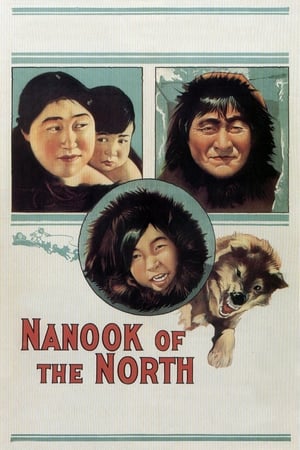
This pioneering documentary film depicts the lives of the indigenous Inuit people of Canada's northern Quebec region. Although the production contains some fictional elements, it vividly shows how its resourceful subjects survive in such a harsh climate, revealing how they construct their igloo homes and find food by hunting and fishing. The film also captures the beautiful, if unforgiving, frozen landscape of the Great White North, far removed from conventional civilization.
A young man's dramatic rescue at sea spirals into accusations he murdered two members of his wealthy New England family.
Canada Mania
Inspired by a book by acclaimed historian Simon Schama, Murder at Harvard uses a combination of film-noir drama and present-day documentary footage to tell the true tale of one of the most notorious American crimes of the 19th century. Grappling with frustrating gaps in the historical record, Schama assumes the role of a time-travelling detective who takes an unusual step for an historian and imagines how certain scenes and encounters might have played out. "Maybe I thought what I was after was not a literal documentary truth," Schama tells us, "but a poetic truth — an imaginative truth — and for that I was going to have to become my own Resurrection man. I was going to have to make these characters live again."
An international investigation into the Rajneesh movement. One of the world's biggest and most successful cults, it had communes in more than 30 countries in the 70s and 80s and was portrayed in the Netflix series Wild Wild Country' But until now, a central truth about the organization has remained hidden.
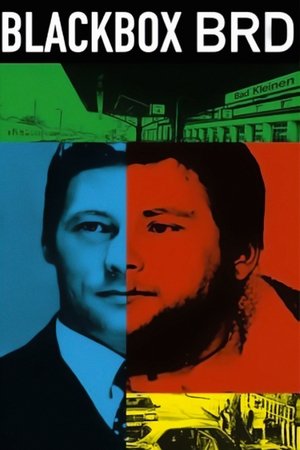
Black Box BRD steps back into German history, showing the Federal Republic of Germany of the 70s and 80s. The country is polarized due to the power struggle of the German state and the "Red Army Faction". Society is torn, the fronts are irreconcilable. The life stories of both Wolfgang Grams and Alfred Herrhausen are tragically linked to this era. Grams is the one who takes up arms for moral rigor; Herrhausen however seizes power and dies when powerful.
Four-time Emmy winner John Kastner was granted unprecedented access to the Brockville facility for 18 months, allowing 46 patients and 75 staff to share their experiences with stunning frankness. The result is two remarkable documentaries: the first, NCR: Not Criminally Responsible, premiered at Hot Docs in the spring of 2013 and follows the story of a violent patient released into the community. The second film, Out of Mind, Out of Sight, returns to the Brockville Mental Health Centre to profile four patients, two men and two women, as they struggle to gain control over their lives so they can return to a society that often fears and demonizes them.
Since the late 18th century American legal decision that the business corporation organizational model is legally a person, it has become a dominant economic, political and social force around the globe. This film takes an in-depth psychological examination of the organization model through various case studies. What the study illustrates is that in the its behaviour, this type of "person" typically acts like a dangerously destructive psychopath without conscience. Furthermore, we see the profound threat this psychopath has for our world and our future, but also how the people with courage, intelligence and determination can do to stop it.
In the late 1990s, some officers at Vancouver Police Department made a documentary film (THROUGH A BLUE LENS) about the everyday lives of six drug addicts in Vancouver's skid row, the Downtown Eastside. TEARS FOR APRIL reintroduces us to these six people; with footage shot over a period of nearly ten years, it continues their biography.
In 1967 Canadian filmmaker Hugh O'Connor came with a crew to eastern Kentucky to make a film showing people from all walks of life in the United States. They finished the day by filming coal miners and their families in rental houses. As the filmmakers were leaving, Hobart Ison, the owner of the property, drove up and fired three shots, killing Hugh O'Connor. Elizabeth Barrett, from Kentucky herself, explores why this happened by trying to understand the people and culture of eastern Kentucky.