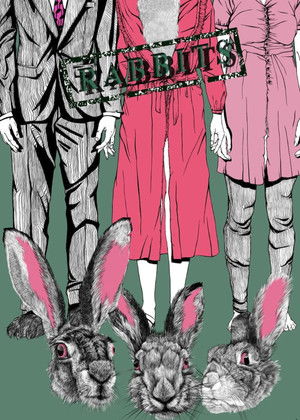
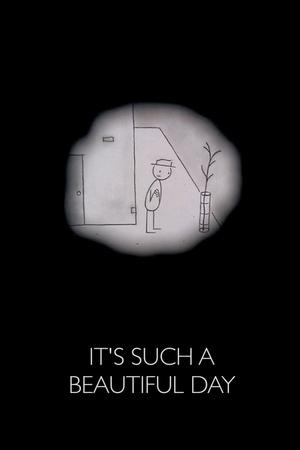
A story of a group of humanoid rabbits and their depressive, daily life. The plot includes Suzie ironing, Jane sitting on a couch, Jack walking in and out of the apartment, and the occasional solo singing number by Suzie or Jane. At one point the rabbits also make contact with their “leader”.
Someone falls off the scene and a tree is upside down. In the search for the roots, people are torn from their usual order, while in the dark connections are made. A woman tastes of the primordial soup and we end up in a system of people spinning around themselves. Only one person remains alone, but he gets unexpected comfort from somewhere.
In the unearthly world of E, hand-made meets hi-tech as characters appear to consume one another with their own, trafficked likenesses. Constructing her work entirely from laser-printed film stills (approximately 770 in total) lifted from Niklaus Schilling’s 1972 horror film, Nachtschatten, Zemlianski rips, layers, and paints these images with pastels and charcoal, then scans them back together into a bracing animation set to the eponymous song (“E”) by the Berlin-based band, Comb.
Black kites soar on thermals along the Kamo river in Kyoto. Flags billow. Cacti spin. Plum trees blossom. Pigeons make love atop a clock. Friends chat by the riverside. Filmed February/March 2019 on a single 40 year old cartridge of Kodachrome Super 8 and hand-developed in Caffenol. The film was heavily fogged, but there are some (real) images.
"The Immortality of the crab" is an experimental animated short film shot on super 8 film, made with in-camera editing and no post production. In this movie, the synaesthetic research between sound and image is accomplished by connecting the animations, made on 1125 cardboard frames, with an original soundtrack produced using only sounds sampled by handling pieces of cardboard. The title refers to the time spent between the birth of the embryonal idea and the production of the short. "The Immortality of the crab" is a south american expression, almost no longer used, which indicates the act of daydreaming. This film symbolizes the director's release from the spectre of procrastination, a condition he sistematically faced when daydreaming about possible ways to give shape to his idea.
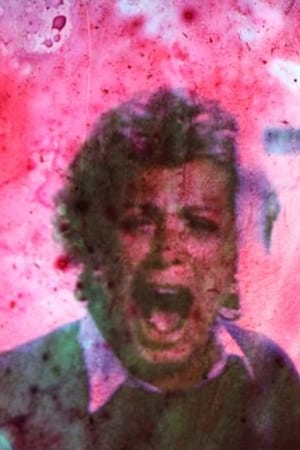
The Philosophy of Horror is a seven-part abstract adaptation of Noël Carroll’s influential film theoretical book of the same title (published in 1990), which is a close examination of the horror genre. The film uses hand painted and decayed 35mm film strips of the classic slasher movie A Nightmare on Elm Street (Wes Craven, 1984) and its sequel A Nightmare on Elm Street 2: Freddy's Revenge (1985).
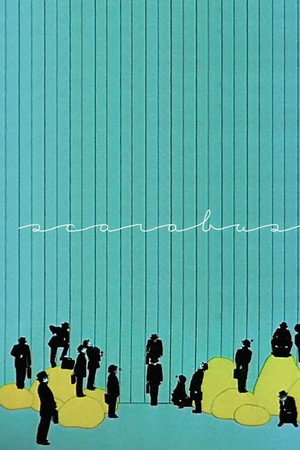
A strange town and the odd behaviour of its inhabitants.
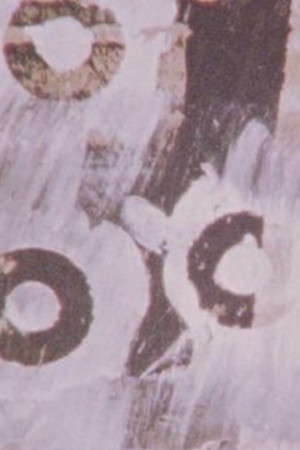
Hand-painted experimental short by Cioni Carpi.
Heineken is an abstraction based on an image from a six pack of beer. The extraction of color and transformation of the source image are inspirations for the animation
TRAUMA is a collaborative film project by Jesse Kanda and Arca first partially exhibited at MoMA PS1 at the end of 2013. The film follows a nonlinear narrative about the death of a salaryman, a drunk driving infant and takes place within a subconscious world. TRAUMA's score will span through Arca's existing and future works.
Stochastics investigates the possibility of making a primitive film, using a flea market Rolleiflex from the fifties, shooting on 120 (6 X 6) black and white film on which each roll takes twelve pictures.
Four types of visual interpretation of four songs by Karol Szymanowski. Polish words by Julian Tuwin, English translation by Jan Sliwinski.
A boom operator attempts to record the noise mushrooms make in this semi-experimental animation inspired by the world of sounds.
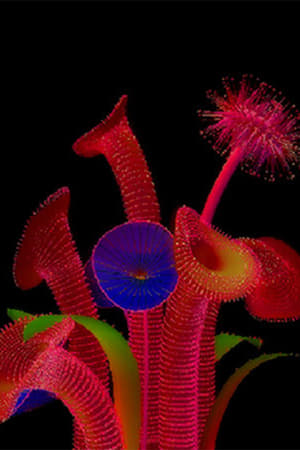
Barry Doupé’s Thalé (2009) experiments with the phenomenology of light and colour through fiber-optic flower arrangements. Doupé’s animations are inspired by the Thale Cress plant, which is commonly used in biological mutation experiments. His rotating electronic floras, which resemble neon lights, sex toys and fireworks, glow in the dark digital void. - Amy Kazymerchyk, Fabulous Festival of Fringe Film
Sam, a shy young man, finds himself in a slow-motion world. Trying to restore the time, he fails. The circumstances bring him to rescue his coworkers, and Nathalie, the girl he secretly loves.
Eye-popping digital moving image work with an equally arresting soundtrack from noise music heavies.
Bill struggles to put together his shattered psyche.
Slow disintegration and aging of artists head, revealing underlying bone structure. Created using old picture-phone technology. New music added in 2013.
Hand painted directly onto film stock by Margaret Tait, this film features animated dancing figures, accompanied by authentic calypso music.
Forms are born and die.