24 horas en la vida de Querejeta
Dirty Dave grimsley is a pint size blend of Randall McMurphy and "One flew over the cuckoo's nest" and George clooney's, Ulysses Everett McGill in "oh brother where art thou" also known as 'dammit man" and "Tom Sawyer" because of his profane hucksterism, Dave is a hard drinking leprechaun with the gift of gab, a heart of gold and not a pot to piss in. He runs a homeless camp while waiting for local authorities in Volusia county, Florida to donate public land for tiger Bay village, a community of services for adults who fall through the cracks.
Documentary that reconstructs the professional life of the dancer through the thread of his own voice. A work that travels to the fundamental landscapes of the personal history of Gades with unpublished documents and the testimony of those who shared with him many pages of the book of his life and the history of Spanish dance in recent decades.
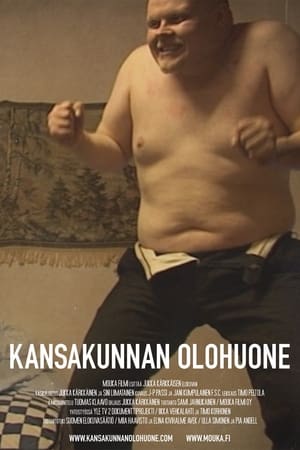
The Living Room of the Nation is a documentary film that portrays a number of Finnish living rooms. The film is a story of changes, the inevitable passing of time, and the human desire to be needed, visible.
How are the sex scenes filmed? What tricks are used to fake the desire? How do the interpreters prepare and feel? Spanish actors and directors talk about the most intimate side of acting, about the tricks and work methods when narrating exposed sex. In Spain the general rule is that there are no rules. Each film, each interpreter, faces it in very different ways.
Jyire holds a motocross race in his hometown, where he must adhere to the park’s restrictions and drown out the public’s concern.
The Other Side of Fear signifies the actions which incite religious violence and broaden the divide of cultural and moral beliefs in society. The film shadows two clashing perspectives both of which are searching for safety in their own communities and these perspectives blend testimonies of trauma and manifestos of power. By using poetic documentation, the director acknowledges that there are more than two sides to every story and intertwines these sentiments, embodiments and experiences into one journey to understand what is happening behind the doors of communities the other hasn’t experienced.
A journey through Greece and Europe’s past and recent history: from the Second World War to the current crisis. It is a historical documentary, a look into many stories. «If Democracy can be destroyed in Greece, it can be destroyed throughout Europe» Paul Craig Roberts
In the picture-postcard community of North Vancouver, filmmaker Murray Siple follows men who have turned bottle-picking, their primary source of income, into the extreme sport of shopping cart racing. Enduring hardships from everyday life on the streets of Vancouver, this sub-culture depicts street life as much more than stereotypes portrayed in mainstream media. The films takes a deep look into the lives of the men who race carts, the adversity they face, and the appeal of cart racing despite the risk.
'Whispering' Bob Harris journeys to America's country music capital to reveal why Nashville became Music City USA. From the beginnings of the Grand Ole Opry on commercial radio, through the threatening onset of rock 'n' roll in the 1950s, right up to the modern mainstream hits of Music Row, this is the story of how music has shaped Nashville and why today it's a place of pilgrimage for musicians from all over the world.
The 1960's and 1970's were a time of change, a time of revolution, a time of the Hippies. Hippies reached across the nation and their effects are still felt today.
We follow Roach, a 17-year-old ex-junkie and squeegee punk living on the streets of Toronto and Montreal. As part of the filmmaking process, he's been given a camera to document his world. The footage he gets is urgent, because there's a war against squeegee kids. This documentary is from the point of view of the kids themselves, in order to provide alternative voices. Roach's camera is positioned behind "enemy" lines: living in derelict buildings, squeegeeing for money, being hunted by police.
Stonewall veterans (including prominent trans activist Sylvia Rivera) and HIV-positive New Yorkers take up residency on the Hudson River piers as cranes raze vacant buildings for a new skyline.
A historical perspective to understand Neoliberalism and to understand why this ideology today so profoundly influences the choices of our governments and our lives.
In 1936, the sound film had already been around for a decade. Nevertheless, Charlie Chaplin (1889-1977) made another silent film, "Modern Times", which only used sound effects as a dramaturgical device. Speaking is reserved for the apparatus alone. The film became a monument in the history of cinema for this very reason.
Max Ramsey, an advocate for those experiencing poverty, uses what he has gone through to serve the impoverished community of Milwaukee despite internal struggles and disapproval from the city.
Dramatizes the plight of a young adventure seeker whose canoe is capsized by a wall of water during a flood. Shows community flood preparations, pointing out that a flood's predictability usually allows ample warning time to save lives. Designed to stimulate discussion on civil preparedness for floods
Documentary that describes and analyzes the characteristics, themes and central concerns of Roman Polanski's cinema.
Award-winning documentary maker Bryan Bruce investigates New Zealand's housing crisis and what might be done to solve it. Bruce consults with recognised world experts (in Canada, Ireland and Germany) to discuss their global research – this time on foreign capital and housing affordability and the effect of immigration on house prices. Bruce also looks at some of the many possible solutions (available particularly in Germany) that would provide families with stability of tenure that don’t involve private ownership.
"Africa Light" - as white local citizens call Namibia. The name suggests romance, the beauty of nature and promises a life without any problems in a country where the difference between rich and poor could hardly be greater. Namibia does not give that impression of it. If you look at its surface it seems like Africa in its most innocent and civilized form. It is a country that is so inviting to dream by its spectacular landscape, stunning scenery and fascinating wildlife. It has a very strong tourism structure and the government gets a lot of money with its magical attraction. But despite its grandiose splendor it is an endless gray zone as well. It oscillates between tradition and modernity, between the cattle in the country and the slums in the city. It shuttles from colonial times, land property reform to minimum wage for everyone. It fluctuates between socialism and cold calculated market economy.