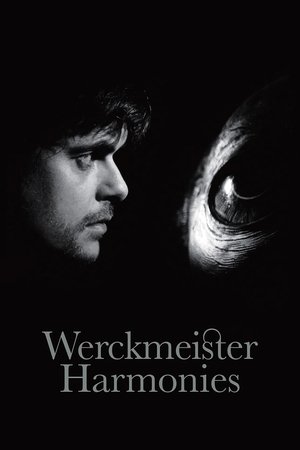
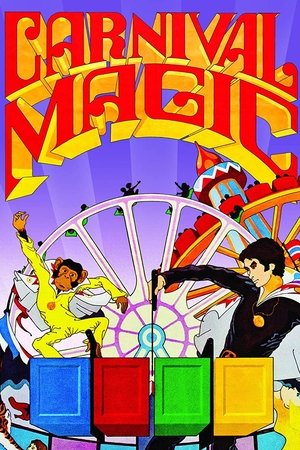
The arrival of a travelling circus sends ripples through the inhabitants of a remote Keralan village.
Hope has an act in a traveling circus where she is "the rainbow princess" and performs a Hula dance. The owner of the circus pawns the girl off on Judge Daingerfield as his long-lost granddaughter. Hope goes to live with the judge, and to the horror of his upstanding family, insists on having the circus performers over as her guests. But the whole ruse, unbeknownst to her, is so that the circus owner's sons can rob the judge.
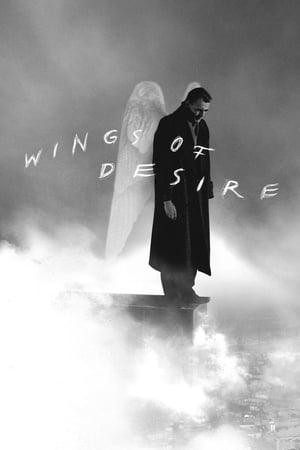
Two angels, Damiel and Cassiel, glide through the streets of Berlin, observing the bustling population, providing invisible rays of hope to the distressed but never interacting with them. When Damiel falls in love with lonely trapeze artist Marion, the angel longs to experience life in the physical world, and finds — with some words of wisdom from actor Peter Falk — that it might be possible for him to take human form.
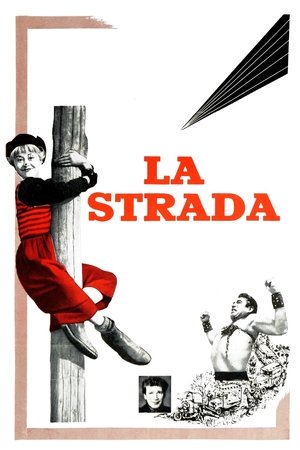
When Gelsomina, a naïve young woman, is purchased from her impoverished mother by brutish circus strongman Zampanò to be his wife and partner, she loyally endures her husband's coldness and abuse as they travel the Italian countryside performing together. Soon Zampanò must deal with his jealousy and conflicted feelings about Gelsomina when she finds a kindred spirit in Il Matto, the carefree circus fool, and contemplates leaving Zampanò.
The owner of a failing circus has to cope with the return of her son after he is released from the psychiatric hospital with complete loss of memory.
Poppy Valentine, a young circus performer who has grown up in her family's traveling circus, has never dreamed of what life would be like outside of its fences. However, now in her mid-20s and with more unwelcomed responsibility weighing her down, she's desperate to figure out if this life is for her.
Dara and Karan, the sons of two of the victims of dacoit Jogi Thakur, wait many years to exact their revenge. When the Thakur's colleague Raja Singh cheats him and runs away with his loot, Jogi is arrested and sentenced for life imprisonment. Years later Jogi escapes from the prison to get hold of Raja and take back his booty, but finds his face on all the posters in the village to find him dead or alive with a reward of fifty thousand rupees. When Karan gets to know Jogi has escaped he goes looking for him. Dara also join hands with Karan to even the score with the dreaded dacoit.
Raju faces many hurdles and disappointments in matters of the heart throughout his life. But as a clown in a circus, he tries to make his audience laugh at the cost of his own sorrows. Along the way, Raju loves and loses, but must always keep a smile on his face because, in the words of his circus manager, "The show must go on."
One out of three silent adaptations of the novella "Les quatre diables" written by Danish author Herman Bang. The most famous one, although unfortunately lost, is without any doubt F.W. Murnau's "4 Devils". This German version, by Danish director A.W. Sandberg, was done eight years prior to Murnau's American one, and was a big success at the time.
A former circus artist escapes from a mental hospital to rejoin his armless, cult leader mother, and is forced to enact brutal murders in her name.
"Don't pity me, just give me money." A smart little girl, Suzu, for the sake of her beloved sick mother, has no choice but to attempt all ways to fork up the money required for the operation. It includes stealing, cheating and almost anything that could yield cash. However, deep within her is a sadness unseen by many.
At a three-ring circus, 'Spangles' Delancy, a beautiful bareback horse rider, falls in love with a wanted man, Dick Radley, who uses the circus as a hideout. The show's owner Big Bill Bowman also falls in love with Spangles-- But only one man can have her.
After Clown Teddy lost his son, he lost his gift for laughter. He opened a joke shop and lives above the shop. His landlady has had a foster son since birth, and Teddy decides to raise the child, who always believed that Teddy was his father. When the mother suddenly appears five years later and wants her son, Teddy decides to run away with the child and goes back onstage with his son. Will the family catch up with them, or will the mother never get her son back?
L'uomo proiettile
Post-war Germany 1945: Two rival gangs of uprooted boys fight each other in the ruins of Berlin, whose business is the black market out of necessity in order to survive. Their respective leaders are Gerhard and Dietrich. A pretty young circus artist named Corona comes to the destroyed city with a traveling circus. She immediately caught the boys' attention. When the latter notice that the circus director is abusing the girl, the two gangs join forces and plot an act of revenge against the tyrant. But with the hustle and bustle caused by this, Corona falls from the trapeze and is seriously injured. When the circus moves on, the boys organize a doctor for the sick artist who has been left behind. Their collectively concern for the blonde beauty makes them forget their enmity. This welds the troops closer together and sets the course for a common, meaningful future.
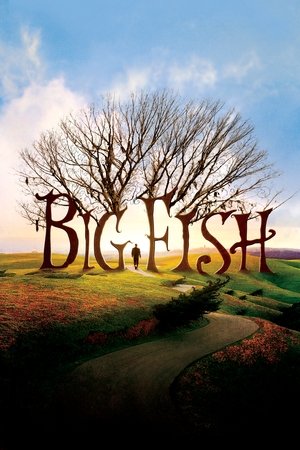
Throughout his life Edward Bloom has always been a man of big appetites, enormous passions and tall tales. In his later years, he remains a huge mystery to his son, William. Now, to get to know the real man, Will begins piecing together a true picture of his father from flashbacks of his amazing adventures.
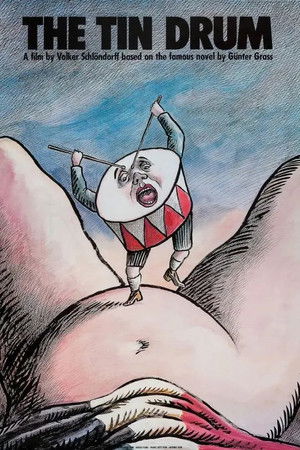
In 1924, Oskar Matzerath is born in the Free City of Danzig. At age three, he falls down a flight of stairs and stops growing. In 1939, World War II breaks out.
When a woman dies in a car accident, her former husband (a traveling circus worker) learns that his wife was pregnant when she divorced him many years earlier. The now teen-aged daughter enters his life. Can they form a relationship?
In one of the occupied European cities, the commandant of the garrison gathers a troupe of circus performers. Coming from different countries, they are in the humiliating position of people forced to serve their enslavers. Many of them, recruited from camps and workhouses, were quite content with their lot. Only after a chain of subsequent events, the artists raise an uprising. Unarmed people are not able to resist the arrived guards. They die, but at the cost of their lives they regain their lost human dignity.
Edith Lawson is engaged as the star dancer of a traveling tent show. Her circus name is Fatima. Billy Harvey, one of the performers, and a part owner of the show, is, or rather pretends to be, in love with Fatima, and she loves him in return. The arduous duties have made the poor girl ill but her managers cruelly insist that she must appear, as she is a feature. During her dance, however, she faints from weakness, and the audience is dismissed. Amos Holden, a young merchant in the village, who is in the audience, is deeply moved by the poor girl's predicament, and determines to help her.