18. April
The humorous portrait of a female artist. The film follows the career of 24-year-old Janine F. who in 2002 caused a commotion from the rooftop of a Berlin building.
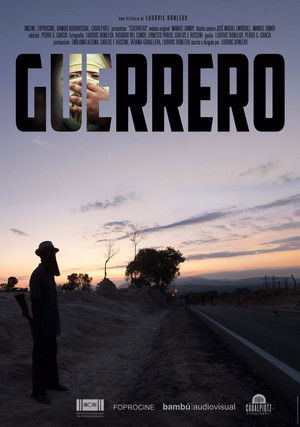
An exploration —manipulated and staged— of life in Las Hurdes, in the province of Cáceres, in Extremadura, Spain, as it was in 1932. Insalubrity, misery and lack of opportunities provoke the emigration of young people and the solitude of those who remain in the desolation of one of the poorest and least developed Spanish regions at that time.
Megacities is a documentary about the slums of five different metropolitan cities.
A poetic look at the life and legacy of legendary author Philip K. Dick (1928-1982), who wrote over a hundred short stories and 44 novels of mind-bending sci-fi, exploring themes of authority, drugs, theology, mental illness and much more.
A documentary about how Russia has been using popular culture as a weapon against Ukraine for decades. Together with industry participants, the film's narrator, musician Albert Tsukrenko, explores the financial, political and psychological reasons for the vulnerability of Ukrainian artists and reflects on how to break this vicious circle. Unfortunately, our own Ukrainian talents are becoming the ammunition in this weapon. Several generations of original Ukrainian musicians at different times in the 1970s and 1980s, 1990s and 2000s, and 2010s switched from Ukrainian to Russian in their work. Whether willingly or unwittingly, they became tools of Russian show business, which has always sought to blur the cultural border between Russia and Ukraine and worked to promote the imperial myth of "one nation".
Based on the book by Major Alexander de Seversky's about his theories of the practical uses of long range strategic bombing. Using a combination of animation humorously telling about the development of air warfare, the film shows de Seversky illustrating his ideas of how air power could win World War II for the Allies.
Addiction is an all-encompassing force, in not only the lives of the afflicted, but also those around them. Our American Family provides an honest, unfiltered look at a close-knit Philadelphia family dealing with generational substance abuse.
The true-life story of a Harlem's notorious Nicky Barnes, a junkie turned multimillionaire drug-lord. Follow his life story from his rough childhood to the last days of his life.
Spin doctors spread misinformation and confusion among American citizens to delay progress on such important issues as global climate change.
Fifteen years ago, social networks were seen as a new democratic ferment that, by promoting the dissemination of information and horizontal communication between citizens, would help people break their chains, from Eastern Europe to the Arab world. The story is different: the assault on the Capitol by Donald Trump's supporters, the chaotic reign of his counterpart Jair Bolsonaro, the offensives targeting Muslims in Narendra Modi's India, or the dazzling success of the racist slogans of Italian League leader Matteo Salvini have highlighted the devastating power on a global scale of the calls to hatred and disinformation that circulate in real time on social media.
This documentary follows three women — a fire chief, a judge, and a street missionary — as they battle West Virginia's devastating opioid epidemic.
A Nazi propaganda film about the lead up to World War II and Germany's success on the Western Front. Utilizes newsreel footage of battles and fell into disfavour with propaganda minister Goebbels because of it's lack of emphasis on Adolf Hitler.
North Korean propaganda film about orchards that yield bigger crops after Kim Il-sung visits. The films was presented as a gift to friendly-minded countries in the world. And expected by the North Korean Culture Ministry to be displayed publicly. Sweden was one of the countries honored by receiving a copy of "Gwasu-ui nara / Country of Orchards".
A holiday of sorts for Stockport army reserves, fitting high-jinks between drills over two weeks of summer training in South Wales.
A newspaper clip of a 30-year-old movie makes our middle-aged protagonist in the middle of his peak years to look for his best childhood friend. The journey leads him back to his teenage years in the 1990s depression, over-generational substance abuse and past encounters. This partly essayistic, autobiographical documentary tells the story of friendship and generational experiences while also pondering on the causes and effects of destinies in the judgmental atmosphere of our society.
Tugging Diary documents a footbridge over a year between August 2019 to January 2021. Due to social unrest and the uncertainty of various immediate happenings, both the internet and physical spaces act as critical communication platforms of its own during this period. As such, information can be circulated in the community more widely and rapidly outside of the existing mainstream media. As time goes by, these materials are continuously altered, some were renewed, while the others were removed, covered with paint, or overlaid by other information.
For over four decades the Rolling Stones have been on top. Arrests, drugs, fall-outs, death and relationships have stood center stage with eight consecutive number one albums in the US and sold out live shows.
When this propaganda film begins the narrator states that before the beginning of World War II, Japan was the only one of thirty-five nations to refuse to sign an anti-narcotics treaty and alleges that this was because the country's leaders planned to use drugs as a weapon of war.
After a tragic series of events in his life, Rob discovers the over-the-counter drug known as codeine. The effects of the pill are so strong and addictive, that soon, Rob becomes dependant and consumes them daily. But the less he feels the more he misses, as his life degrades into a deep, dangerous, oblivion of bliss.