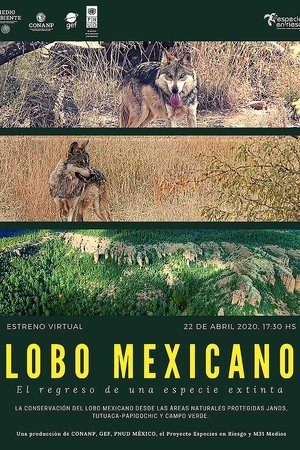
About the mexican wolf in northwest Chihuahua, the search for its conservation among local communities, landowners, and the Livestock Assurance Fund.
During the lockdown, a guy goes to hangout with his friend Sayan but does he arrive ? This short film was made on the spot without any preparation. The duration got big, so it was divided into 2 parts.
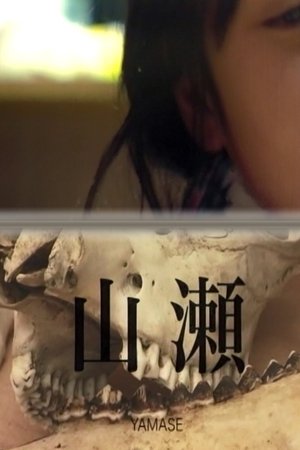
Film by Kenji Onishi. With friends. Mr. Yamase as main character, Sasakubo and Shinojima. And the girls having a good time. The camera is all you need. Looking still at the Mt. Buko which is disappearing.
A small town begins to feel the effects of an illness, forcing the local pastor to make an ethical decision that will affect the habitants of the place.
As a divorced Japanese man's repetitive daily life unfolds, a mysterious presence lurking in the shadows suggests he may not be as alone as he thought.
Two podcasters uncover a cheating scandal in a handball match which shocks the town of Gripton and disturbs the status quo of the local handball scene.
The mountain giving birth
John's first independent work from 1989. Won Best of Fest Shorts at the Cinequest Film Festival, CA. The film is comprised of highly rendered drawings with very little moving parts to tell a complex story of relationships "gone to the birds".
An associative linking of erotic and pornographically suggestive transformations, whereby the unity is preserved by placing the action in a frame.
Story of a two woman who goes to the hammam for the first time.
The first film Vegter made using image generation software that he wrote himself, consists of three parts, each with its own, formal starting-point. Gradual changes in the position, direction, movement, velocity and colour of the elements become apparent.
Burford met Breer in February 1992 and filmed his actions. Breer manipulates some of his mutoscopes: he leafs through some cards of his film in the making, Sparkill Ave! A dome-shaped sculpture slowly moves across the space.
A boy realizes how will his life be in the present and future with or without his crush
A film that places the bright and dark sides of life close together. From an understatement beginning, the movie drives up to an ecstatic highlight with a love act between two young people. The orgasm becomes an enormous image flow into the crematorium's death machine.
Using both found footage and her own material, Nina Fonoroff recollects the memory of her father. Constructing and deconstructing a portrait, she weaves family and friends’ remembrances with an inquiry into her own work process. Her searching attitude suggests that with the loss of her father came a question of the role, not of a particular father, but the father figure—a refusal of authority, and an appreciation of her father’s cycles of learning, teaching, learning. As Danny Kaye, playing Hans Christian Andersen, tells a group of children the story of the piece of chalk that saw itself as a the source, not the transmitter of knowledge, one senses Fonoroff’s sorrow at the loss inherent in the film image, and a yearning for the source of the image, not just its projection.
A young boy learns about his heart through the step-by-step construction of a simple circulatory system. He learns how his heart pumps, what blood and blood vessels do, how they do it, and some of the ways to help his heart stay healthy.
A troubled missionary, led by a rough Pākehā guide, treks through the forest of 1820s Aotearoa. On a journey to deliver a musket to a distant leader, they are surprised by the appearance of a young Māori man who proclaims he’s been sent to guide them. After joining their party, it is not long before the cultural differences of the trio divide them, and the missionary is forced into an awful revelation of his true nature
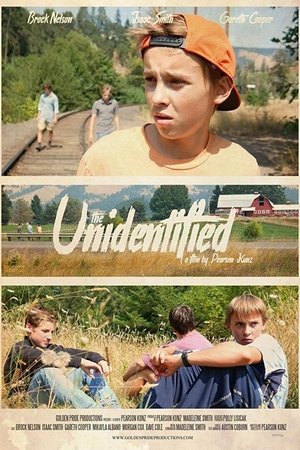
Three young people journey to a mystical Oracle living outside their small town in a search for identity.
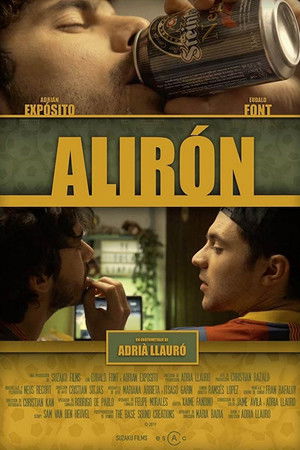
Marc, like every weekend, goes to his best friend's house to watch a football game. But this time the meeting is different, an involuntary finding will make him look at his colleague with different eyes.
In recent decades, humans have lost 25 to 40 percent of the world's corals due to seawater temperature rise and ocean acidification. Dr David Vaughan has been studying corals his whole life, but until eight years ago, could only watch the crisis unfold. After an accident one day in the lab, Vaughan discovered a secret of coral reproduction, and is now working to replant dwindling coral reefs at an astonishing rate. The Atlantic visited Dr Vaughan in the Florida Keys to uncover how the process works and understand how much hope there is to revitalize our reefs.