Documentary about the history of the bateyes, informal settlements surrounding the mills to house workers. Throughout the film, Sara Gómez recovers the political and cultural relevance of black migrants.
Sur les Gratte-Ciel de New York
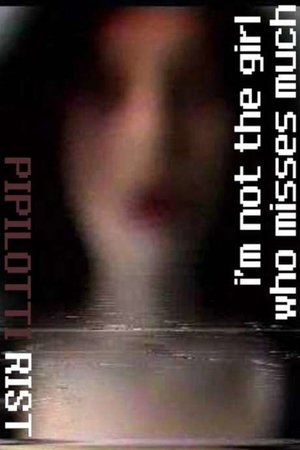
This video work was made while Rist was still an art student at the School of Design in Basel, Switzerland. It was produced in an unlimited edition and is intended to be shown on a domestic-style monitor, although it may also be displayed as a projection with special permission from the artist. The video depicts the artist, an attractive young woman dancing manically around the room while repeatedly singing ‘I’m not the girl who misses much’. The phrase is an adaptation of the first line of the Beatles song ‘Happiness is a Warm Gun'. Referring to her childhood Rist has said, ‘In my village in Switzerland I had a small window on the art world through the mass media; through John Lennon/Yoko Ono I moved from pop music to contemporary art. In return, I will always be grateful to popular culture’ (quoted in ‘I rist, you rist, she rists, he rists, we rist, you rist, they rist, tourist: Hans Ulrich Obrist in Conversation with Pipilotti Rist’, Pipilotti Rist, p.16).
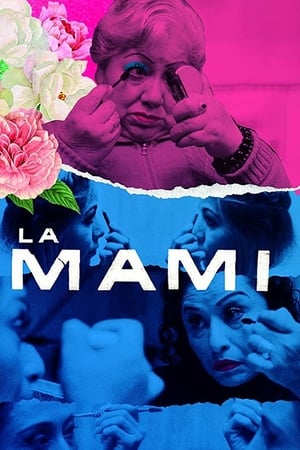
One of the rooms inside the legendary Barba Azul Cabaret has become a shelter for the girls working there: the women's bathroom. Every night La Mami, who's in charge of the bathrooms, offers them the warmth and the advice they need to take on the challenge they face in the dance hall.
Rafael - the minister of sports of an unrecognized country, and Natasha - a Russian opera singer, try living together in Abkhazia - a war-torn future-less country. Observing their difficult relations, we see life in a place marked by war and nationalism. The film portrays trapped people dreaming of peace, normality and happiness.
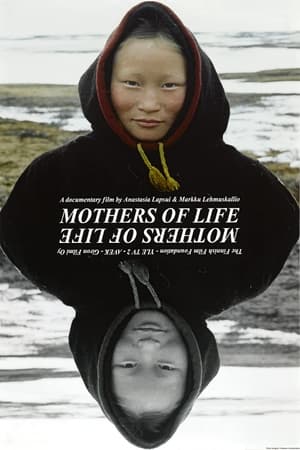
A documentary on the experiences of the Nubetya Yaptiks nomadic family in the Yamal Peninsula, Eastern Siberia, from 1992 to 2001.
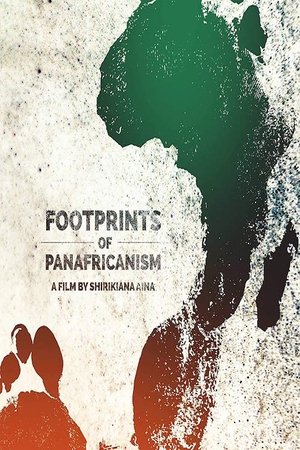
In 1957, Ghana was the first African country to become independent of its colonial rulers, in this case the British. Kwame Nkrumah, the first president of what in 1960 became the Republic of Ghana, called on Africans from all over the world to come to Ghana to help build the new nation. The most important aim was to "undo the damage caused by the slave trade" as filmmaker Shirikiana Aina expressed it in her documentary Footprints of Pan Africanism. Several people speak in Aina’s film about the reconstruction of Ghana and Nkrumah, who was deposed in 1966, offering room for their frequently gripping personal stories. These are often marked by racism, the emerging civil rights movement and what it’s like to be black and live elsewhere. For many, returning to Africa was like going home.
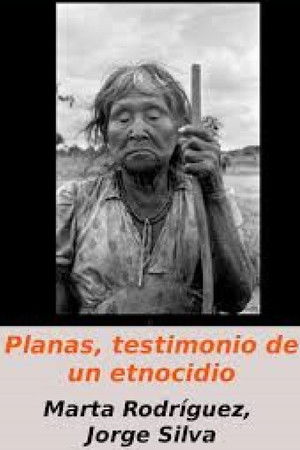
A documentary on the massacre of Planas in the Colombian east plains in 1970. An Indigenous community formed a cooperative to defend their rights from settlers and colonists, but the government organized a military operation to protect the latter and foreign companies.
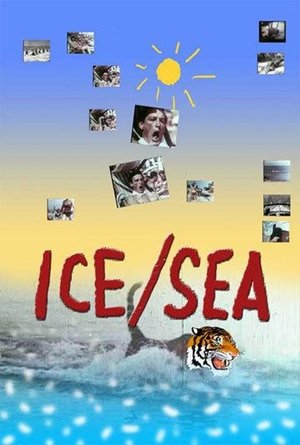
Funny collage of sea, sun and ice. A show from the beach with skiers, tigers, mermaids and much more.
Performance with live audio equalization.
Roaming through the traditional Christmas stands of live carp fish on the street of Prague.
This is the filmic portrait of Daniel Vicinos, one of the most characteristic figures of Argentina's film industry: inventor, technician, collector, ironwork lover, but above all, in love with cinema.
The biggest, most populated, and frantic city in South America. While Cariocas are like tropical birds, Paulistas are like frenetic ants. Distances are longer and they're always in a hurry. A busy journey through this beautiful Brazilian beast which cannot help but beating irregularly.
A vibrant kaleidoscopic tribute to the guitar that meshes dance, mime, visual art, and virtuoso performances to create a spectacular yet intimate celebration of the instrument. For one exciting week the city of Toronto plays host to the International Guitar Festival. The streets echo with the sounds of the instrument as the great masters from every tradition gather to play for each other -- John Williams from England, Leo Brouwer from Cuba (classical), Turibio Santos from Brazil (folk), Vladimir Mikulka from Czechoslovakia (avant-garde), Rik Emmett and Kim Mitchell from Canada, Steve Morse from the USA (rock).
Film loops with overlapping chromatic density and textures achieved with photochemical development experiments.
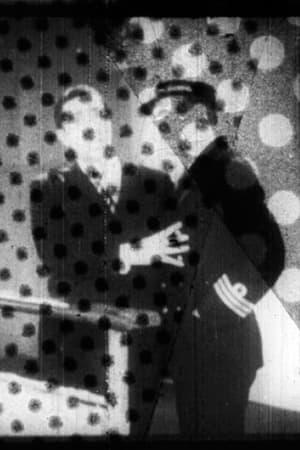
Letraset typeset intervention and editing on the projection copy of the film Cuesta Abajo, by Louis J. Gasnier, 1934.
A Suitable Girl follows three young women in India struggling to maintain their identities and follow their dreams amid intense pressure to get married. The film examines the women's complex relationship with marriage, family, and society.
This is the portrait of Cesar, the heir to a tradition of neon lights that ruled in Buenos Aires' marquees and now resists obsolescence.
During the evening, between 15:00 and 17:00 all of Valparaíso's hills appear almost motionless.
With carpenters and fishermen on the coast of Valparaíso, Leonel Vasquez built a boat/sound installation following the almost extinct tradition of the craft wooden boats that still sail these waters. Through on-board wooden speakers, fishermen tell the stories of their livelihoods.