Eugen Suchoň's opera Svätopluk returns to the stage of the Slovak National Theatre Opera in 2023. Since 1960, when it had its world premiere, this is the fifth production of this musical drama at the Slovak National Theatre. It returns as an eloquent witness of Slovak operatic history, as a bearer of a message, as an impulse for reflection and reassessment of historical attitudes in a broader context.
Inspired by Beaumarchais' comedy, Rossini retains all the passion to create this bubbling opera buffa. A native of Venice, the cradle of the commedia dell’arte, Damiano Michieletto is sensitive to the burlesque vein of Rossinian music. He transposes the action of this "unnecessary precaution" into a contemporary Seville inspired by the cinema of Almodóvar. Bartolo’s monumental building, in which Figaro swirls in free electron, allows the director to give free rein to his crazy imagination.
Werther loves Charlotte, but she promised her mother on her deathbed that she would marry Albert. After the marriage Charlotte suggests that Werther should travel - but not forget her. In addition to the singing and orchestral accompaniment, the entire cast acts very convincingly. And, there's no backstage mugging, entrances and spoken nonsense to spoil the experience of the drama.
The painter Lili Elbe was the first person to have gender confirmation surgery in the 1930s. The homonymous opera is a glimpse into the life of Lili Elbe and her wife Gerda Wegener (also a famous painter) through Lili's transition at a time when such surgery was still completely uncharted territory.
In the Summer of 2009, the British director Nigel Lowery and the Iranian choreographer Amir Hosseinpour brought to the stage of the Berlin State Opera Unter den Linden, with colour and full of humour, the fantastic and imaginative adventures of "Racing Roland". On the occasion of the 200th anniversary of the death of Joseph Haydn, the composer's most renowned opera during his lifetime,Orlando Paladino, was performed, a heroic-comical stage piece based on Ariost's famous Versepos. Singers such as Marlis Petersen (Angelica), Tom Randle (Orlando), Alexandrina Pendatchanska (Alcina), Pietro Spagnoli (Rodomonte), Sunhae Im (Eurilla) and Victor Torres (Pasquale) performed under the musical direction of period-music specialist René Jacobs. The Freiburg Baroque Orchestra completed this high-class production giving the music a beautiful sound and lively swing.
Last production staged by Patrice Chéreau, this Elektra will remain as the main and most striking lyrical event of these last years in Aix-en-Provence. This production is leaded by three amazing singers: the German soprano Evelyn Herlitzius gave a tremendous, never-to-be-forgotten account of the title role, Waltraud Meier portrays a human and chilling Clytemnestra and Adrianne Pieczonka is a fantastic Chrysothemis. Everyone's loneliness and intimate struggles are Patrice Chéreau's favorites theatrical themes. With Esa-Pekka Salonen conducting the Orchestre de Paris, this production of Elektra becomes an unforgettable experience.
John Dexter’s brilliant production, James Levine’s masterful conducting of the eclectic score, and a sensational cast come together to make this Kurt Weill–Bertolt Brecht masterpiece a riveting evening of music theater. At the center of the action is Jimmy Mahoney (Richard Cassilly), a logger who stumbles onto the city of Mahagonny, where (almost) anything is allowed. Teresa Stratas gives a mesmerizing performance as Jenny, the prostitute who takes up with Jimmy, until he is executed for the greatest of all crimes in Mahagonny—to not have any money. The legendary Astrid Varnay, in her final Met appearances, is Leocadia Begbick, and Cornell MacNeil sings Trinity Moses.
Loosely based on the story of the singer Nellie Melba...
Dvorak's masterpiece. 1981 telecast conducted by Jan Štych.
Wolfgang Sawallisch conducts Hans Werner Henze's opera "Der Prinz von Homburg".
Wiener Philharmoniker and Wiener Philharmonia Chor Conducted by Karl Böhm Directed by Vaclav Kaslik
Performance of Schoenberg's Gurrelieder by SBR, conducted by Mariss Jansons
Based on a true story, the "Dialogues des Carmelites" sets the life of the Carmelites nuns at the dawn of the French Revolution. “Robert Carsen's production is effective in its simplicity, allowing the drama to speak for itself. Dagmar Schellenberger compellingly conveys Blanche's journey from distress to acceptance… Anja Silja's portrayal of the old Prioress is outstanding, with its disturbing transformation from serene wisdom to terrified, blasphemous, near-madness as death approaches. ...Riccardo Muti and the La Scala orchestra in magnificent form, captured in magnificent sound. Ultimately, it is the final scene, with its multiple executions, that makes or breaks a production of Dialogues. Carsen's allegorical solution is both elegant and deeply moving.” BBC Music Magazine, September 2007
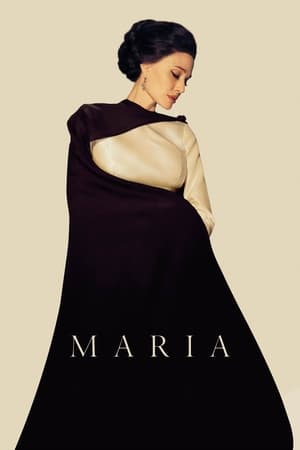
An aging opera singer looks back on her long life, including her relationships with her vocal teacher and a student.
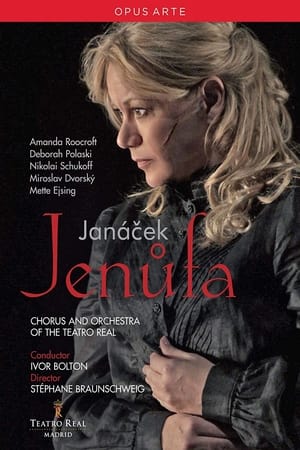
Miller’s daughter Zuzanka Vojířová, betrothed to Ondřej Zachar, hesitates before marriage when Lord Peter Vok of Rožmberk invites her to his castle. There she bears his son Petříček, but his wife hides the child. After Vok’s death in battle, Zuzanka is expelled and lives as a beggar, reunited with her son and former fiancé, finding solace in the continuation of the Rožmberk lineage.
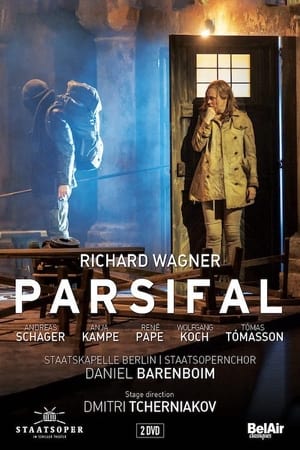
The Met assembled an ideal cast for François Girard’s acclaimed new production of Wagner’s final masterpiece: Jonas Kaufmann in the title role of the fool “made wise by compassion”, René Pape as Gurnemanz, the veteran Knight of the Grail, Katarina Dalayman as Kundry, Peter Mattei is Amfortas, the anguished ruler of the Grail’s kingdom, and Evgeny Nikitin sings the evil magician Klingsor.
Dark fairytale about a demonic doctor who abducts a beautiful opera singer with designs on transforming her into a mechanical nightingale.
A melancholy poet reflects on three women he loved and lost in the past: a mechanical performing doll, a Venetian courtesan, and the consumptive daughter of a celebrated composer.
Glyndebourne's celebrated production of Nikolaus Lehnhoff's Tristan und Isolde is a supremely intelligent achievement; gravely beautiful, haunting and meditative, it is deeply reflective rather than visceral, fortified by Roland Aeschlimann's stunningly effective set, a womb-like space through which the protagonists move like gods. Conductor Jiří Bělohlávek mirrors Lehnhoff's approach in his sophisticated plumbing of the score's depths, with every shift in texture carefully laid bare by an inspired London Philharmonic Orchestra. Nina Stemme's Isolde and Robert Gambill's Tristan, both gloriously lyrical, are matched by superb performances from René Pape as the betrayed and vulnerable King Marke and Bo Skovhus as Kurwenal, deeply touching in his helpless devotion to Tristan. This High Definition recording of a production of uncommon intimacy reveals the opera's music and drama in a new light.
Brett Dean's multi-award-winning opera received its world premiere at Glyndebourne Festival 2017. The world premiere recording of Brett Deans new opera based on Shakespeares best-known tragedy: To be, or not to be. This is Hamlets dilemma, and the essence of Shakespeares most famous and arguably greatest work, given new life in operatic form in this original Glyndebourne commission. Thoughts of murder and revenge drive Hamlet when he learns that it was his uncle Claudius who killed his father, the King of Denmark, then seized his fathers crown and wife. But Hamlets vengeance vies with the question: is suicide a morally valid deed in an unbearably painful world?