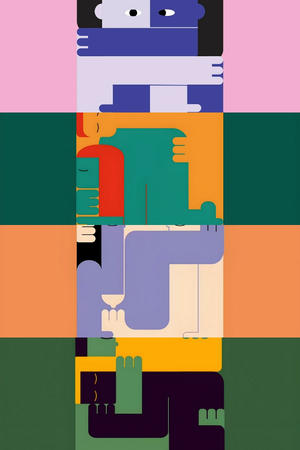
In 1967, experimental filmmaker Jorgen Leth created a striking short film, The Perfect Human, starring a man and women sitting in a box while a narrator poses questions about their relationship and humanity. Years later, Danish director Lars von Trier made a deal with Leth to remake his film five times, each under a different set of circumstances and with von Trier's strictly prescribed rules. As Leth completes each challenge, von Trier creates increasingly further elaborate stipulations.
Heartbeat
Creeping from the halls of the maze brain, corruption and terror is woven by devils born from the denied errors of mankind.
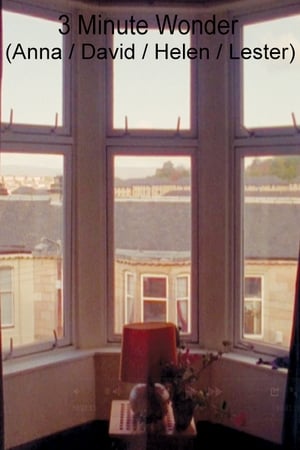
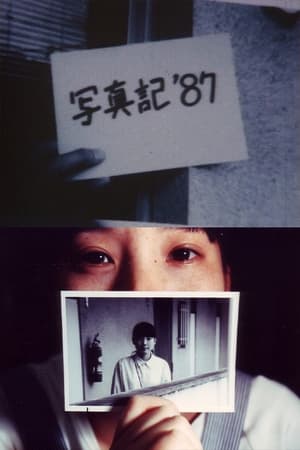
I turned my gaze to the various events in daily life and made this filmic diary in a manner as if confessing my feelings. Of course, since I was making the film, I wanted to depict these feelings and events with tricky techniques. I used various methods to shoot photographs of a relative's wedding, the landscape I see from window of my house, commemorative travel photographs and the like frame-by-frame.
In continuous motion with no end or barrier in its way.
A manufactured memory.
This portrait of a guinea fowl is the first clear vision I've had of the hot-blooded dinosaurs still living among us. (SB)
WORM AND WEB LOVE begins with bracketed light, a throbbing worm in the sand and sea foam mixed with grass and oceanic detritus, soon superimposed upon the dark blue-toned face of a man, then a woman (Michael McClure and Amy Evans McClure), each seen, then on, through superimpositions of drifting smoke and the back-lit stark grid of a spider's web. The obvious affections of the man and woman, their clear display of love, is metaphored in these tenuous superimpositions, culminating in the frantic movements of the spider itself and the dance of joy of the features of the couple in loving resolution.
This stream-of-consciousness could be nothing less than pathway of the soul, as images of Marilyn's window are remembered from inside-out, its "view" interwoven with all of other windowing and the Elements of the known world.
After a six -or seven- year study of Hammurabi's Code, original Babylonian Text and translation, I've tried to feel my way into the moving visual thought process of this ancient culture (whose numerical system is composed primarily of building materials, nails, joints and the like): this, then, is a visual music which balances the two thought processes of Structure and Nature.
An unnamed passer-by is forced to trace a circular route inside an abandoned tram station, facing loss and time. The broken walls act as a channel, transmitting fragmentary, blurred and analogical memories.
We live with stories. And it's hard for us to give up on these stories, which provide us our identity, a way of understanding ourselves. Reflections from three successive generations are dusted off and presented as remaining fragments. An attempt to archive thoughts on familial history, narrative traditions, human perception and "the story" from known and unknown sources. "There is history behind it and the history becomes the story and the story becomes the pattern and the pattern becomes rigidity."
Experimental film fragment made with the Edison-Dickson-Heise experimental horizontal-feed kinetograph camera and viewer, using 3/4-inch wide film.
Someone falls off the scene and a tree is upside down. In the search for the roots, people are torn from their usual order, while in the dark connections are made. A woman tastes of the primordial soup and we end up in a system of people spinning around themselves. Only one person remains alone, but he gets unexpected comfort from somewhere.
Something takes us underground, where gods and monsters are active, amid the ruins of a world they move around with their innumerable hands. Inspired by Fritz Lang and Richard Wagner, Remains is a daydream.
A meditation on the human quest to transcend physicality, constructed from decaying archival footage and set to an original symphonic score.
The second entry in Velu Viswanadhan's series of experimental documentaries. This film traces the Ganges river upstream.
An anthology of one-minute films created by 51 international filmmakers on the theme of the death of cinema. Intended as an ode to 35mm, the film was screened one time only on a purpose-built 20x12 meter public cinema screen in the Port of Tallinn, Estonia, on 22 December 2011. A special projector was constructed for the event which allowed the actual filmstrip to be burnt at the same time as the film was shown.
Made on a wind-up Bolex camera, The Sound of Seeing announced the arrival of 21-year-old filmmaker Tony Williams. Based around a painter and a composer wandering the city (and beyond), the film meshes music and imagery to show the duo taking inspiration from their surroundings.
A small portrait of the volatility of intimacy and of breaking free from abusive cycles: made in response to a year of collapsing relationships and violent accidents that left me broken, dislocated and stuck in my apartment.