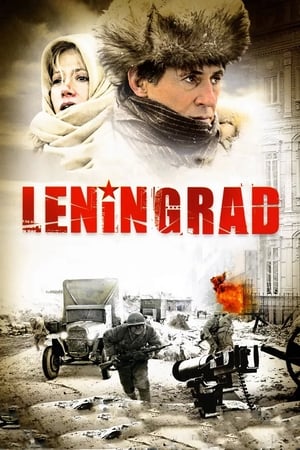
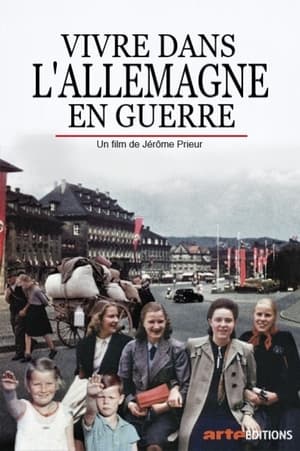
It was one of the great crimes of the Second World War: from 1941 to 1944, a total of 872 days, the siege and starvation of Leningrad by the German Wehrmacht on Hitler's orders lasted. Over a million people fell victim to the blockade, most of them dying of hunger. Countless of these starving people wrote diaries with the last of their strength, and cameramen filmed in the paralyzed city. Evidence from the hell of the siege, many of the film recordings, but above all the written memories on which this documentary on the occasion of the 80th anniversary of the liberation is based, remained under lock and key after the war. The voices of those who had suffered through this terrible time should not be heard by anyone, because they did not fit the pathos of the Leningrad heroic song that was officially sung. Most of the recordings come from women. The writers feared neither the enemy nor the Communist Party or Stalin, who often proved incompetent in providing for the population.
Filmmaker Eva Colmers' father Theo Melzer spent three and a half years in a POW camp in Lethbridge, Alberta -- one of 25 such camps across Canada housing German prisoners captured during World War II. Surviving prisoners, including Melzer, recount how their lives were changed by the unexpected respect and dignity they received at the hands of their Canadian captors.
In February 1939, more than 20,000 Americans filled Madison Square Garden for an event billed as a “Pro-American Rally.” Images of George Washington hung next to swastikas and speakers railed against the “Jewish controlled media” and called for a return to a racially “pure” America. The keynote speaker was Fritz Kuhn, head of the German American Bund. Nazi Town, USA tells the largely unknown story of the Bund, which had scores of chapters in suburbs and big cities across the country and represented what many believe was a real threat of fascist subversion in the United States. The Bund held joint rallies with the Ku Klux Klan and ran dozens of summer camps for children centered around Nazi ideology and imagery. Its melding of patriotic values with virulent anti-Semitism raised thorny issues that we continue to wrestle with today.
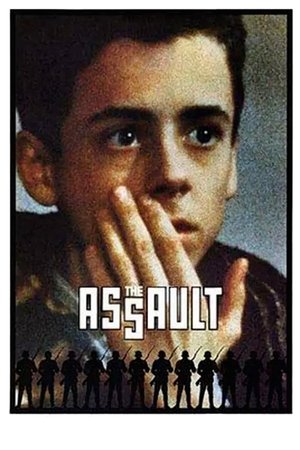
Despite the ongoing WW2, most of the people were just minding their own business. But everything changes when police arrests the group of youths under suspicion of being resistance sympathizers. Outraged townsfolk organize the siege of police station.
Germany, 1945. Soldier Willi Herold, a deserter of the German army, stumbles into a uniform of a Nazi captain abandoned during the last and desperate weeks of the Third Reich. Newly emboldened by the allure of a suit that he has stolen only to stay warm, Willi discovers that many Germans will follow the leader, whoever he is.
Two partisans, a man and a woman, try to escape a Nazi manhunt in the infernal landscape of WW2 Vojvodina.
Federico Buffa racconta: i Diavoli di Zonderwater
A woman - raised in the jungle - tries to help an American stop a native uprising spurned on by Nazis.
This World War II documentary rests on an unusual thesis: it argues that, in the wake of Pearl Harbor, the actions precipitated by the U.S.A.F. that truly helped turn the tide were perpetrated not by the widely-ballyhooed U.S.N. aviators or aircraft carriers, but by the American submarines - silent warriors beneath the deceptively placid ocean surface. The subs, after all, were responsible for gravely wounding Japan's industry, all but destroying the Japanese merchant fleet, and therefore preventing reinforcement of Japanese military garrisons. In relaying this story, the program draws on a series of interviews with military veterans, and endless archival footage of naval battles that chronologically tells the gripping story of the Pacific Front of the war.
A group of resistance members are fighting Germans in the occupied Minsk during WWII.
While Dresden is in ruins in the immediate aftermath of the Second World War, over two thousand paintings by artists including Rembrandt, Raphael, Rubens, Giorgione, and Vermeer have disappeared from the city’s Old Masters Picture Gallery. Red Army captain Leonov and his soldiers are ordered to recover the lost paintings.
When Germany invades Holland in 1940, a British intelligence officer and two Dutch diamond merchants go to Amsterdam to persuade the Dutch diamond merchants to evacuate their diamond supplies to England.
Alex is an 11-year old boy who, during WWII, hides in the Jewish ghetto from Nazis after all his relatives have been sent to the concentration camp. The movie portrays the ghetto through his eyes.
A group of children from a small Slovenian town form a battalion to fight against the Nazi enemy.
An RAF squadron is brought down over occupied France. The flyers get to Paris in spite of the fact that the youngest, Baby, is injured. He must be hidden and his wounds cared for. The Gestapo has already issued orders for their arrest.
As the Germans drop explosive booby-traps on 1943 Britain, the embittered expert who'll have to disarm them fights a private battle with alcohol.
The story of a village woman given the grueling task of looking after (and fulfilling the sexual needs of) her quadruple amputee husband, a Japanese soldier in the Second Sino-Japanese War who has been decreed a "War God" by the Emperor.
It tells the story of the Warsaw Uprising of 1944 through the eyes of a US airman, escaper from the Nazi Stalag camp and two young reporters, cameramen for the Bureau of Information and Propaganda of the Polish Home Army. Their mission: documenting the Uprising by shooting newsreels for the “Palladium” cinema. Looking for the right shots, they go deeper and deeper – literally and figuratively – into the heart of the Uprising. Traumatic truth becomes obvious. Aware of being witnesses of indescribable events, they realize their duties: to document them and preserve the rolls of film at any cost…
When their boat sinks while crossing the Timor Sea during World War II, a troop of young Australian soldiers must find a way to survive the harsh seas on a quickly shrinking raft. Hundreds of miles from anywhere, they must confront interpersonal conflicts, enemy attacks, and the advances of one very large, very hungry great white shark.
The true story of one boy's journey as a victim of Nazi oppression. While exposed to some of the most horrific events of the Holocaust, Misa was able to endure the atrocities of genocide through his love of art and music.