The story of artist Edith Lake Wilkinson, a painter who was committed to an asylum in 1924 and never heard from again. All her worldly possessions were packed into trunks and shipped to a relative in West Virginia where they sat in an attic for 40 years. Edith's great-niece, Emmy Award winning writer and director Jane Anderson, grew up surrounded by Edith's paintings, thanks to her mother who had gone poking through that dusty attic and rescued Edith's work. The film follows Jane in her decades-long journey to find the answers to the mystery of Edith's buried life, return the work to Provincetown and have Edith's contributions recognized by the larger art world.
In a community where silence is seen as necessary for survival, undocumented immigrant activist Angy Rivera joins a generation of Dreamers in a quest to come out of the shadows and claim her place in the only home she's ever known.
The work of the artist.
This short documentary captures the poetry of the city’s storied skid row before its gentrification.
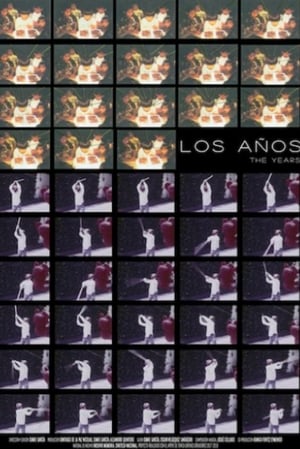
Chapter 15 of the series 18 decades of life in Mexico in the twentieth century. Images of the cultural, social and political life in Mexico from 1970 to 1974. During the presidential term of Luis Echeverria Alvarez fantasies of prosperous and modern country it dissolves; Mexico live in political crisis. It is a time of omnipotence, barbarism, and violence intervention: the world seeks new ways. In Mexico, it held the World Cup, unionism is strengthened and inflation responds to the continuing economic imbalances.
Chapter 16 of the series 18 decades of life in Mexico in the twentieth century. Images of the cultural, social and political life in Mexico from 1975 to 1979. Overview of the first years of the government of Jose Lopez Portillo. At the beginning of his administration, political problems make it necessary to counter the influence of Luis Echeverria. It is a time of disappearances and political killings; Birth of opposition political associations and guerrilla movements. Mexico is experiencing one of its worst economic crises.
In this documentary companion to CHARLIE'S COUNTRY, Australian actor David Gulpilil tells the story of when his people's way of life was derailed by ours.
This documentary from Min Sook Lee follows a poverty-stricken father from Central Mexico, along with several of his countrymen, as they make their annual migration to southern Ontario to pick tomatoes. For 8 months a year, the town's population absorbs 4,000 migrant workers who toil under conditions, and for wages, that no local would accept. Yet despite a fear of repercussions, the workers voice their desire for dignity and respect.
Provocateur, artist, performer: Peter Vanessa "Troy" Davies was a chameleon. Using layers of identity at will, Davies charmed his way through a lifetime of secrets and lies, prostitution, art, HIV, abuse, incest and gender subversion, leaving a legacy of unanswered questions, influential performances and reams of enigmatic home video. Ecco Homo is a psychological detective story and a testament to a social history rarely documented on film
In 1960 Adolf Eichmann was kidnapped in Argentina and taken to Israel to face trial. In 2016, Renate -a young German translator who lives in Buenos Aires- is hired to translate it. Her work shows the unusual life and remarkable trial defense of Eichmann.
Tom "Putuparri" Lawford is a man caught between two worlds: his past and present in modern society, where he battles with alcoholism and domestic violence; and his future as a leader of his people, reconnecting with his ancestral lands, learning about his traditional culture and shouldering his responsibility to pass this knowledge on to the next generation. Director Nicole Ma spent more than a decade documenting Putuparri's journey, travelling with him and his family on numerous occasions to Kurtal, in the Kimberley's Great Sandy Desert region – traditionally a site of great significance as a place where people ritually make rain – as they fight for their native title claim over the area. Set against the backdrop of this long fight for ownership of traditional lands, the MIFF Premiere Fund-supported Putuparri and the Rainmakers is an emotional, visually breathtaking story of love, hope and the survival of Aboriginal law and culture against all odds.
Madeline Anderson’s documentary brings viewers to the front lines of the civil rights movement during the 1969 Charleston hospital workers’ strike, when 400 poorly paid Black women went on strike to demand union recognition and a wage increase, only to find themselves in confrontation with the National Guard and the state government. Anderson personally participated in the strike, along with such notable figures as Coretta Scott King, Ralph Abernathy and Andrew Young, all affiliated with Martin Luther King’s Southern Christian Leadership Conference. Anderson’s film shows the courage and resiliency of the strikers and the support they received from the local black community. It is an essential filmed record of this important moment in the history of civil and women’s rights. The film is also notable as arguably the first televised documentary on civil rights directed by a woman of color, solidifying its place in American film history.
The story of the women at the "House of Sharing" continues. Old women who share a common bond lead a peaceful life in the countryside, raising vegetables, chickens and painting pictures. They are no different from the elderly women we see every day. But they are all scarred by pain and sorrow from their collective history of being comfort women during World War 2. They became subject to prejudice in their own homeland after their return to Korea. It is painful for them to watch other peoples' children and grandchildren, and they feel rage when the Japanese government tries to cover up the unspeakable crimes they committed against them. The film asks us to remember what these women sacrificed and the shame and misery they faced even as these individuals pass away often forgotten by their own people.
The town of Picher, Oklahoma, was once home to the world's richest lead and zinc mining field. After decades of mining, towering piles of mine waste covered 25,000 acres, devastating Quapaw tribal lands and local economies. Acid mine water burned nearby Tar Creek and stained it red. Despite these environmental hazards, many people in Picher desperately wished to stay and revitalize their town.
Looking for Lowry is an entertaining documentary film about the life and work of the much loved British artist L.S. Lowry (1887 – 1976). This contemporary new film illuminates Lowry’s extraordinary vision for the first time in high definition, as we meet those who knew him and those who have been inspired in our post-industrial age by his unique observations of our country and his powerful artistic legacy. Manchester-born rock star Noel Gallagher describes how Lowry’s life chimes with his own: “…for me it’s like when did you first hear the Beatles? Lowry has always been there… I guess all the people Lowry ever met are there in his paintings…”
The lives of three extraordinary African women from different social levels and origins determined to bring about radical transformations in their day to day realities: Kenyan attorney and reputed lawyer Njoki Ndung'u, Puthi Ragophala the committed school principal of a remote South African village and Zimbabwean housewife-entrepreneur, Amai Rosie.
A tale of one North Korean's struggle to leave behind the homeland, this stylised documentary unveils the depths of loss and longing, and the desire for legacy amongst a community of North Korean defectors who have escaped their homeland to live in the leafy London suburb of New Malden.
Jessye Norman Sings Carmen is a gripping vérité study of the famous dramatic soprano’s approach to mastering Bizet’s heroine in recording sessions with Seiji Ozawa and the Orchestre National de France. Musical segments include performances of three arias and the great duets between Carmen and Don José
Strasbourg was home to one of three Reich Universities founded by the Nazis, known as a project close to Hitler's heart. The university, founded in 1941, is infamous for the human experiments performed on KZ prisoners by the professors of the medical faculty. What did its dean, Johannes Stein, grandfather of documentarian Kirsten Esch, know of these crimes?
Lyrical and powerfully personal essay film that reflects on the deaths of her husband Lou Reed, her mother, her beloved dog, and such diverse subjects as family memories, surveillance, and Buddhist teachings.