Capturar (Las 1001 novias)
A documentary about the making of the television mini-series by Rainer Werner Fassbinder, including interviewees with the principal actors.
Documentary about the legendary American film director from his introduction to the film industry in its early years to his death in 1959.
The city of Madrid as it appears in the Spanish films of the 1950s. A small tribute to all those who filmed and portrayed Madrid despite the dictatorship, censorship and the critical situation of industry and society.
A documentary about the making of the Lone Wolf and Cub film series.
Omnibus: François Truffaut
Documentary about the making of the film Salò by Pier Paolo Pasolini
Documentary about filmmakers of the New German Cinema who were members of the legendary Filmverlag für Autoren (Film Publishing House for Authors). Among them are Werner Herzog, Rainer Werner Fassbinder, and Wim Wenders.
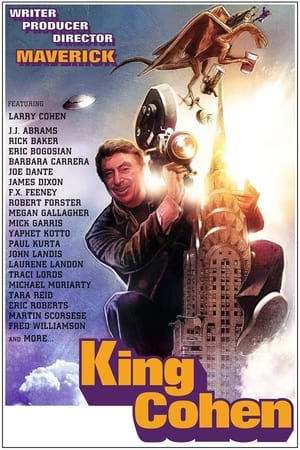
A feature-length documentary focusing on the acclaimed work and eclectic career of maverick filmmaker Larry Cohen, writer-director of "Black Caesar," "It's Alive," "God Told Me To," "Q," "The Stuff," and many more.
Interview with Fritz Lang on the roof of Villa Malaparte on Capri during the filming of the fictitious film "Odysseus" and the filming of "Contempt" by Jean-Luc Godard, in which Fritz Lang plays the role of an old film director. During the interview, excerpts from the Lang films "The Nibelungen", "The Tired Death" and "M" are shown.
Martin Scorsese’s electrifying concert documentary captures The Rolling Stones live at New York’s Beacon Theatre during their A Bigger Bang tour. Filmed over two nights in 2006 with an all-star team of cinematographers, the film combines dynamic performances with archival footage and rare glimpses behind the scenes, offering a vibrant portrait of the band’s enduring energy and legacy.
Documentary featuring interviews with several of legendary Spanish director Luis Buñuel’s close friends and collaborators.
How are the sex scenes filmed? What tricks are used to fake the desire? How do the interpreters prepare and feel? Spanish actors and directors talk about the most intimate side of acting, about the tricks and work methods when narrating exposed sex. In Spain the general rule is that there are no rules. Each film, each interpreter, faces it in very different ways.
In the summer of 1975, the young director Steven Spielberg set new standards for cinema worldwide with an oversized shark bite, a plastic shark fin and an unmistakable two-note main theme composed by John Williams. With the horror from the deep, a man-eating, gigantic great white shark, the film of the same name became a similarly traumatic reference as Alfred Hitchcock's "Psycho": it triggered lasting primal fears across generations. On the beaches of the world, there was clearly a "before" and an "after". Steven Spielberg, who was only 28 at the time, not only set new standards for the thriller genre, but also hid his biting criticism of US capitalism in the 1970s behind it.
Documentary about the making of Alfred Hitchcock's 'Frenzy'.
Hawaii, May 1977. After the success of Star Wars, George Lucas and Steven Spielberg meet to find a new project to work on together, the former as producer, the latter as director. The story of how the charismatic archaeologist Indiana Jones was born and how his first adventure, released in 1981, triumphed at box offices around the world.
Great filmmakers claim the artistic influence of French director Henri-Georges Clouzot (1907-1977), a master of suspense, with a unique vision of the world, who knew how to offer both great shows and subtle studies of characters. Beyond the myth of the tyrannical director, a contrasting portrait of a visionary, an agitator, an artist against the system.
In Spain, they have been the others for decades, those whose names are not known because their faces never appear in front of a camera; those whose voices are linked to the best performances in the mind of any cinema aficionado. They are the other actors, those who work in the shadows, those who are often criticized by the cinephiles who defend the original version, the purity and integrity of the motion pictures. They are the dubbing actors.
A retrospective look at the global impact of Alien, the science fiction and horror masterpiece directed by British filmmaker Ridley Scott in 1979, exploring the origins of its unique aesthetic and the audacity of its screenplay.
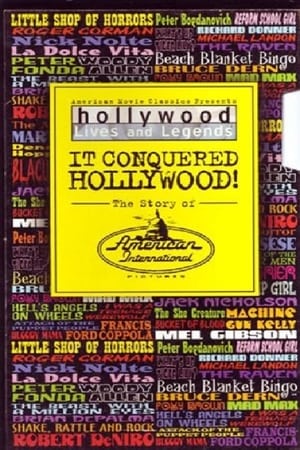
A chronicle of the long career of American filmmaker Roger Corman, the most tenacious and ingenious low-budget producer and director in the US film industry, a pioneer of independent filmmaking and discoverer of new talent.