Story of the relationship between the poets Ted Hughes and Sylvia Plath.
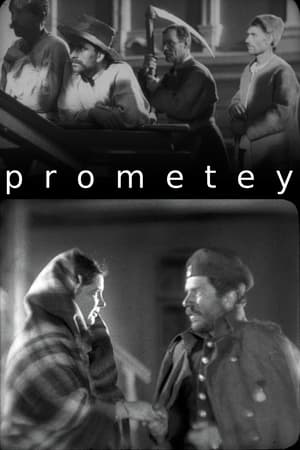
The life of the revered 18th-century Armenian poet and musician Sayat-Nova. Portraying events in the life of the artist from childhood up to his death, the movie addresses in particular his relationships with women, including his muse. The production tells Sayat-Nova's dramatic story by using both his poems and largely still camerawork, creating a work hailed as revolutionary by Mikhail Vartanov.
In 1818, high-spirited young Fanny Brawne finds herself increasingly intrigued by the handsome but aloof poet John Keats, who lives next door to her family friends the Dilkes. After reading a book of his poetry, she finds herself even more drawn to the taciturn Keats. Although he agrees to teach her about poetry, Keats cannot act on his reciprocated feelings for Fanny, since as a struggling poet he has no money to support a wife.
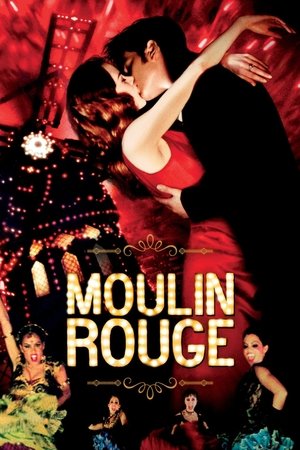
A celebration of love and creative inspiration takes place in the infamous, gaudy and glamorous Parisian nightclub, at the cusp of the 20th century. A young poet, who is plunged into the heady world of Moulin Rouge, begins a passionate affair with the club's most notorious and beautiful star.
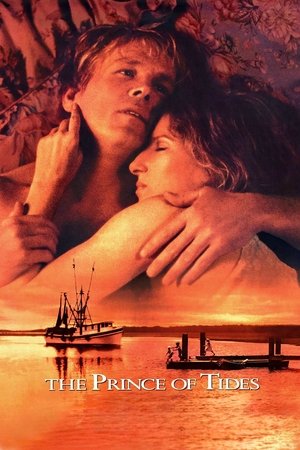
A troubled Southern man talks to his suicidal sister's psychiatrist about their family history and falls in love with her (and New York City) in the process.
The young Friedrich Schiller begins his life as a poet with a dramatic escape. After the sensational success of his first drama "The Robbers", he deserts from the Duke's army. At the Mannheim Court and National Theatre, he initially receives a friendly reception, but his new play "Fiesko" is not well received by the artistic director Dalberg. In the successful actor and author August Wilhelm Iffland, Schiller finds a strong competitor for the position of in-house playwright and vies with him for the love of the same woman. The young poet's situation becomes increasingly precarious; he has no money, suffers from hunger and falls seriously ill. Nevertheless, he works feverishly for recognition and success with no regard for his own health.
Love and injury in time of war. Attilio de Giovanni teaches poetry in Italy. He has a romantic soul, and women love him. But he is in love with Vittoria, and the love is unrequited. Every night he dreams of marrying her, in his boxer shorts and t-shirt, as Tom Waits sings. Vittoria travels to Iraq with her friend, Fuad, a poet; they are there with the second Gulf War breaks out. Vittoria is injured. Attilio must get to her side, and then, as war rages around him, he must find her the medical care she needs. In war, does love conquer all?
Trapped in routine, a Jeju poet finds himself drawn to a boy—and to emotions he’s never dared name.
Robert Burns was well aware of the revolution taking place across the Atlantic as he grew up. The poet was inspired. And America was to be inspired by him. From Abraham Lincoln to Frederick Douglass, and Walt Whitman to Bob Dylan, some of the most significant figures in American politics and culture have cited Burns as an influence.
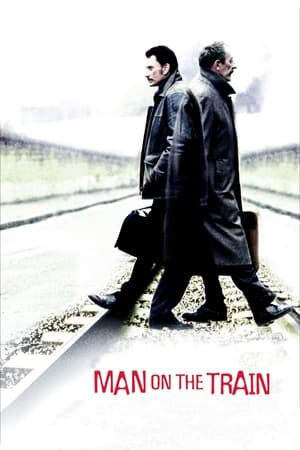
A man, Milan steps off a train, into a small French village. As he waits for the day when he will rob the town bank, he runs into an old retired poetry teacher named M. Manesquier. The two men strike up a strange friendship and explore the road not taken, each wanting to live the other's life.
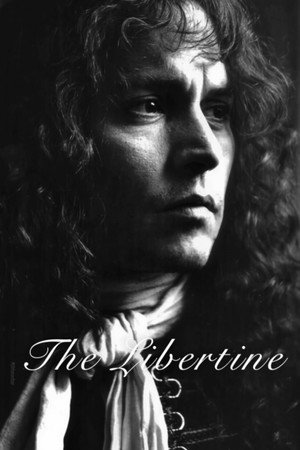
The story of John Wilmot, a.k.a. the Earl of Rochester, a 17th century poet who famously drank and debauched his way to an early grave, only to earn posthumous critical acclaim for his life's work.
While visiting her sister in Paris, a young woman finds romance and learns her brother-in-law is a philanderer.
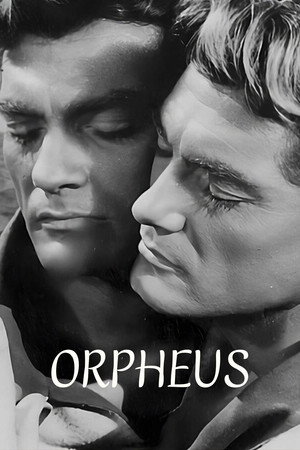
A famous poet in postwar Paris, scorned by the Left Bank youth, is in love with both his wife Eurydice and a mysterious princess. Seeking inspiration, the poet becomes obsessed and follows the princess from the world of the living to the land of the dead.
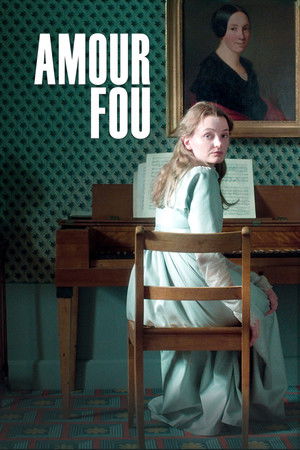
Narcisus and Psyche is based on a novel by Sandor Weores which was adapted by Vilmos Csaplar and director Gabor Body for a feature-length film. Borrowing the character of Psyche from mythology and placing her in Europe in the 19th century, the authors give her a "modern" life. She is an attractive young woman - and remains so throughout the film, in spite of one hardship after another. Psyche is libidinous, and her prurient interests shock her staid contemporaries.
A posthumous look at the last days of Guenther's life as he, his best friend, and his sister let loose on a four-day binge of alcohol, drugs, and sex.
1936. Giovanni Comini, the youngest Federal in Fascist Italy, is summoned to Rome for a delicate mission: to surveil aging national poet Gabriele D'Annunzio, whose increasingly restless behavior Mussolini fears could damage his alliance with Nazi Germany. However, after spending time with D'Annunzio, Comini finds himself torn between loyalty to the Party and his fascination with the poet, who will put his burgeoning career at risk.
No one expects much from Christy Brown, a boy with cerebral palsy born into a working-class Irish family. Though Christy is a spastic quadriplegic and essentially paralyzed, a miraculous event occurs when, at the age of 5, he demonstrates control of his left foot by using chalk to scrawl a word on the floor. With the help of his steely mother — and no shortage of grit and determination — Christy overcomes his infirmity to become a painter, poet and author.
A ghostly meeting with Luís de Camões, the one-eyed adventurer, widely considered Portugal’s greatest poet. Luís de Camões is considered Portugal’s national poet, an equivalent to England’s Shakespeare or Spain’s Cervantes. João Lopes’s film takes us on an otherworldly journey to Camões’s five-hundred-year-old epic Os Lusíadas, which he composed in Macau whilst he was stationed in the colony.
A defrocked Episcopal clergyman leads a bus-load of middle-aged Baptist women on a tour of the Mexican coast and comes to terms with the failure haunting his life.
A series of bawdy and satirical episodes written during the reign of the emperor Nero and set in imperial Rome. Like the more famous version made by Federico Fellini, an adaptation of Petronius' Satyricon.