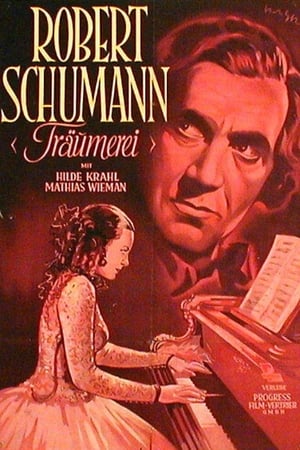
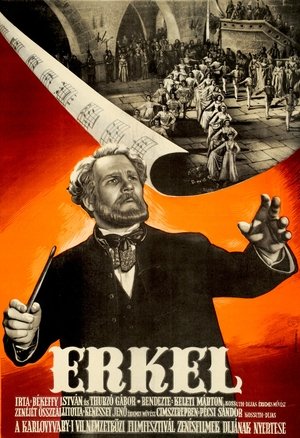
A musical film based on biographical facts about Clara Wieck's love for composer Robert Schumann (1810-1856), her marriage against her will, Schumann's triumph, and his tragic end due to mental illness. The film is beautiful and entertaining, full of noble spirit and beautiful words about art and love, which only conflict in a theoretical context; not least thanks to its solid cast, this film is quite serious and far from kitsch. Completed in 1944, during World War II, the film was rejected by the Nazi leadership, but was eventually released and enjoyed success with an audience already weary of war.
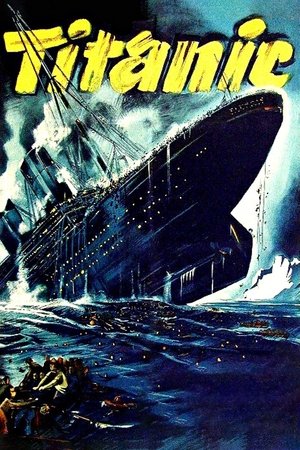
In 1912, the Titanic embarks on its inevitable collision course with history. In the wake of the over-spending required to build the largest luxury ship in the world, White Star Line executive Sir Bruce Ismay schemes to reverse the direction of his company's plummeting stock value. Onboard the Titanic, brave German 1st Officer Petersen struggles to convince his self-important British superiors not to overexert the ship's engines.
Two beautiful and different girls, Alice and Lisette are 17 years old, when forcibly removed from their Alsatian family to cooperate in the war effort in Germany. After spending six months in a indoctrination camp, they are both sent to a munitions factory where they are tasked to perform inhuman works. An explosion erupts, they are suspected of sabotage and threatened with being sent to a boot camp. Alice and Lisette believe they saved when transferred to a maternity where they continue living the hell of war.
Lyrical biography of the classical composer, depicted as a romantic hero, an accursed artist.
A fiction piece centered around the Czech resistance to the Nazis.
Film journalist and critic Rüdiger Suchsland examines German cinema from 1933, when the Nazis came into power, until 1945, when the Third Reich collapsed. (A sequel to From Caligari to Hitler, 2015.)
The course of an organized strike by workers from North Moravian steelworks in 1931 to resist mass layoffs during the economic crisis.
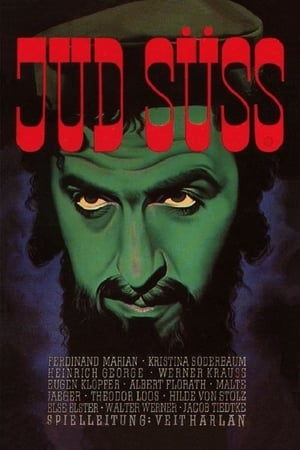
Nazi historical drama about Duke Karl Alexander of Württemberg and his treasurer Süß Oppenheimer.
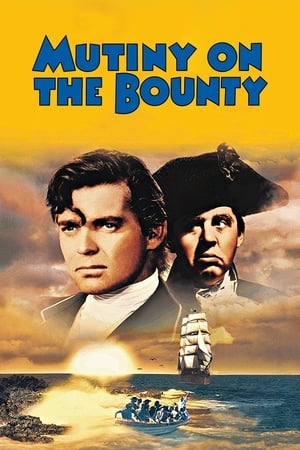
Fletcher Christian successfully leads a revolt against the ruthless Captain Bligh on the HMS Bounty. However, Bligh returns one year later, hell bent on revenge.
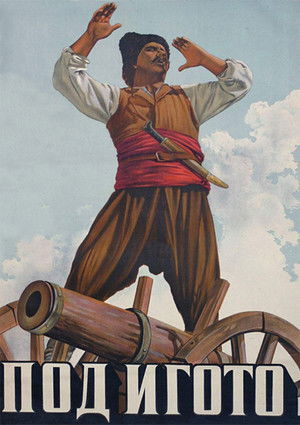
Follows the Bulgarian people's struggle for national independence in the period from 1875 to the Liberation from Otoman bondage.
In the first of Hartl's two Mozart biographies, Hans Holt plays the robust and dashing composer who, in keeping with the spirit of the film's time of origin, sets out into the world like a soldier of art after his falling out with the Salzburg authorities. Instead of conquering lands, he conquers the hearts of young ladies, like one of his most famous creations.
During the Nazi occupation of 1944 Rome, Resistance leader Giorgio Manfredi is pursued by the Nazis as he seeks refuge and a means of escape.
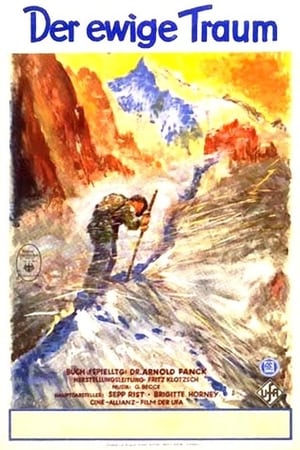
At the end of the 18th century, the wealthy French scholar Saussure comes to a small Alpine village and offers 1,000 pieces of gold to anyone who can lead him to the summit of Mont Blanc. The young farmer's son Jacques Balmat wants to take on the dangerous task, even though his father has told him from an early age about the mighty mountain spirits who guard a legendary treasure of gold on the mountain peak.
Dr. Peter Blood, unjustly convicted of treason and exiled from England, becomes a notorious pirate.
A Nazi propaganda movie from 1941 directed by Max W. Kimmich, covering a story of Irish heroism and martyrdom over two generations under the occupation of the British.
The story of the HMS Torrin, from its construction to its sinking in the Mediterranean during action in World War II. The ship’s first and only commanding officer is Captain E.V. Kinross, who trains his men not only to be loyal to him and the country, but—most importantly—to themselves.
In the 15th century Richard Duke of Gloucester, aided by his club-footed executioner Mord, eliminates those ahead of him in succession to the throne, then occupied by his brother King Edward IV of England. As each murder is accomplished he takes particular delight in removing small figurines, each resembling one of the successors, from a throne-room dollhouse, until he alone remains. After the death of Edward he becomes Richard III, King of England, and need only defeat the exiled Henry Tudor to retain power.
Dashing pirate Geoffrey Thorpe plunders Spanish ships for Queen Elizabeth I and falls in love with Dona Maria, a beautiful Spanish royal he captures.
The story of Johann Friedrich Böttger, an apothecary’s apprentice and alchemist’s assistant. Fleeing from the Prussian King, he goes to Saxony, where King Frederick August the Strong takes him to a fortress and demands that he create gold. Böttger is equipped with everything he would need for the task, but he has known for a while that actual gold production is a myth and instead experiments with porcelain—white porcelain, as the Chinese are said to possess. In 1709, he finally succeeds in surprising the King with the "white gold," the first white porcelain made in Europe, he hopes for freedom.
Diederich Heßling is scared of everything and everyone. But as he grows up, he comes to realize that he has to offer his services to the powers-that-be if he wants to wield power himself. His life motto now runs: bow to those at the top and tread on those below. In this way, he always succeeds: as a student in a duel-fighting student fraternity and as a businessman in a paper factory. He cajoles the obese district administrative president Von Wulkow and wins his favor. He slanders his financial rivals and hatches a plot with the social democrats in the town council. On his honeymoon with his rich wife Guste, he finally finds a chance to do his beloved Kaiser a favor. And when a memorial to the Kaiser is unveiled in the town where Diederich lives and works, he delivers the address. He stands behind the lectern in the pouring rain, saluting his Kaiser. The crowd is dispersed. Everything is laid in ruins...