This literary adaptation was one of only two films made during World War II on the subject of the Civil War following the Bolshevik Revolution, as attention by filmmakers and viewers shifted away from past history and toward the current conflict.
An account of the revolutionary years of the legendary American journalist John Reed, who shared his adventurous professional life with his radical commitment to the socialist revolution in Russia, his dream of spreading its principles among the members of the American working class, and his troubled romantic relationship with the writer Louise Bryant.
March/April 1917. The first world war is already a couple year to pace. A sealed train with Russian emigrants keeps on driving from Zürich Germany and Sweden to Sint-Petersburg. The outlaws stand under the guidance of Vladimir J. Lenin. Two senior officers support the revolutionary bomb "to ensure that everything runs smoothly. Yet there are some unpleasant clashes between Socialists and enthusiastic workers who are worried about the war. During train travel there comes an end to Lenin's affair with the gracious Inessa, and his wife Nadja is prepared take back him. The triumphant entrance in St. Petersburg will exceed all expectations....
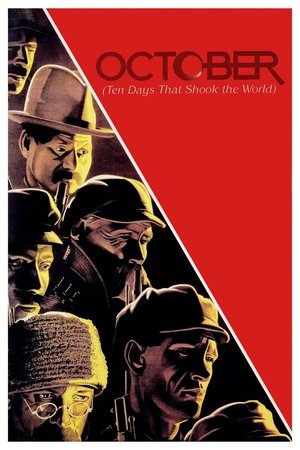
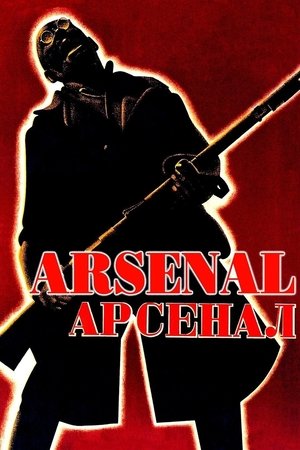
Sergei M. Eisenstein's docu-drama about the 1917 October Revolution in Russia. Made ten years after the events and edited in Eisenstein's 'Soviet Montage' style, it re-enacts in celebratory terms several key scenes from the revolution.
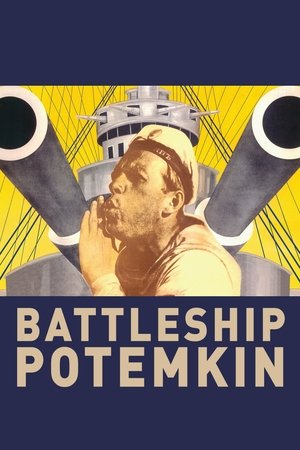
A dramatized account of a great Russian naval mutiny and a resultant public demonstration, showing support, which brought on a police massacre.
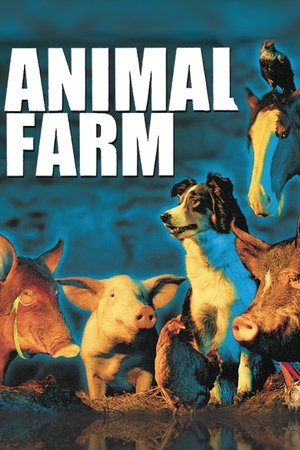
Animals on a farm lead a revolution against the farmers to put their destiny in their own hands. However this revolution eats their own children and they cannot avoid corruption.
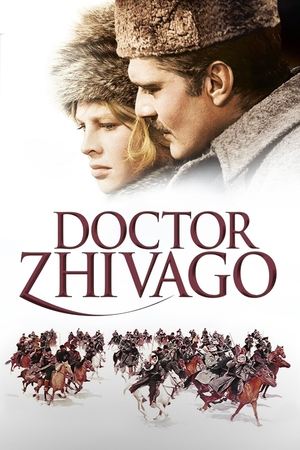
The life of a Russian physician and poet who, although married to another, falls in love with a political activist's wife and experiences hardship during World War I and then the October Revolution.
Tsar Nicholas II, the inept last monarch of Russia, insensitive to the needs of his people, is overthrown and exiled to Siberia with his family.
Zurich, 1905. Nineteen-year-old Russian Sabina Spielrein is put by her parents in a psychiatric hospital, suffering from a severe form of hysteria and refusing to eat. A compassionate doctor, Carl Gustav Jung, takes her under his care and, for the first time, experiments with the psychoanalytical method of his teacher Sigmund Freud. Thus is born a sweeping story of love and passion, of body and soul, soaring to the utmost heights, but also plunging to the darkest depths of the 20th century.
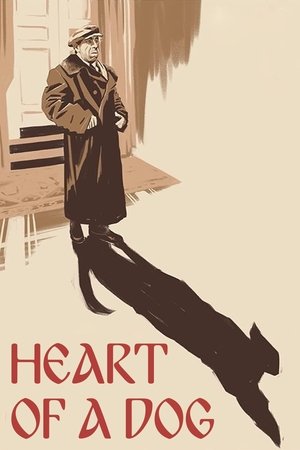
"Heart of a Dog" is a Soviet film adaptation of Mikhail Bulgakov’s iconic novella. Set in 1920s Moscow, it tells the satirical and darkly humorous story of a stray dog named Sharik, who is transformed into a human by Professor Preobrazhensky through a daring medical experiment. The resulting man, Poligraf Poligrafovich Sharikov, embodies the social and ideological tensions of early Soviet society. With its sharp critique of class struggle, human nature, and the perils of radical change, the film is celebrated for its faithful adaptation, brilliant performances, and rich allegorical depth.
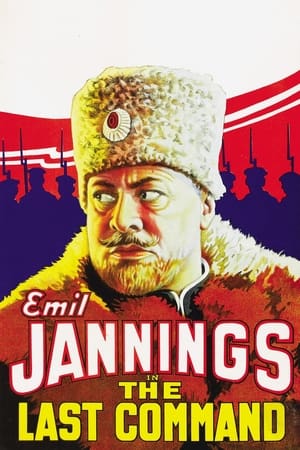
A former Imperial Russian general and cousin of the Czar ends up in Hollywood as an extra in a movie directed by a former revolutionary.
A film about the struggle of Baltic Fleet sailors for revolutionary Petrograd in the autumn of 1917. The film focuses on the fates of a sailor and a naval officer who join the ranks of those fighting for the revolution.
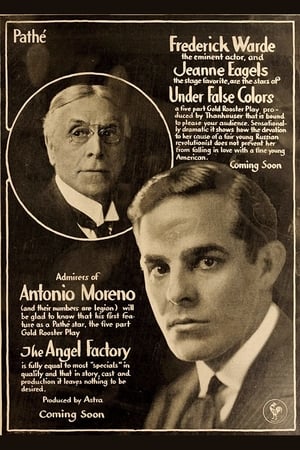
During the Russian Revolution Princess Vera, though betrothed to Prince Dimitri, is attracted to the peasant Feodor.
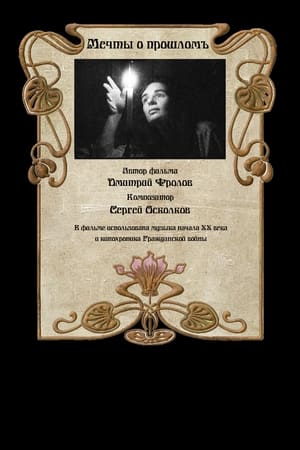
A film about peace, love and war. Dedicated to the 100th anniversary of the end of the Civil War in Russia. The film takes place at the end of the summer of 1917, when Russia and the whole world were at a crossroads between two eras. None of the people could even imagine how much his life would change in the very near future. In a strange way, the atmosphere of the film echoes our current reality and what is happening in Russia today. According to the form of visualization, the film belongs to experimental mockumentary cinema. To give greater authenticity to what is happening on the screen, the shooting was carried out on black-and-white negatives of 16 and 35 mm, hand-operated cameras were used and the material was developed in manual spiral tanks. The documentary chronicle of the Kolchak army of 1919 and the White army in the Far East of 1922 is embedded in the finale of the film.
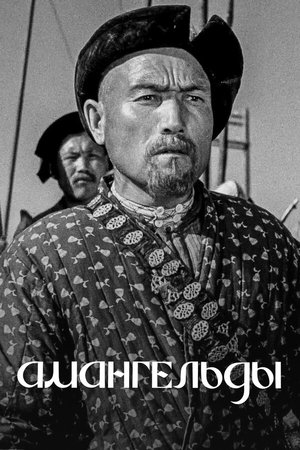
In 1916, a new Russian governor is sent to the Kazakhstan steppes by the Tsar and tries to impose mandatory military service upon the native Kazakhs. A popular uprising begins against the Tsarist empire. A Kazakh hero, Amangeldy Imanov, leads the revolt and allies with the Bolsheviks against the Kazakh clans loyal to the Tsar.
During the Russian Revolution, a young nobleman and his peasant maid flee from their homeland to Constantinople where they marry and begin a challenging new life.
A new doctor from Moscow arrives at a provincial mental institution. His interest is the peculiarities of the psyche of a patient who believes that he is Yakov Yurovsky, the man who assassinated the last Russian tsar. In the course of their conversations it transpires that the patient is a kind of philosopher, not without a gift for suggestion. In a while the doctor himself falls under his patient’s influence: he tends to relive that fatal night of June 16-17, 1918 when, without any investigation or trial, Tsar Nicholas II, who had recently abdicated, was murdered, together with his wife, daughters and incurably ill heir. Soon the doctor realizes that the tragedy of the last Russian tsar is in part his own tragedy, too...
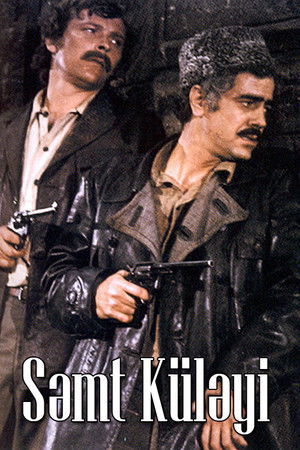
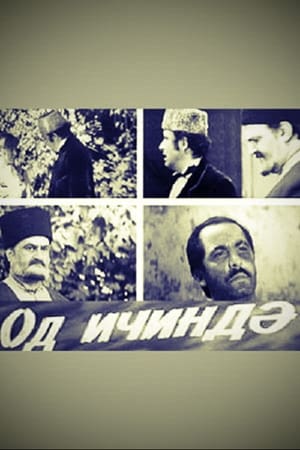
Historical film about the dramatic event in the southern regions of Azerbaijan during the 1917 Soviet Revolution.
Jan Vacek, a revolutionary of Czech origin, organizes the retreat of communist troops in Baku after the Bolshevik Revolution, following the fall of the local commune...
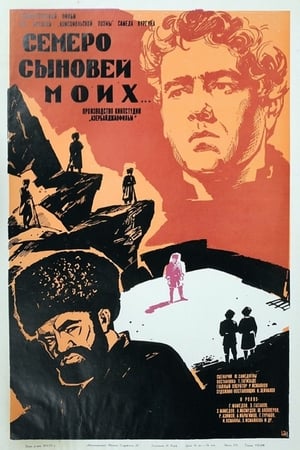
This film was based on Samad Vurgun's "Komsomol poem". Seven sons, like seven samurai become the seven komsomols (communist leaders) who were sent to a village to establish Soviet power. Seven sons become the romanticized images of people's heroes ready to take revenge.