An attempt to visualize a secret knowledge about the nature of man —a philo-clip—, through the use of structures of dissociated geometry and laser beams, with direct references to the Renaissance, Leonardo da Vinci and the work of Agrippa von Nettesheim.
Created as a demonstration of multi-disciplinary thinking, this film was produced in association with UCLA Mathematics professor, Ray Redheffer. With the exclusive use of storytelling through animation this lively and exuberant presentation of the “architecture of algebra,” the film explains the behavior of specific exponents and concludes with the general laws that all exponential expressions obey – all achieved without the use of narration. Council on International Non-Theatrical Events (C.I.N.E.) Gold Eagle Award, 1975. Columbus International Film Festival Bronze Chris Plaque Award-C, 1975. New York International Animation Festival Bronze Praexinoscope Award, 1975. Melbourne Film Festival Selected for Participation, 1976.
Every year, millions of high school and college students walk into their first geometry class thinking: "Circles and squares. How tough can it be?" Then they encounter the postulates, statements and theorems! But have no fear, our simple, straightforward format will help students understand and make sense of geometry.
Physics is a system of models of nature according to which all phenomena are explained in terms of matter and force. Sound confusing? It doesn't have to be! Whether you need help with high school physics, need to review for a college physics class, or you're studying for the AP Physics Exam, this physics tutorial will help you understand the basics, such as Newton's Laws, the Law of Universal Gravitation, Kepler's Law and more.
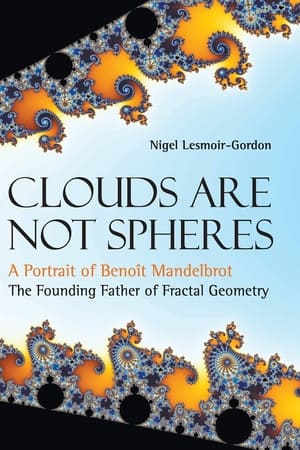
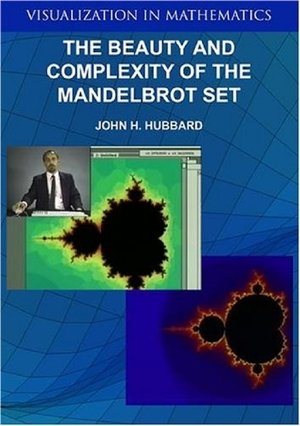
Until recently geometry was 'cold', incapable of describing the irregular shape of a cloud, the slope of a mountain or the beauty of the human body. With fractal geometry, Benoit Mandelbrot gave us a language for our natural world. In this captivating documentary, the man himself explains this groundbreaking discovery.
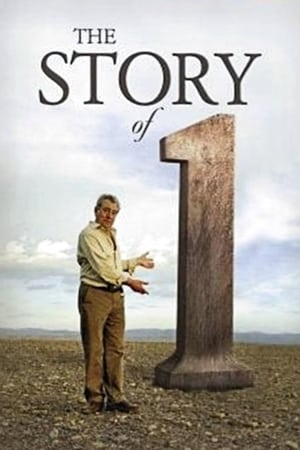
A humor-inflected history of the of the number one, covering military applications in ancient Rome, the measurement of distances in India, and the decimal system created by Leibnitz.
NOVA leads viewers on a mathematical mystery tour -- a provocative exploration of math's astonishing power across the centuries. We discover math's signature in the swirl of a nautilus shell, the whirlpool of a galaxy and the spiral in the center of a sunflower. Math was essential to everything from the first wireless radio transmissions to the prediction and discovery of the Higgs boson and the successful landing of rovers on Mars. But where does math get its power? Astrophysicist and writer Mario Livio, along with a colorful cast of mathematicians, physicists and engineers, follows math from Pythagoras to Einstein and beyond, all leading to the ultimate riddle: Is math an invention or a discovery? Humankind's clever trick or the language of the universe?
A mathematical play on one repeated movement. It imparts a sense of possibilities: that something simple can produce complex and unexpected patterns. As with an atom, the variety of possibilities from a base movement is potentially infinite.
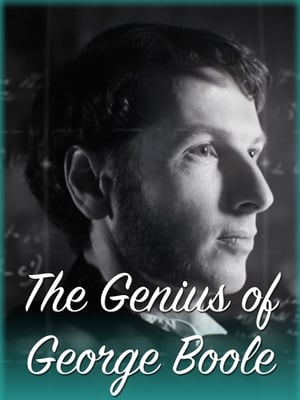
Narrated by Oscar-winning actor Jeremy Irons, The Genius of George Boole assembles academics and industry leaders from across the globe to explore the life and importance of one of the world’s greatest unsung heroes.
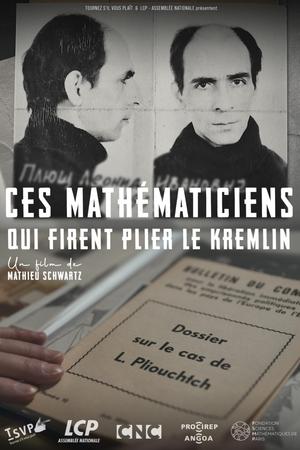
On January 15, 1972, Leonid Pliouchtch, a Ukrainian mathematician who was unknown at the time, was locked up in a Soviet psychiatric institution and accused of dissidence. His wife, Tatiana, fought for his defense and contacted a committee of French mathematicians to help him. Led by Laurent Schwartz, they launched a three-year campaign to secure his release and succeeded in getting the USSR to back down on the issue.
A short mathematical romance about two flat beings who bond over their shared fascination of the hypothetical third-dimension.
Based on the thesis of Alejandro Rivero and Ernesto Pacheco, this documentary attempts to glimpse, through the senses, the fourth mathematical dimension.
“If abstract films are really abstract films… they deal exclusively with those abstract relations that can be expressed in terms of shape and motion” wrote Robert Fairthorne in Film Art in 1936. A mathematician and information scientist, Fairthorne saw aesthetic potential in an animation made as a teaching aid by Salt, and proposed this collaboration. (Tate.org.uk)
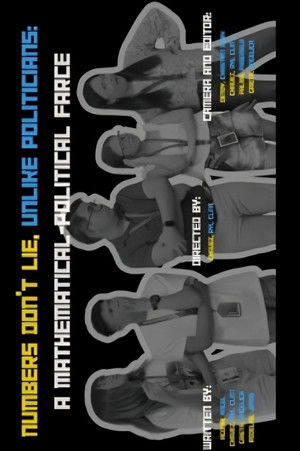
A mockumentary-style short film that humorously follows political science students debating whether math has any real place in their discipline. Through chaptered banter, fourth-wall breaks, and satire, the film exposes the uneasy but unavoidable relationship between numbers, power, and political truth.
In April 1969 Ilya (Eliyahu) Rips, then a young student of mathematics, tried to burn himself in a public square in Riga, Latvia protesting against the Soviet invasion of Czechoslovakia. He was stopped and eventually sent to a psychiatric hospital for two years. Thanks to international pressure from the mathematical community in 1972 he was allowed to emigrate to Israel. Now he is considered one of the most brilliant mathematicians in the world. At the same time, for most people familiar with his name, Rips is first of all associated with the development of the so called Bible Code – a mathematical program allegedly helping to decipher hidden messages encoded in Torah – the Five Books of Moses. He is attacked by both the scientific and religious community, yet his research continues.
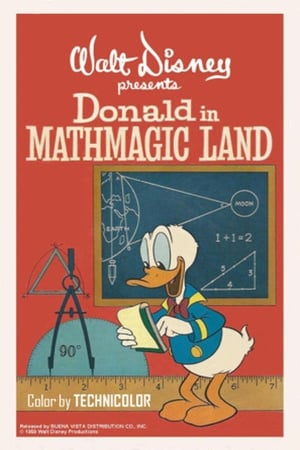
Disney used animation here to explain through this wonderful adventure of Donald how mathematics can be useful in our real life. Through this journey Donald shows us how mathematics are not just numbers and charts, but magical living things.
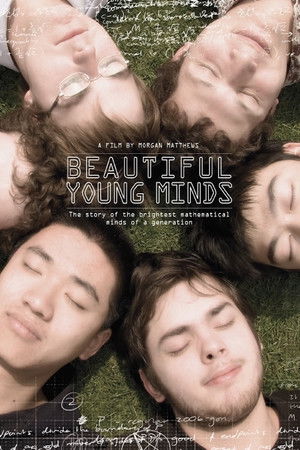
This BAFTA nominated documentary tells the story of some of the brightest mathematical brains of a generation. Each year, exceptionally gifted teenagers from over 90 countries compete for medals at the International Mathematical Olympiad. The film follows a group of brilliant teenagers as they battle it out to become the chosen six selected to represent the UK.
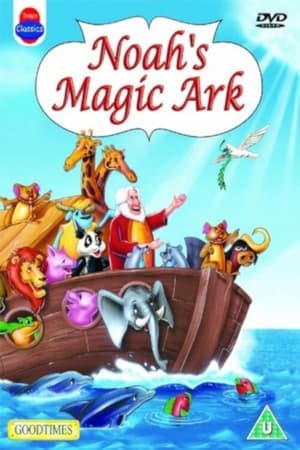
Children and parents alike will love this captivating and charming version of the story of Noah's ark and the great flood, uniquely told from the animals' point of view. Vincent, a friendly young koala, tells others about his portentous dream that a dangerous flood is coming. When they only laugh at him in response, we see that in the animal kingdom there is much of the same cruelty and thoughtlessness that plagues humankind. But when Vincent finds Noah building his ark, he discovers new proof that his dream may come true!
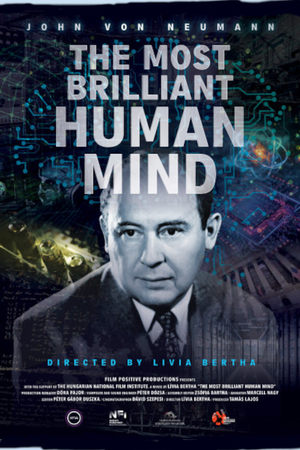
John von Neumann, one of the most incredible Hungarian-born scientists of all time, was named Man of the Century by the Financial Times in 1999. Among other scientific works, Neumann pioneered game theory and, along with Alan Turing and Claude Shannon, was one of the conceptual inventors of the stored-program digital computer. In late 1943 Neumann began to work on the Manhattan Project at the invitation of J. Robert Oppenheimer, and helped to design the first atomic bomb. This biography showcases the famous mathematician's work and legacy from the perspective of his daughter and colleagues. It is based on artefacts and documents from scientific history collections and on the personal memories of Marina von Neumann Whitman, Neumann's daughter. The film's production team has been filming all around the world, from Budapest to Los Alamos and Princeton, with the participation of several Hungarian and American scientists.
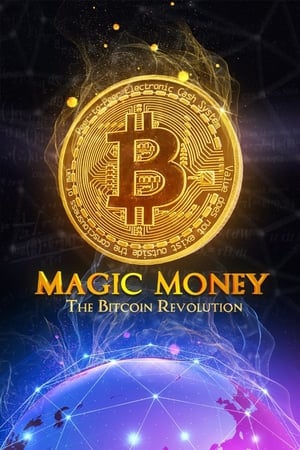
What is Bitcoin? With the advent of Bitcoin, the world's first digital currency, for the first time in history money is no longer controlled by banks or governments, but by the people who use it. But where did this currency come from? How does it work? And is it truly the way forward, or just a flash in the pan? Magic Money answers these questions and more as it explores the mysterious origins of Bitcoin, its role in society, and how it could shape the future.