The plot revolves around four friends who make travel vlogs and they visit a place at the Dooars surrounded by jungle and hills for their next project and the story starts from here. The serene beauty leads to a journey of self-exploration for them and they rediscover the true meaning of life.
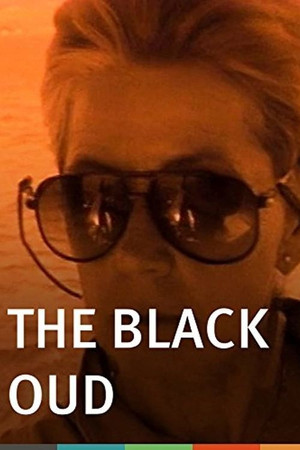
The Black Oud represents a subtle new direction in documentary. I have used the term 'bio-documentary' to describe this slight, though essential, difference between my film and the majority of personal or experimental documentaries made in the last decade.
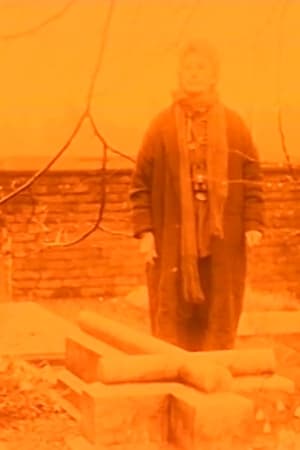
The Grove is the second part of Lawrence Jordan's H.D. Trilogy. It continues what began with THE BLACK OUD (again featuring Joanna McClure as the catalyst) and concludes in STAR OF DAY.
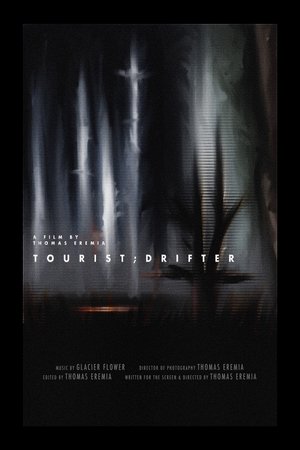
An experimental coming-of-age odyssey through someone's troubled mind, going from country to country, landscape to landscape, growing up in the process. A documentary, travelogue, vlog, dream and self-portrait. A reflection on life, death and history.
A travelogue through the remains of São Paulo failing 80s economy, including its in ruins film industry.
Bruce Brown's The Endless Summer is one of the first and most influential surf movies of all time. The film documents American surfers Mike Hynson and Robert August as they travel the world during California’s winter (which, back in 1965 was off-season for surfing) in search of the perfect wave and ultimately, an endless summer.
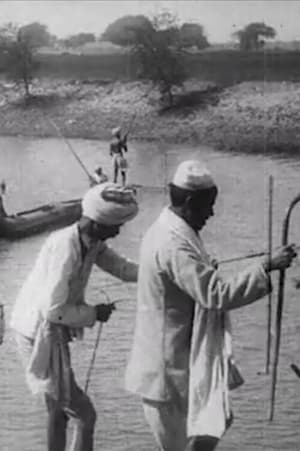
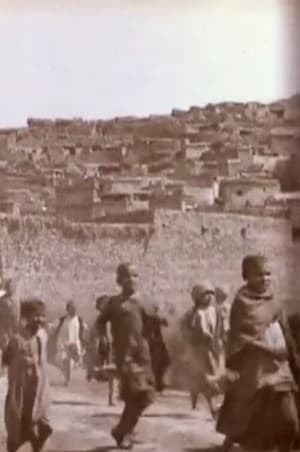
Early film of a crowded street scene in an unidentified Indian city.
A woman narrates the thoughts of a world traveler, meditations on time and memory expressed in words and images from places as far-flung as Japan, Guinea-Bissau, Iceland, and San Francisco.
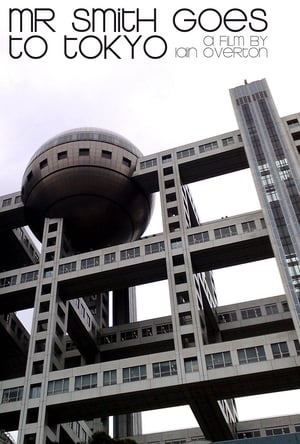
When Tomoko finds some messages for a 'Mr Smith' on a lost mobile phone, she finds herself on an 'Alice in Wonderland' journey through Tokyo's boulevards and back alleys. From the tyranny of symmetry in soaring office blocks - to buildings that look like space-ships, this creative documentary shows us the city's soul.
This documentary visits cities and towns and captures stunning landscapes along Europe's majestic Danube at Christmastime. Locations covered include Passau, Germany; Salzburg, Oberndorf, the Wachau Valley, and Vienna in Austria; Bratislava, Slovakia; and Budapest, Hungary. Along the way the viewer learns relevant history.
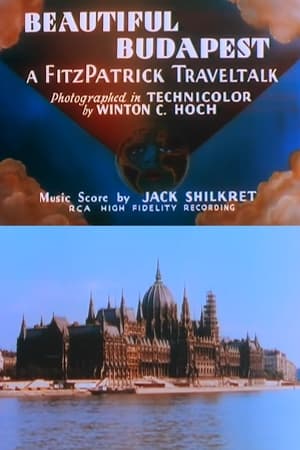
This Traveltalk series short visits Hungary's capital, Budapest.
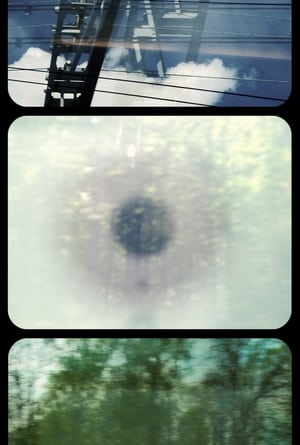
The reception ebbs and flows as the unfamiliar landscape whirls by the window of a plane or train or car. Communication is delayed, fragmented, interrupted. Memories of a distant country.
Botanical gardens in Bombay plus the highly decorative Jain Temple in Calcutta.
Sports enthusiast Ernest is to cover 6,000 kilometers on his motorcycle in 15 days, crossing Austria, Italy, Switzerland, the Balkans and Czechoslovakia.
The film opens with a travelogue, showcasing West Lake and the real Mainland Chinese locations used by the film to which only the Left Wing of Hong Kong Cinema had access to at the time. The title character is a young woman raised by her courtesan aunt in the West Lake scenic resort area in Hangzhou. Siu Siu is perused by a local Official, but falls in love with the son of the Prime Minister. They marry, but are separated by the Prime Minister who arranges another marriage for the son. Siu Siu remains at West Lake, where she regretfully uses the desire of the earlier Official to help another of the girls find happiness.
Growing up in poverty as a child, Dylan dreamt of travelling the world on a motorcycle. Many years later he broke the shackles of a normal life and took to the road. After journeying 200,000km across four continents, the road from Panama to Colombia comes to an end, swallowed up by an impenetrable jungle. Dylan has no choice but to take to the sea, building a raft powered by his motorcycle engine in the hope of reaching Colombia's road network 700km away. He must brave strong ocean currents and storm batterings in his journey from Central to South America.—Journeyman Pictures
The opening moments of "Psyche Out" introduce a young boy who craves the adventures achieved in the surf. The boy -- or at least his dreams -- seem like they could provide a recurring framing device for Walt Phillips' third film (following "Sunset Surf Craze" and "Surf Mania"), but that's the last we see of the boy or hear of ambitions. "Psyche Out" contains less poetic musing, travelogue, comic relief or similar stuff characteristic of surf films of the time, in favor of surf action at Malibu, Point Zero, Rincon and Steamer Lane. This is to the benefit of the film.
To popularize the idea of automobile travel, Ford Motor Company produced Ford Educational Weekly, a film magazine distributed free to theaters. One 1916 series featured "Visits to American Cities." In this episode, Los Angeles is featured at the very beginning of the boom created by oil, movies and aircraft. On the occasion of its centennial in 1953, Ford donated its film to the National Archives and Records Service; this copy derives from a fine grain master printed from the Archive's preservation negative. Music by Frederick Hodges.
Travel films have an established format with their own conventions, history and baggage. It is a medium that has all too often sought to control, define and dictate perceptions of ”other” places. Comprised of footage shot while travelling on group excursions across Russia in 2019, An Uncountable Number of Threads is an attempt to draw out the ethical restrictions of a travelogue, while questioning how (and why) to make one. At times there is an awkward tourist-gaze, aware of its outsider position. But as a self-reflexive work that considers its own creation, it ultimately unravels, as the artist rationalises themselves out of a particular way of working, inviting the viewer into their uncertainty.
Spalding Gray sits behind a desk throughout the entire film and recounts his exploits and chance encounters while playing a minor role in the film 'The Killing Fields'. At the same time, he gives a background to the events occurring in Cambodia at the time the film was set.