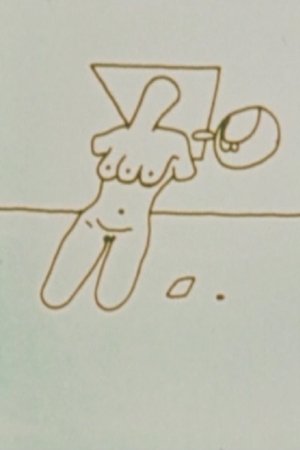
Rubin chats with two friends.
Lulu the dog gets a job at the local convenience store and stays up all night cleaning the back room. Short created for [adult swim] Smalls.
Sketch Film #3 (Tomonari Nishikawa, 2006, 3 min., super 8, silent, 18/24fps, b&w, USA/Japan) The third film in the series, which starts with a sequence of paired images: a focused image and a blurred image of the same subject, which was caused by a diagonal camera movement. Later, it shows an experiment to produce an apparent depth by rotating an apparent shape. It was edited in camera and hand-processed afterwards.
Borrowing its title from a treatise by Aristotle, the latest film by Makino Takashi is an abstract work that finds its drive in the clash between light and darkness. Entirely composed of superimposed images of Tokyo’s landscape and water sites, the film takes its rhythm from the cycles of repetition that are the pillars of life and civilisation. As light emerges from the chaos, Jim O’Rourke’s ambient drone sets the tone for what is to come.
A burst of cheer and refreshment that it seems perfectly suited to a late July afternoon.
A horse goddess gives birth to three powerful brothers who set out into the Underworld to save three princesses from three evil dragons and reclaim their ancestors' lost kingdom.
Flash projection from dutch visual artist Han Hoggerbrugge
An abstract animation with a motif of a dragonfly, and a complex multi-exposure landscape of a field and a woman's naked body overlap.
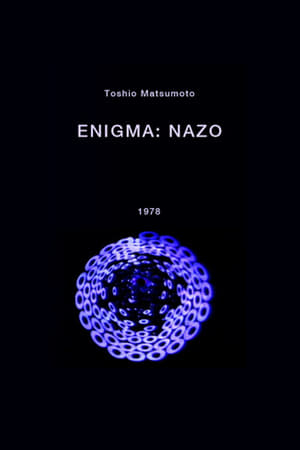
Enigma is something of a more glamorous version of White Hole, with a wide variety of elaborate textures (often composed of iconographic and religious symbols) converging towards the centre of the screen.
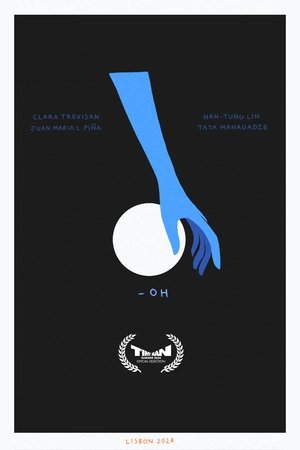
Torn from their home by a hand in the sky, colorful entities seek freedom from a rigid binary in this short experimental animation.
Three books: a film festival catalogue, a dictionary, the Bible. Three works whose materiality has become obsolete by the digital dematerialization. A commentary on the fragility of culture.
A raccoon on a voxel boat talks about his job.
And And
Mamori transports us into a black-and-white universe of fluid shapes, dappled and striated with shadows and light, where the texture of the visuals and of the celluloid itself have been transformed through the filmmaker’s artistry. The raw material of images and sounds was captured in the Amazon rainforest by filmmaker Karl Lemieux and avant-garde composer Francisco López, a specialist in field recordings. Re-filming the photographs on 16 mm stock, then developing the film stock itself and digitally editing the whole, Lemieux transmutes the raw images and accompanying sounds into an intense sensory experience at the outer limits of representation and abstraction. Fragmented musical phrases filter through the soundtrack, evoking in our imagination the clamour of the tropical rainforest in this remote Amazonian location called Mamori.
Len Lye usually timed his films with great care to match their soundtracks, but for All Souls Carnival, he and composer Henry Brant worked separately, preferring to see if the score and visual track would synchronise by chance. Lye also experimented with a new Direct Film technique, drenching the filmstrip in colourful paint and marker pen.
Hand painted directly onto film stock by Margaret Tait, this film features animated dancing figures, accompanied by authentic calypso music.
We watch white shapes dancing on black background, which changes when the white shape fills up the screen completely, and black lines and figures bounce around on the now white background.
In the darkness of a cave, one man who had never seen even his own figure found a hollow flooded with light. An expression of a chaotic world. This experimental graduation film is a mixture of different animation techniques
Partly figurative, partly abstract, Drux Flux is an animation film of fast-flowing images showing modern people crushed by industry. Inspired by One-Dimensional Man by the philosopher Herbert Marcus…
In this powerful abstract film with a soundtrack of African drum music, Lye scratched "white ziggle-zag-splutter scratches" on to black leader, using a variety of tools from saw teeth to arrow heads. The first version of the film won a major award at the International Experimental Film Festival Held in Brussels in 1958 in association with the World's Fair. Stan Brakhage described the film as "an almost unbelievably immense masterpiece".