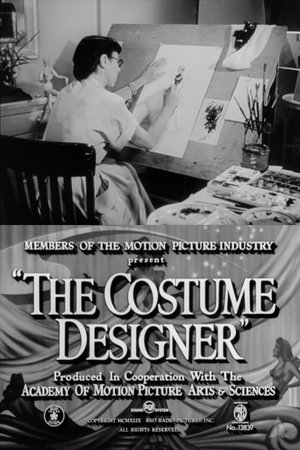
This short focuses on the job of the costume designer in the production of motion pictures. The costume designer must design clothing that is correct for the film historically and geographically, and must be appropriate for the mood of the individual scene. We see famed costume designer Edith Head at work on a production. The Costume Designer was part of The Industry Film Project, a twelve-part series produced by the film studios and the Academy. Each series episode was produced to inform the public on a specific facet of the motion picture industry. Preserved by the Academy Film Archive in 2012.
This short documentary depicts Christmastime in Montreal. The milling crowds, department store Santas, Brink's messengers, kindergarten angels and boisterous nightclubs all combine to make a vivid portrait of the holidays.
A 16mm anthology of experimental super 8 films by Derek Jarman, Michael Kostiff, Cerith Wyn Evans and John Maybury, with framing footage by Tim Burke of Brion Gysin using a dream machine. Jarman's contribution is a version of his 1977 Art and the Pose (aka Arty the Pose), refilmed at 3fps, with a musical soundtrack. Jarman planned The Dream Machine as a commemoration of William Burroughs and Gysin's 1982 visit to the UK, and received initial funding from the Arts Council in 1983, then rethought the project as a portmanteau film featuring Gysin alone. The production remained in limbo until 1986, when James Mackay obtained completion funding from the British Film Institute. (Since this film was released on VHS accompanied by Jarman's Broken English: Three Songs by Marianne Faithfull, T.G.: Psychic Rally in Heaven and Pirate Tape under the umbrella title The Dream Machine, synopses of this film have often muddled up its details with those of the earlier films. )
A documentary about the Parisian night club “Bus Palladium”. This film was theatrically released as a complement for Godard's Masculin, féminin.
Stop for Bud is Jørgen Leth's first film and the first in his long collaboration with Ole John. […] they wanted to "blow up cinematic conventions and invent cinematic language from scratch". The jazz pianist Bud Powell moves around Copenhagen -- through King's Garden, along the quay at Kalkbrænderihavnen, across a waste dump. […] Bud is alone, accompanied only by his music. […] Image and sound are two different things -- that's Leth's and John's principle. Dexter Gordon, the narrator, tells stories about Powell's famous left hand. In an obituary for Powell, dated 3 August 1966, Leth wrote: "He quite willingly, or better still, unresistingly, mechanically, let himself be directed. The film attempts to depict his strange duality about his surroundings. His touch on the keys was like he was burning his fingers -- that's what it looked like, and that's how it sounded. But outside his playing, and often right in the middle of it, too, he was simply gone, not there."
This short, silent film captures a Sunday afternoon at a community skating rink. Iconic Quebec director Gilles Carle has the camera follow toddlers learning to skate, young girls flashing their skates and boys decked out in the colours of their favourite hockey teams. A picture perfect moment on a bright winter's day.
Raw footage received from photographer Harry Dunham revealed never before seen images of Mao Tse-Tung and the Eighth Route Army, inspiring Frontier to collectively shape a new film from desperate images, and to refine its dialectic editing.
This 1964 documentary returns to the battlefields where over 100,000 Canadian soldiers lost their lives in the First and Second World Wars. The film also visits cemeteries where servicemen are buried. Filmed from Hong Kong to Sicily, this documentary is designed to show Canadians places they have reason to know but may not be able to visit. Produced for the Canadian Department of Veteran Affairs by the renowned documentary filmmaker Donald Brittain. (NFB)
A trip on the Swedish lake Mälaren by a 115-year-old steamboat. The journey between Stockholm and Mariefred takes 3,5 hours. The steamboat Mariefred was manufactured over a hundred years ago and is one of the last steam-powered vessels on the lake. The steam whistle sounds when Maja, as she is called in Mariefred, steers into the bay towards the small town. A fanfare for the summer!
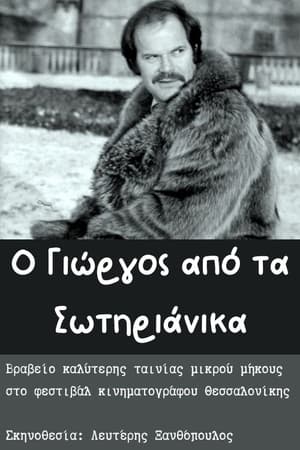
The story of a successful Greek immigrant, the restaurant owner Giorgos Kozompolis, who emigrated in the mid 1960’s from the poor village of Sotirianika, in Mani to the developed city of Heidelberg in the Federal Republic of Germany.
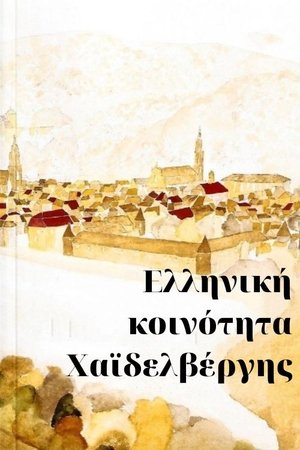
The Greek guest workers -gästarbeiter- in the industrially developed central and northern Europe in the mid 70s.
Greek internal migrants in Athens, after the Greek Civil War colonize the tops of the Tourkovounia hills.
The film sheds light on the topic of the high divorce rate among young people in the form of journalistic statements and scenes as well as analytically reflected statements and statements of experience by sociologist Dr. Ursula Hempel, divorced and single mother of two adolescent children, and her cousin, a puppeteer who is also divorced.
A young boy learns about his heart through the step-by-step construction of a simple circulatory system. He learns how his heart pumps, what blood and blood vessels do, how they do it, and some of the ways to help his heart stay healthy.
For us, a thought always presupposes a society, a culture and above all the consciousness of time. We are haunted by immortality, human notion par excellence. As if the world was here to fascinate us. And to disappoint us. The film travels around the bulb like the Earth around the Sun. Light makes the film visible. A fragile film, like our existence. In the orbit of the film tragedy and our reality, the image resists the cruelty of the experiment.
Migrant families experience violence, but they also keep beautiful memories when they arrive in new lands. Fantastic and intimate stories, recalled from childhood, travel across time and space, magically intermingling with the help of the four elements and breaking the boundaries of cinema.
: Music and its History
Herbert Fux talks about his role in the 1970 film "Hexen bis aufs Blut gequält" also known as "Mark of the Devil"
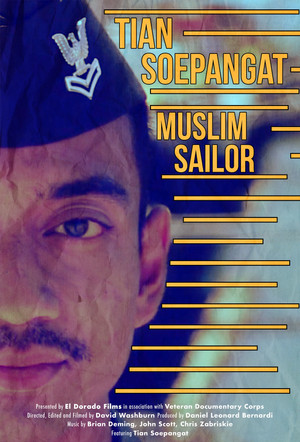
Tian Soepangat joins the U.S. Navy out of a commitment to helping others. As a Muslim, Tian is uncertain of his shipmates' attitudes toward his religion, and so he hides it. Eventually discovering he doesn't have to hide his faith, he is free to express pride in his heritage.
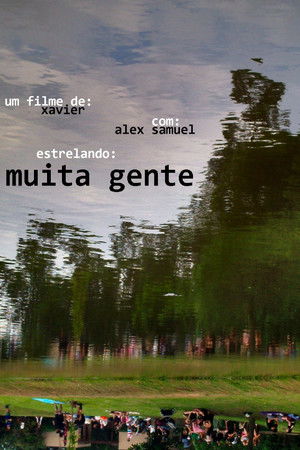
a short film about the end of the world. filmed with an old digicam at a park on all souls’ day, 2025. two best friends talk about turtles and watch people in their natural habitat while listening to tomate cereja.