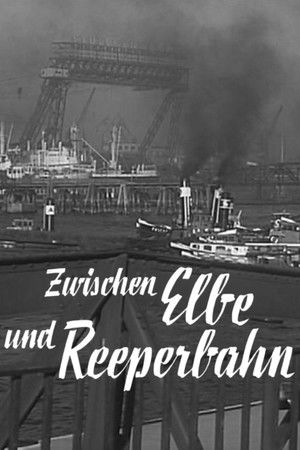
A short film about the airport in Frankfurt am Main. Re-released in 1973.
Short film on the cattle industry and movement of cattle along the production line.
Financially and creatively bankrupt, aspiring actor Chase Miller is sleeping on his friends' couch and increasingly desperate for fame. Deciding to record his every move, Miller documents an unorthodox Oscar campaign.
This film without words is composed of Pamela Bone's unique photograhic transparencies. Her talent has been said to 'push photography beyond its own limits, liberating it to the status of an entirely creative art form.' Inspired by nature, and being more responsive to feeling than to thought, Miss Bone has sought to express the mystery and beauty of the inner vision through photographic means alone: landscape has the quality of a dream; children on the sea-shore have a sense of their own enchantment, trees are forboding and strange when night moves in their arms. It took Miss Bone twenty years to find the right technique and so overcome the limitations that photography would impose.
Music by Prudence tells a self-empowering story of one young woman's struggle who, together with her band, overcomes seemingly insurmountable odds and, in her own voice conveys to the world that disability does not mean inability. In addition to its sheer emotional punch, Music by Prudence has become the cornerstone of an advocacy campaign and has been embraced by the UN, Human Rights Watch and the disability community as an unprecedented portrayal advocating for the rights of persons with disabilities. Prudences poignant, inspiring and irreverent message of hope has received an amazing response from press and audiences all across North America, and has won the Academy Award for Best Documentary Short and several other awards as it continues drawing in more audiences.
Short documentary about 50 years of history of Czechoslovakia, with archive images.
A short making of feature about the 1966 John Frankenheimer movie Grande Prix
For the last 53 years, Baltazar Ushca has harvested glacial ice from the tallest mountain in Ecuador. His brothers, Gregorio and Juan, have long since retired from the mountain. This is a tale of cultural change in a small indigenous community and how three brothers have adapted to it.
“A silent perusal of the Grand Canyon, morning to night, from a single, fixed camera position, by means of constant dissolves spaced a few seconds apart. Man — entirely absent — is no longer the center of the universe; the canyon exists outside of him. Despite the invisible photographer and his technologically-caused dissolves, this is a creditable approximation of the true foreign-ness of nature.” — Amos Vogel, Film as a Subversive Art (1974)
Jan Schmidt and Pavel Juráček turn their attention to the problem of Czechoslovakia's unloved cars in this whimsical documentary short.
This short film explores the resolution of a plumbing problem through a narrative lens compiled from found footage sourced from pornographic websites.
A coast guard captain on a small Greek island is suddenly charged with saving thousands of refugees from drowning at sea.
"Grow a Better Dallas" is a short documentary film showcasing South Dallas' Restorative Farms, a registered non-profit offering restorative justice and urban agriculture solutions to the "food desert" problem in South Dallas. Restorative Farms offers the ability for rehabilitation and therapeutic solutions to individuals with criminal backgrounds to come and contribute as employees to the farm. Restorative Farms was co-founded by Tyrone Day, who was falsely incarcerated for over 26 years.
In December 1967, a Cuban film crew led by Santiago Alvarez, the veteran polemicist, travelled to Hanoi. They shot the footage which constitutes this short documentary all in one day - Tuesday 13. The film is the story of that day and what happened to the North Vietnamese people in the course of it.
A home movie made by Robbins and Meg Barstow that documents their family's free trip to the newly opened Disneyland. The one-week trip was a prize that they won in a contest sponsored by Scotch tape.
The March, also known as The March to Washington, is a 1964 documentary film by James Blue about the 1963 civil rights March on Washington. It was made for the Motion Picture Service unit of the United States Information Agency for use outside the United States – the 1948 Smith-Mundt Act prevented USIA films from being shown domestically without a special act of Congress. In 1990 Congress authorized these films to be shown in the U.S. twelve years after their initial release. In 2008, the film was selected for preservation in the United States National Film Registry by the Library of Congress as being "culturally, historically, or aesthetically significant". (Wikipedia)
A short film containing a collection of clips from various Hollywood movies.
A moving record of a natural disaster, Volcano documents the effect of a sudden volcanic eruption on the tiny island of Haimaey, off the coast of Iceland. Blasts of flame, clouds of black smoke and showers of rock erupt from the screen in a poignant portrait of a stricken town.
A tourist's view of Ontario, with magnificent visuals of the province's lakes and rivers, and a delicious hint of easy summer days, vacations, and boating. Viewers fish for salmon, idle their boats through the locks, and watch sailboats and steamships travel the Great Lakes against a background of granite rock and craggy coastlines.
Audio Caña, an old farmer in rural Venezuela, believes there is a giant alligator living in his pond. With his family's help, he's determined to prove its existence to his friends who are often dissuaded by his exaggerated stories.