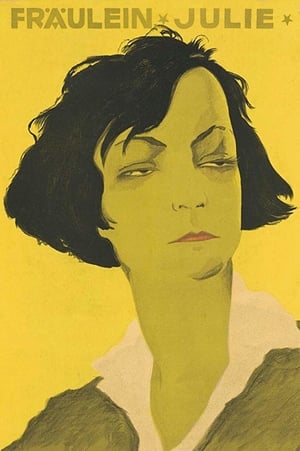
A loose adaptation of August Strindberg's Miss Julie. The daughter of a count witnesses her mother's increasing mental instability after being spurned by a lover.
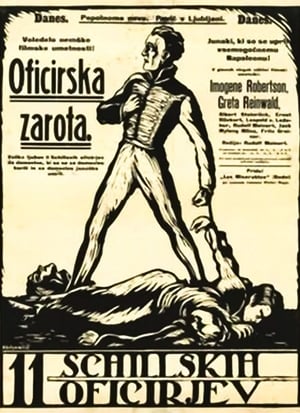
The film depicts the failed 1809 uprising of Prussian soldiers led by Ferdinand von Schill against the occupying French during the Napoleonic War.
Fatty, his wife and mother-in-law are on a ferry to Catalina Island for an outing. So are Mabel and her father. Mabel and Fatty flirt with each other, and Fatty tosses her father overboard, thinking he is another suitor. The boat docks and the two go their separate ways. Mack Swain tries to pick Mabel up, too. All go to rent bathing suits, Fatty locks Mack in a dressing room with mother-in-law. Fatty and Mabel feed a large fish to a seal at the water's edge, and then engage in some graceful and comic diving. Swain, Avery, Durfee and Davenport see them diving and corner them...everyone's relationship to each other is revealed. —Ben Model, [email protected]
Silas Warner dictates a letter commanding his son Harry to leave college at once and enter his office as an employee. Furthermore, Mr. Warner has in mind the marriage of his son to his partner's daughter. When Harry receives his father's letter, he returns home, but takes a decided stand in opposition to his father's ideas. Furthermore, Harry is about to be married to Rose Blend. Warner's partner, Martin, turns out to be a defaulter, and almost ruins the firm. Harry reads a newspaper account of his father's ills and trouble, so he and his wife go to see and assist him. As Mr. Warner is convalescent, he extends to his son and wife his parental blessings.
Betty, the only daughter of Jenkins, a wealthy farmer, is secretly loved by Tom Saunders, a farm hand. Tom's scapegrace brother, Dick, returns from the city and is befriended by Tom. Dick later wins Betty's love. While Jenkins is blasting out a tree stump with dynamite, Betty and Dick are passing close by unnoticed, and the explosion destroys Betty's sight.
In the poor Italian quarter of New York lives Luigi, an Italian peasant and inventor, who is so absorbed in his work that he greatly neglects his wife, Nedda. She is younger than he and fond of pleasure. Not understanding his neglect, she strongly resents it.
Promising to send for his sweetheart Roza, when he gets settled, Hugo Hunfalvy leaves Hungary for America. In New York he meets Louis Kaplan, an old friend, who owns a fruit store. Louis' sister, Marie, is pretty and flirtatious, and is much impressed by Hugo. He soon falls under the influence of her wiles and buys part interest in Louis' store.
An unauthorised adaptation of the novel by Alexandre Dumas. Produced by Selig with the intent of beating Adolph Zukor's adaptation to the screen, Zukor successfully sued and the prints were ordered to be destroyed. The film is now lost.
Bert Williams in his film debut, a now lost film.
Satirical silent movie based on the play Macbeth written in 1916 by Peter Pan creator and playwright J. M. Barrie as a parody of the American entertainment industry. The film was made by the newly created British Actors Film Company in response to news that American filmmaker D. W. Griffith intended to honor the 300th anniversary of William Shakespeare's death by producing of a film version of the play. It was subtitled A Suggestion for the Artists of the Future. It was screened at a charity benefit attended by the royal family, but was not widely distributed, and no copies are known to survive.
Young and pretty, Margery Dean, companion to Mrs. Sawyer, a wealthy lady, chances to meet Jack Drislane, a young clerk. It is raining hard; she has not an umbrella; he secures one and escorts her home. He is duly impressed when she enters a large brownstone mansion, particularly as the girl does not enlighten him as to her real social position; Later, they see each other again in passing autos and then Jack, who has been unable to forget Margery, asks permission to call, neglecting to mention, however, that he is a working man and not a wealthy idler.
In a jewelry store, Grace Norris, a wealthy girl, unnoticed by the salesman, absent-mindedly takes a vanity case. She is seen by Fred Wright, who thinks she stole it.
The two sons of Judge Stone, William and Wylie, are both in love with Nancy Sevier. Wylie is of a jealous temperament and believes he sees in Nancy's acceptance of his brother's attentions a proof of her preference for him. William monopolizes Nancy until Wylie is almost beside himself with rage and jealousy.
Born with an artistic temperament, Joe Leigh feels keenly the bitterness and drudgery of life on a small farm and longs to get away from it. Jabez, his uncle, who owns the farm, is a hard, matter-of-fact man, utterly out of sympathy with his nephew's ambitions.
George Darrel presents Helen Gray, his fiancée, with a very valuable engagement ring of antique design, which is an heirloom. They have a serious quarrel over Dave Brower, one of her friends, and Darrel leaves for the west.
Dorothy Danesbridge is spoiled by her father and aunt, and through the influence of Phyllis, an old school friend and an ardent suffragette, becomes interested in Women's Suffrage.
On account of an urgent business call, Mr. and Mrs. Leslie hurriedly close their summer home at Hudsoncliff and leave with their daughter, Jane, for the city. Bob, their son, decides to visit his parents at Hudsoncliff with his friend, Ralph Lyons. Bob and Ralph find the house locked up and, after some reconnoitering, enter through a window. Ralph hurts his ankle and is unable to attend a dance that evening, so Bob goes instead. Jane, on her arrival in the city, finds she has left her necklace in the safe at their summer home, and leaves a note for her mother, saying she is going back for it.
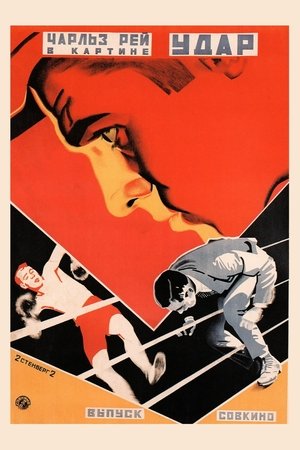
John Steel is a poor boy with a gentle spirit, but he has a natural gift for fighting. His mother is a strict pacifist, so although he has opportunities to make a career as a boxer, he refuses--until hard times force him to enter the ring despite his mother's pleas.
A lost silent Western short.
A series of four 2-reelers based on the stories of George Bronson Howard, directed by Duke Worne, and starring Roy Stewart in the title role; each episode in the series was a story complete in itself. They are all presumably lost.