Gravitation - Urkraft des Universums
Chaco Canyon, located in northwest New Mexico, is perhaps the only site in the world constructed in an elaborate pattern that mirrors the yearly cycle of the sun and the 19-year cycle of the moon. How did an ancient civilization, with no known written language, arrange its buildings into a virtual celestial calendar, spanning an area roughly the size of Ireland?
In the year 1957 the cold war expands to space. The Soviet-Union sends Sputnik as the first manmade object into earth-orbit. 3 years later Yuri Gagarin enters space as the first man in space. The so called "Space Race" seems to be decided. But in 1961 President Kennedy promised to send American Astronauts to the Moon. The Apollo Project was born. A space ship had to be built that is strong enough to escape earth's gravitation, land on the moon and bring the crew safely back to earth. Motion Designer Christian worked with his brother and Composer Wolfgang for 18 months on this shortfilm. The foundation were thousands original NASA photographies, taken from the Astronauts during the Apollo Missions, which were released in September 2015. It is an animated collage using different techniques to bring the stills to life.
The sun is the miracle that makes everything possible - but also the greatest danger. For the first time, a feature-length documentary is dedicated to the search for the significance of our home star for mankind, science and nature. Thanks to the researchers from the American space agency NASA, who work at the Canary Islands observatories in the hottest and coldest places on the planet.
Documentary about the Griffith Observatory, shown at their Leonard Nimoy Event Horizon Theater
The first American space station Skylab is found in pieces scattered in Western Australia. Putting these pieces back together and re-tracing the Skylab program back to its very conception reveals the cornerstone of human space exploration.
William Shatner presents a light-hearted look at how the "Star Trek" TV series have influenced and inspired today's technologies, including: cell phones, medical imaging, computers and software, SETI, MP3 players and iPods, virtual reality, and spaceship propulsion.
An incredible travel through space and time between the walls of the Paris Observatory, which is celebrating its 350th birthday. Place of discoveries such as speed of light or Neptune’s existence, it is still today one of the oldest operating observatories and the greatest hub in the world for astronomy and astrophysics researches, second only to Harvard.
Some 220 miles above Earth lies the International Space Station, a one-of-a-kind outer space laboratory that 16 nations came together to build. Get a behind-the-scenes look at the making of this extraordinary structure in this spectacular IMAX film. Viewers will blast off from Florida's Kennedy Space Center and the Baikonur Cosmodrome in Russia for this incredible journey -- IMAX's first-ever space film. Tom Cruise narrates.
The Wonder of it All focuses on the human side of the men behind the Apollo missions through candid interviews with seven of the Apollo astronauts: Buzz Aldrin, Alan Bean, Edgar Mitchell, John Young, Charles Duke, Eugene Cernan and Harrison Schmitt. They all reflect on the training, the tragedies, the camaraderie, and the effect that their space travel has had on their families.
Billions of years ago, Venus may have harbored life-giving habitats similar to those on the early Earth. Today, Earth's twin is a planet knocked upside down and turned inside out. Its burned-out surface is a global fossil of volcanic destruction, shrouded in a dense, toxic atmosphere. Scientists are now unveiling daring new strategies to search for clues from a time when the planet was alive.
Join the Mars rovers Spirit and Opportunity for an awe-inspiring journey to the surface of the mysterious red planet.
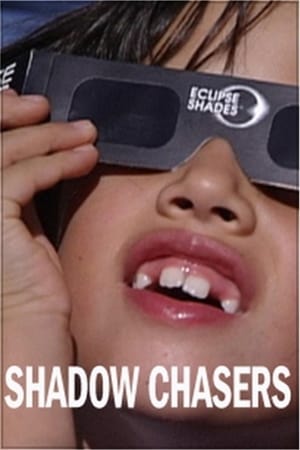
This feature-length documentary is a portrait of eclipse chasers, people for whom solar eclipses - among nature's more spectacular phenomena – are a veritable obsession. The film follows 4 of them as they travel incredible distances to witness the last total eclipse of the millennium as it sweeps eastward across Europe to India. At various points along the way enthusiasts Alain Cirou in France, Paul Houde in Austria, Olivier Staiger in Germany and Debasis Sarkar in India offer their impressions of the historic event.
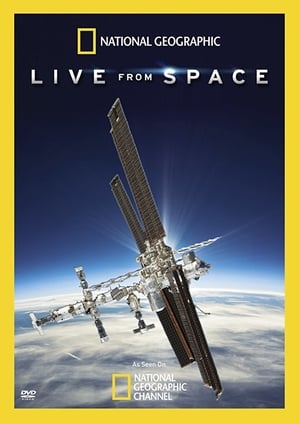
National Geographic and NASA are sending you into space - live! For the first time ever, board the International Space Station and take a complete orbit of Earth in real time.
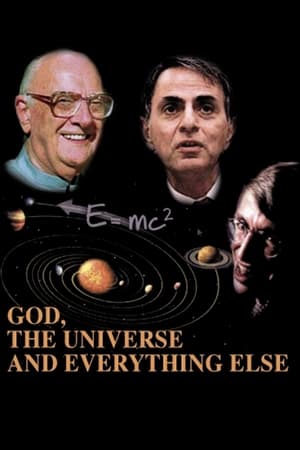
In a studio setting, Stephen Hawking, Arthur C. Clarke and Carl Sagan (who joins them via satellite) discuss the Big Bang theory, God, our existence as well as the possibility of extraterrestrial life.
A GCSE short film project studying depictions of outer space in movies.
Everyone knows Neil Armstrong came back from the Moon in 1969 – but it wasn’t until three years later, when the people of a tiny Scottish town stepped in, that he finally got home. Neil Armstrong and the Langholmites is a film about the day one of the world’s most famous men visited the small ‘burgh’ of Langholm and the profound emotional effect the place, and its people, had on the normally stoic astronaut. From Industria Studios and Duncan Cowles, director of acclaimed 2024 feature Silent Men, comes a wry and beautiful slice of Scottish life and a unique, lesser-known tale about one of America’s most famous sons.
Documentary which uses the latest, most detailed imagery to reveal the monthly life cycle of the moon. From Wales to Wyoming, Hong Kong to Croydon, the programme finds out how the moon shapes life on Earth, as well as exploring its mysterious dark side and discovering how the moon's journey around Earth delivers one of nature's most awe-inspiring events - a total solar eclipse. And at the end of a remarkable year of lunar activity, we find out why so many supermoons have been lighting up the night sky.
Photo sequence of the rare transit of Venus over the face of the Sun, one of the first chronophotographic sequences. In 1873, P.J.C. Janssen, or Pierre Jules César Janssen, invented the Photographic Revolver, which captured a series of images in a row. The device, automatic, produced images in a row without human intervention, being used to serve as photographic evidence of the passage of Venus before the Sun, in 1874.
Host John Larroquette takes viewers on a nostalgic trip through the 1965-1968 sci-fi comedy series. The disc's rare footage include Guy Williams's screen test, extended clips from the 1965 pilot, bloopers and the original clips CBS network sales presentation. Viewers also get to go behind the scenes of the 1998 big-screen version. To top it off, Billy Mumy (Will), Jonathan Harris (Dr. Smith) and the robot reunite for a special tribute.