Today we cut the granite with diamond-cut blade as is one of the most difficult rocks to cut due to its hardness.How could the egyptians, if it was them, have achieved those shapes in the sculpture sphinx of Sénousret made of Migmatite material, which is harder than granite? What was that extraordinary tool that made this possible? This example is what disputes all the official theories of egyptology. Dozen of questions now arise. Did the egyptians really have an advance technology that was losted over time? The answer is in this movie.Lucky is to understand that in 2019, we have a chance to learn how the Great Pyramid was built, who built it, and what its hidden behind it. Let yourself go and come discover the biggest mystery of humanity, the New Great Story!
Armenian radio-engineer Arevik Sargsyan has struggled throughout her life to preserve ROT54, a giant telescope built by her uncle in the 1980s. But the collapse of the Soviet Union meant that ROT54 was left abandoned for 30 years. Now, Arevik is attempting to take control of the telescope and prove it still works.
In a feast of colours and sounds, Mayan Archaeoastronomy: Observers of the Universe makes a tour of 6 Mayan temples: San Gervasio, Chichen Itzá, Uxmal, Edzná, Palenque and Bonampak where the spectator dives into a Mayan world of knowledge about the importance of the orientations of its temples in relation to the movement of some stars like the Sun, the Moon and Venus.
Touring this historic, romantic and ruggedly beautiful land, from it's craggy ocean shores to its North Sea islands--from its mist-shrouded mountains to its ancient cities. This is Scotland! Embarking from the colorful Borders and Hadrian's Wall we travel to the abbeys, and to Gretna Green. To Ayr, Dumfries and Culzean Castle, with its memories of General Eisenhower. And on to the Cinderella city of Glasgow and Loch Lomond. To Oban, Ben Nevis, Glenfinnan and haunting Glencoe. Excursion to fabled island--Skye, holy Iona and "Fingal's Cave"--and on to the Orkneys and the Shetlands, renowned for their loveable ponies.
Tour scenic England, the island in the silver sea that holds a special place for us all.
An unprecedented UHD film on Karnataka's rich biodiversity narrated by David Attenborough. Portraying the state with highest number of tigers and elephants using the latest technology - a masterpiece showcasing the state, its flora, fauna.
What do the Japanese see in Canada? What's the magnetic pull from the Far East? And what's our take on this land of ours? Bolstering our feeling of national pride comes naturally after watching the Japanese embrace the country. The film follows Masaaki Kagami, a Japanese transplanted in Alberta. He specializes in making souvenir videos for Japanese tourists. HO! KANADA is an investigation of national stereotypes. The film records the way the Japanese see us, and how we see them and ourselves.
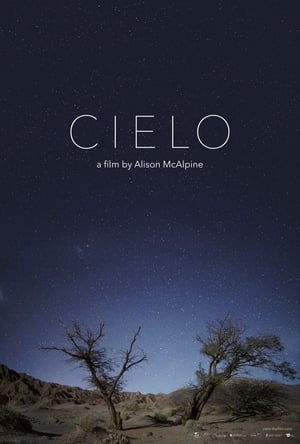
The first feature from Alison McAlpine is a dialogue with the heavens—in this case, the heavens above the Andes and the Atacama Desert in northern Chile, where she alights on the desert- and mountain-dwelling astronomers, fishermen, miners, and cowboys who live their lives with reverence and awe for the skies.
CERN and the University of California-Santa Barbara are collaborating in the search for the elusive substance that physicists and astronomers believe holds the universe together -- dark matter. Where is this search now in the realm of particle physics and what comes next?
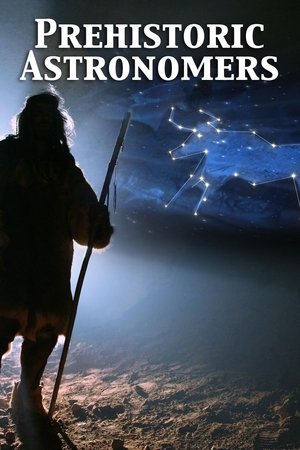
Cave paintings and lunar calendars exist in the caves and remains of prehistoric hunters studied recently. What if Prehistoric Man were clever enough to develop in depth scientific knowledge? As unlikely as it may seem, new data tend to prove that Prehistoric Man actually invented Astronomy!
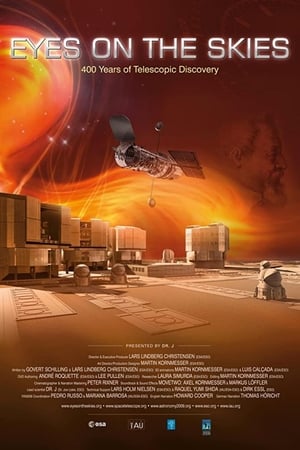
A documentary chronicling the history of the telescope from the time of Galileo. Featuring interviews with leading scientists discussing Galileo's first use of the telescope to the latest discoveries in cosmology.
Chaco Canyon, located in northwest New Mexico, is perhaps the only site in the world constructed in an elaborate pattern that mirrors the yearly cycle of the sun and the 19-year cycle of the moon. How did an ancient civilization, with no known written language, arrange its buildings into a virtual celestial calendar, spanning an area roughly the size of Ireland?
Documentary about the Griffith Observatory, shown at their Leonard Nimoy Event Horizon Theater
Cien Años del Padre Negro en Atacama
ASTÉROIDE 2008 TC3 : COLLISION IMMINENTE
In the competitive world of tourism, there are very few experiences that are out of bounds. “Danger Zone” explores the world of war tourism, catering to a growing market for ever more rare and extreme experiences.
Do Chile za zatměním Slunce
For six weeks we explored the Antarctic Peninsula by sea kayak, sailboat, foot and small plane, observing the fast changing evolution of this most remote place. Impacted by climate change - temperatures have warmed along the Peninsula faster than anywhere on the planet during the past 50 years - this part of Antarctica is also experiencing a boom in tourism and nations fighting over who owns what as its ice slowly disappears. This National Geographic-sponsored exploration is a one-of-a-kind look at Antarctica from a unique perspective - sea level.
This documentary examines ayahuasca shamanism near Iquitos (a metropolis in the Peruvian Amazon), and the tourism it has attracted. The filmmakers talk with two ayahuasqueros, Percy Garcia and Ron Wheelock, as well as ayuahuasca tourists and local people connected with the ayahuasca industry.
An incredible travel through space and time between the walls of the Paris Observatory, which is celebrating its 350th birthday. Place of discoveries such as speed of light or Neptune’s existence, it is still today one of the oldest operating observatories and the greatest hub in the world for astronomy and astrophysics researches, second only to Harvard.