A young Prince Asoka works to perfect his skills in battle and also deals with family conflict. During a struggle with one of his step-brothers, his mother urges Asoka to escape to stay alive. While away, Asoka meets Kaurwaki and falls in love, but must use his skills as a warrior to protect her. A dangerous and heartbreaking web of conspiracy follows, which leads Asoka to embrace a Buddhist path.
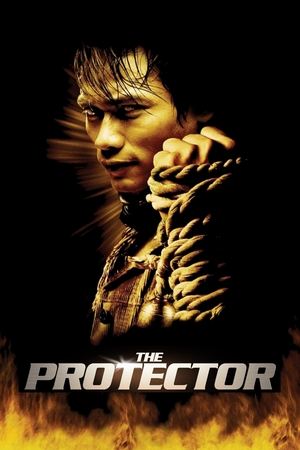
A young fighter named Kham must go to Australia to retrieve his stolen elephant. With the help of a Thai-born Australian detective, Kham must take on all comers, including a gang led by an evil woman and her two deadly bodyguards.
British diplomat Robert Conway and a small group of civilians crash-land in the Himalayas, where they are rescued by the inhabitants of the hidden, idyllic valley of Shangri-La. Protected by the mountains from the world outside, where the clouds of World War II are gathering, Shangri-La provides a seductive escape for the world-weary Conway.
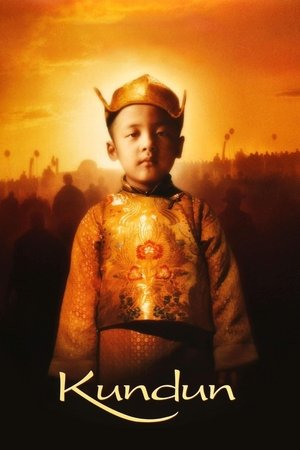
Austrian mountaineer Heinrich Harrer journeys to the Himalayas without his family to head an expedition in 1939. But when World War II breaks out, the arrogant Harrer falls into Allied forces' hands as a prisoner of war. He escapes with a fellow detainee and makes his way to Lhasa, Tibet, where he meets the 14-year-old Dalai Lama, whose friendship ultimately transforms his outlook on life.
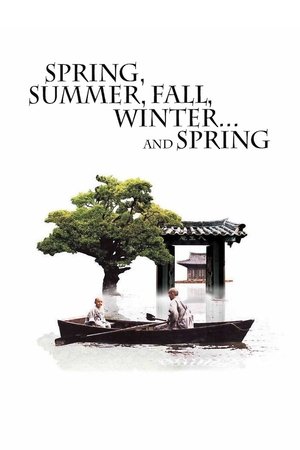
An isolated lake, where an old monk lives in a small floating temple. The monk has a young boy living with him, learning to become a monk. We watch as seasons and years pass by.
The first of four installments in the groundbreaking Heartbeat of the World anthology film series. Comprised of several short films by some of the world's most exciting directors, Words with Gods follows the theme of religion - specifically as it relates to an individual's relationship with his/her god or gods...or the lack thereof. In Words with Gods, each director recounts a narrative centered around human fragility, as well as environmental and cultural crises involving specific religions with which each has a personal relationship; including early Aboriginal Spirituality, Umbanda, Buddhism, the Abrahamic faiths, Hinduism, and Atheism. An animated sequence by Mexican animator Maribel Martinez is woven through each of the film segments, with each segment narratively connected as a feature-length film.
A dramatic history of Pu Yi, the last of the Emperors of China, from his lofty birth and brief reign in the Forbidden City, the object of worship by half a billion people; through his abdication, his decline and dissolute lifestyle; his exploitation by the invading Japanese, and finally to his obscure existence as just another peasant worker in the People's Republic.
After going down in the fifth round, boxer Bud Gordon bowed out of the limelight. Now residing in a fixer-upper apartment in New Jersey with his girlfriend, Bud longs for his former Manhattan glory. In an effort to get back in the game, he makes a deal with a crooked restaurateur. But quick schemes rarely bring easy pay-offs and as the consequences of his business negotiations unfold, Bud has to make a choice between his integrity and his aspirations.
A view of the religious tensions between Muslims and Buddhist through the portrait of the Buddhist monk Ashin Wirathu, leader of anti-Muslim movement in Myanmar.
Copenhagen, Denmark, 1951. Criminal investigator Anders Olsen follows the case of a bank robber who eyewitnesses say appears to have been acting under some kind of trance.
Set in ancient Tibet under the shadow of the Himalayas, the young prince Lhamoklodan learns of his father's mysterious death and returns to the Kingdom Jiaobo. Troubled by his mother's sudden remarriage to his uncle Kulo-ngam, he swears to find the truth of his father's death. His obsession of revenge overwhelms his spirit and shadows his love to Odsaluyang. When he points his sword at the new king, Queen Nanm finally tells her beloved son, Lhamoklodan, the true identity of his uncle. In the struggle to face his destiny and fight his demons, a new king is born
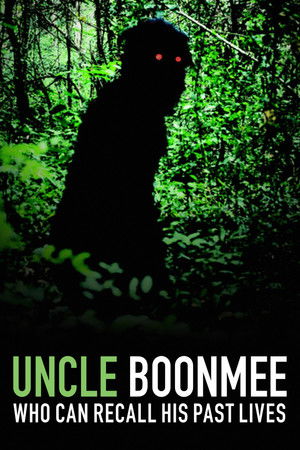
An inexperienced astral projector seeks his grandmother’s wisdom after meeting an uncanny woman in a place transcending reality.
Devout Buddhists, Norbu and Dolma live with their young son Tashi in a clan in Tibet. Norbu is a highwayman. After Norbu is charged with stealing from the temple, he and his family are banished. Impoverished and marginalized, they can do little when their beloved son becomes ill. Tashi dies of a fever. After a second son is born, Norbu focuses his every action on keeping this child alive, seeking re-admission to the clan for his wife and child, then risking all to save them from isolation and starvation in winter.
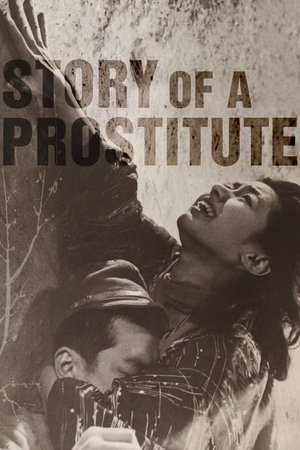
A woman, Tome, is born to a lower class family in Japan in 1918. The title refers to an insect, repeating its mistakes, as in an infinite circle. Imamura, with this metaphor, introduces the life of Tome, who keeps trying to change her poor life.
Do-ah initiates a lawsuit against her husband's uncle who takes away a piece of land that her husband's grandfather left them. Do-ah decides to initiate the lawsuit, unable to stand by when the land and medicine business that her family has worked so hard to realize is stolen before her eyes. But she has no material evidence, and she knows nothing about legal procedures or what to do in court, leading to an extremely difficult situation for her. However in the midst of these troubles, she is reminded of the mysterious and rare treasure that can be used to solve any situation and to locate the expansive at land inside of her which she used to know.
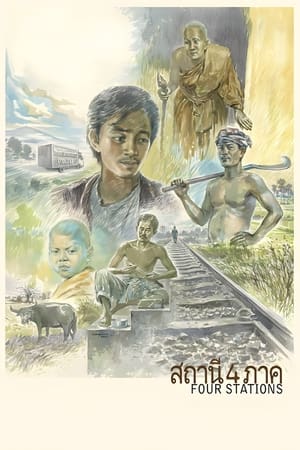
It covers the lives of the poor in 4 different regions of Thailand, all connected by the same railroad. A monk, a laborer, an orphan and former friends, all facing various problems and hardships.
Phai is an innocent boy who has been forced to be a monk, with the hope that this would help the venerable monk to get better from disease. At the same time, villagers also praise a termite hill in the woods for the same purpose. Fahmai a town girl makes Phai start to question what happens.
From the creators of You Can Heal Your Life: The Movie comes a compelling portrait of three modern lives in need of new direction and new meaning. In his first-ever movie, Wayne Dyer explores the spiritual journey in the second half of life when we long to find the purpose that is our unique contribution to the world. The powerful shift from the ego constructs we are taught early in life by parents and society—which promote an emphasis on achievement and accumulation—are shown in contrast to a life of meaning, focused on serving and giving back. Filmed on coastal California’s spectacular Monterey Peninsula, The Shift captures every person’s mid-life longing for a more purposeful, soul-directed life.
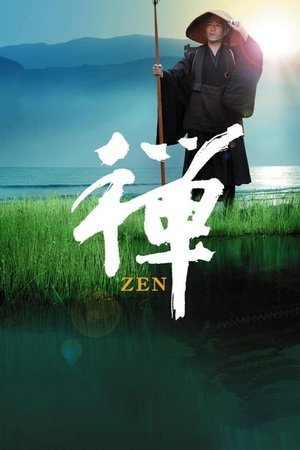
In the early 1200s, Dogen brought Chinese Zen philosophy to Japan, and established the Japanese Zen school of Buddhism. He taught that a person was capable of realizing Buddhahood within himself, by way of Zazen. Zazen is extended hours of sitting and meditating to achieve a state of “Mu” (nothingness, or empty existence).
A story about director Apichatpong Weerasethakul’s parents who were both doctors, and his memories of growing up in a hospital environment.